POST FACTO: Camping bylaw in court, police racism scandal, corporate watchdog cut
Cops’ in-house AI, Trump’s ex-ICE leader joins BC firm, the $63K fence, Innu history censored, Canada sued for climate rollbacks
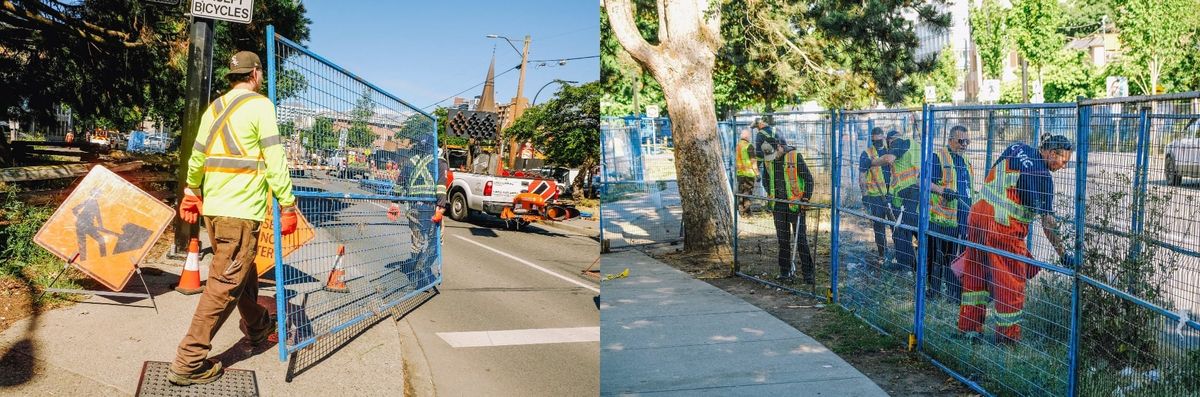
Last week we took you “behind the blue fence” as the City of Victoria displaced people to do an annual cleanup of Pandora Avenue. That involved removal of some sections of the familiar blue fencing installed in late 2024.
CHEK now reports the city has spent $63,000 (roughly $3,000/month) on renting that fencing — more than the estimated cost of buying it outright.
The fencing was intended to be a temporary element of a late-2024 push to end sheltering on Pandora by 2025 — a target explicitly given by both Mayor Marianne Alto and the CEO of service provider Our Place. Alto blamed the continuing expense on “a gap of social services and health-care from the province.”
City wins case over 2024 sheltering bylaw
On the same day as that Pandora clearout, the City of Victoria won a BC Supreme Court ruling on decampment. A justice determined the city was within its legal authority to create a 2024 bylaw (and its 2025 amendment) preventing overnight sheltering in particular parks.
Three people who were all unhoused at the time brought the petition; one has since found housing, and another died. Their petition argued that:
- restricting those parks violated both constitutional and international sheltering rights, partly because other parks lacked the same washroom access or proximity to services.
- the bylaw, as a response to those parks' encampments, was administrative (quasi-judicial, or directing the outcome of a specific situation) rather than legislative (setting general public policy).
Bylaws are typically considered legislative, but some that target individual plots of land have been found administrative. The plaintiffs also likened this bylaw to 2022's struck-down eviction order for Vancouver's CRAB Park encampment, which was deemed “largely administrative.” If administrative, the bylaw would be subject to a broader review of its reasonableness; if legislative, only the authority to enact it would be at issue.
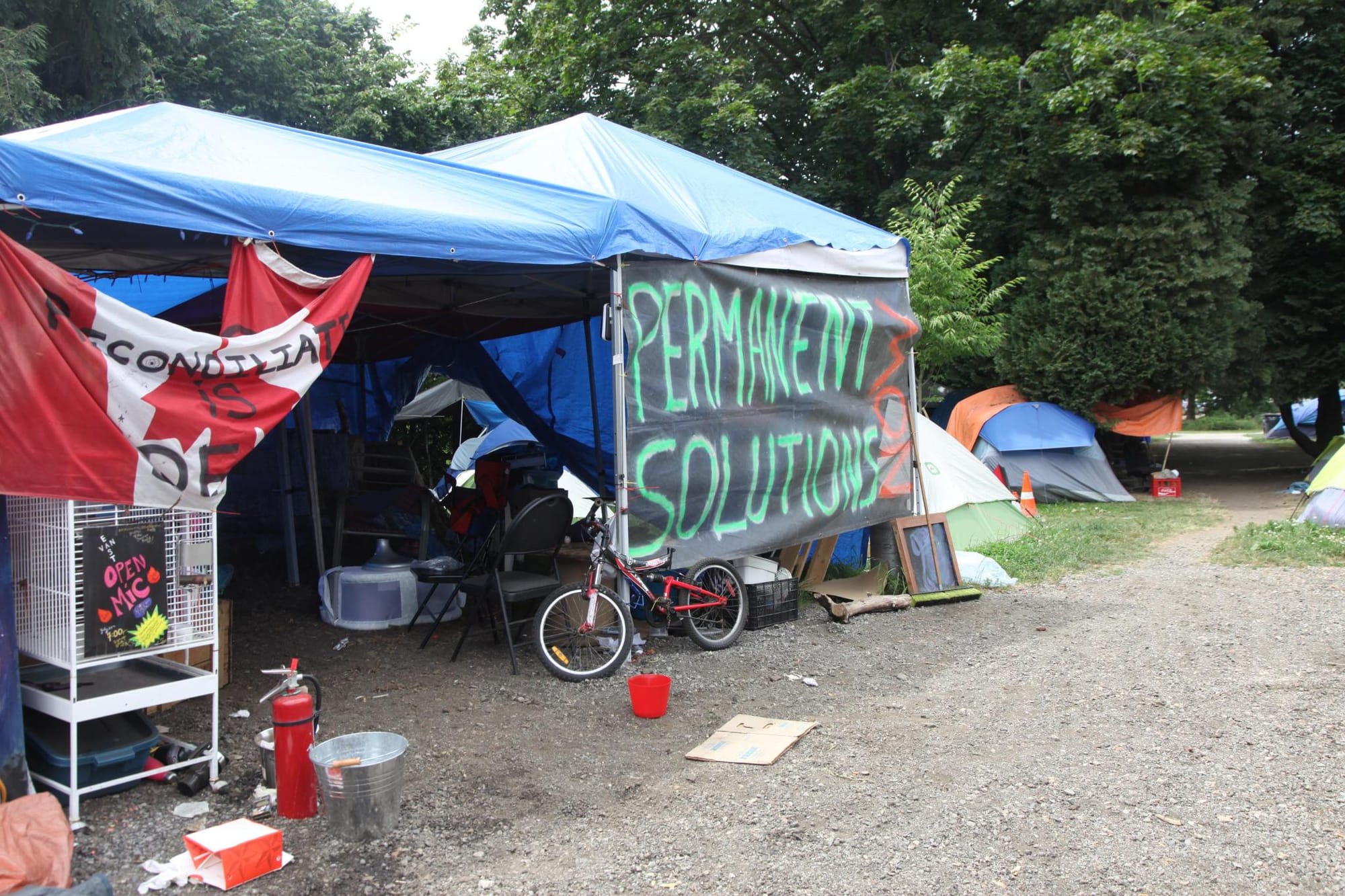
Justice Jacqueline Hughes determined this Victoria bylaw was legislative, unlike the CRAB order (which was issued by the parks general manager, not through a bylaw). Hughes also found the bylaw was within city authority even if its effects are unconstitutional — but it can still face a direct constitutional challenge.
Victoria lost to such a challenge in 2009, in a foundational case that established that temporary overnight sheltering is permitted when there are not enough shelter beds.
And in Ontario just last month, a Waterloo Region bylaw to clear an encampment on a lot slated for transit construction was once again ruled unconstitutional by the Superior Court.
EX FACTO
News we’ve been reading about the subjects we cover.
Calls for inquiry into police racism scandal in Montreal North
On June 12, Montreal police dismantled a night patrol unit of 16 officers over allegations they targeted Black and Arab residents, made racist comments, and took dreadlocks as trophies. A coalition of community organizations said these allegations from whistleblowers reinforce claims that many in Montreal North have made for years about racism and violence from officers.
Quebec’s police ethics commissioner has opened a file on the claims, and the province has appointed an independent overseer for the Montreal Police (SVPM) internal investigation.
Black staff groups send formal letters to police & city
A committee of Black police employees sent a message to management seeking stronger reporting processes, citing attempts in some units to identify the whistleblowers. Black city employees then sent their own letter, saying they want clear action after years of flagging racism.
Protesters want independent public inquiry
Protesters rallied last week to call for the inquiry, which civil liberties groups say is the only way to restore trust. Mayor Soraya Martinez Ferrada called for an end to police checks, which statistically targeted Black and Arab residents much more than white ones. She told Radio-Canada her husband, who is Black, was stopped “at least 5 or 6 times — for nothing” last year.
The Rover’s latest weekly video reports from the ground on the protests, in English and French, and features extended English interviews with local figures about the fallout.
New inquiry into last fall's police killing of Nooram Rezayi, age 15
The Montreal North scandal emerged just days after Quebec announced an administrative inquiry into the killing of Rezayi. The boys who witnessed his death say they were often harassed by Longueuil police. And SVPM later raided several boys’ homes in what they say is an investigation into whether any crime led to the fatal encounter — and critics say it is an attempt to retroactively justify the shooting. The Hatchet covered Rezayi's story in detail on the first episode of its new series on Canadian police misconduct, “A Few Bad Apples.”
 Arshy Mann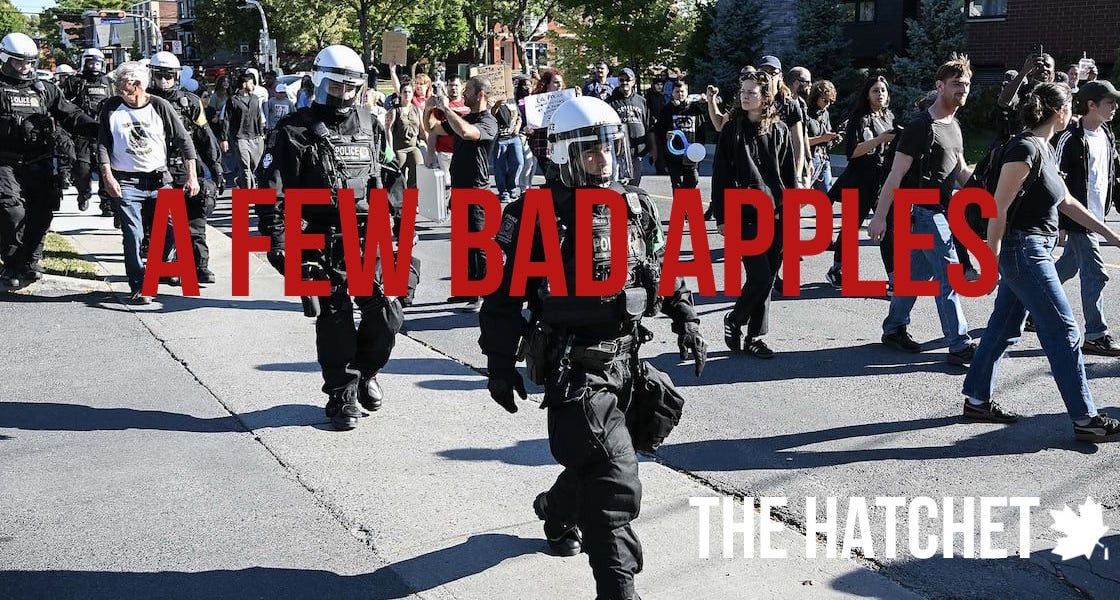
Federal government eliminating watchdog for Canadian companies’ abuses abroad
The Canadian ombudsperson for responsible enterprise (CORE) was not effective, Mark Carney argued, saying it had only completed a single investigation since its 2019 debut. The ombuds office's ex-leader said last year that companies were simply refusing its information requests. Advocates argue that CORE was “set up to fail” and “left to languish,” but should be empowered and funded — not shuttered.
MiningWatch Canada's co-manager told CBC that many affected people are now left hanging after reporting complaints to CORE, in good faith and at personal risk, after being told to by Canadian embassies. She said accountability is getting weaker amid the intensifying international rush for critical minerals — a competition also cited by Trump's former ICE overseer Kristi Noem in the announcement by Vancouver's NovaRed that it had hired her as an advisor.
 Amy Judd
Supreme Court ruled that Canadian companies can be sued domestically for foreign abuses
The 2020 ruling allowed Eritrean plaintiffs’ class-action case against Vancouver mining corp Nevsun for alleged slavery and torture. Nevsun quietly settled, and Canada adopted an anti-forced-labour law in 2024.
Canada recently said it is strengthening such rules; the US has been arguing that Canada is not fully enforcing their shared free-trade agreement’s rules on imports made with forced labour.
Latest major forced-labour complaint is about the US
A group of lawyers filed with Canada's Competition Bureau against companies such as automakers Kia Canada and Hyundai Canada. The group said this week that the companies used, and in some cases covered up, Alabama prison labour in their supply chains.
Newfoundland government accused of censorship after Innu Nation made to scrub its history from exhibit
Yesterday was National Indigenous Peoples Day, but in Labrador the day's planned launch of a major exhibition on Innu history never happened. The nation pulled out of the exhibit after members were told the government wouldn't allow any mention of Innu existence before 300 years ago.
The Labrador Friendship Centre and other Indigenous nonprofits spoke out against the province's use of what the nation calls a “fringe theory” that goes against accepted archaeological evidence “to suit the province's legal objectives.” The province deployed this 300-year timeline in a 2023 court case over caribou hunting, The Independent notes.
 Heidi Atter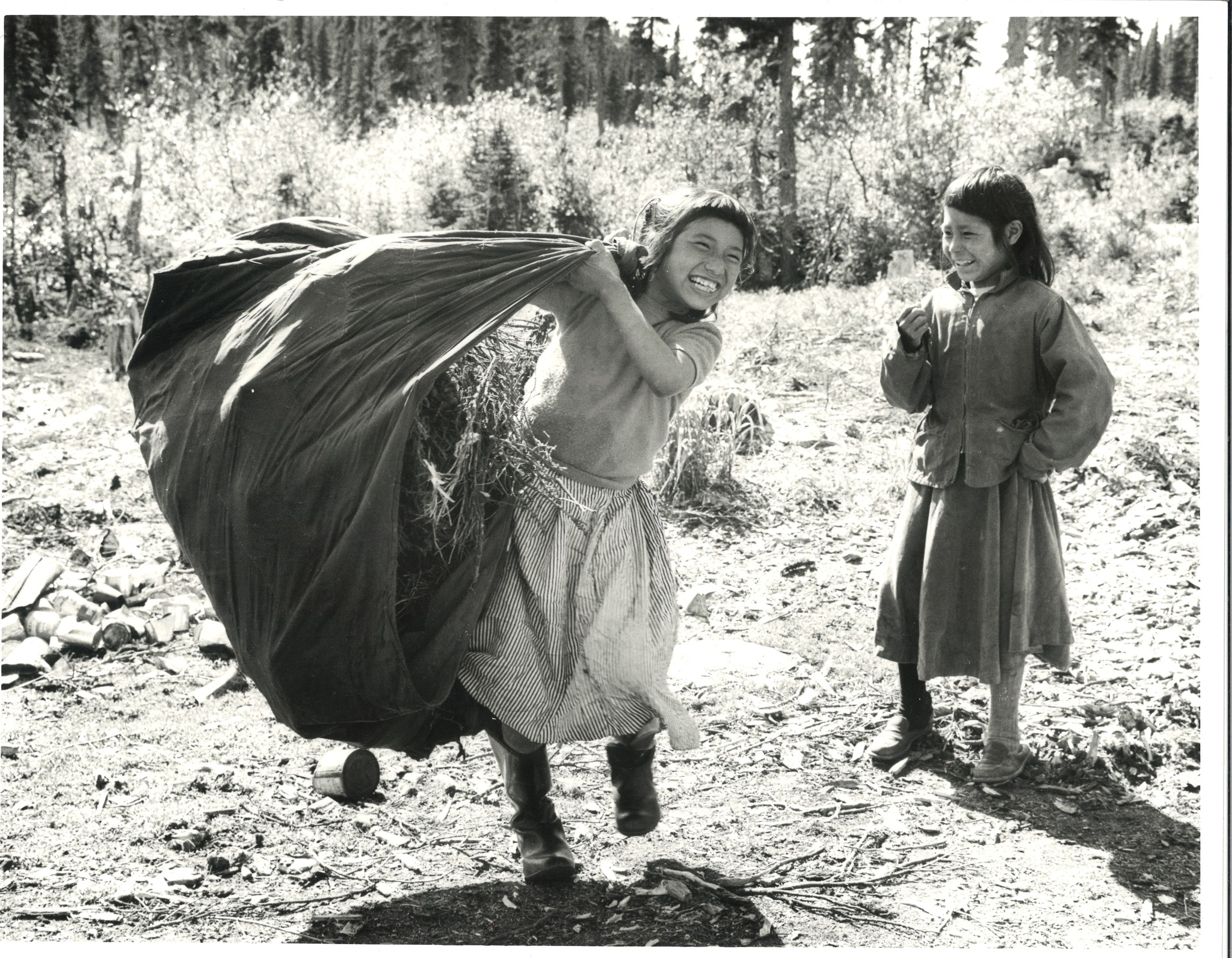
VicPD using $24K internal AI tool to ask policy advice
Search logs acquired by watchdog site NeedsMoreSpikes show officers asking for help with law enforcement approaches and with writing letters, requests, emails, and posts. Some searches also included personal information. Policy does not require officers to save their logs.
 author
More news:
- Safe consumption sites in Ottawa and Toronto close as province officially ends all funding. [CBC]
- New one-year deadline for refugee claims endangers LGBTQ2S+ people who were not initially out, advocates say. [Global]
- Thunder Bay police refusing to send releases to the reporter whose work led to charges for “militantly illegal police conduct.” [Ricochet]
- Unit launched to help Indigenous people with police-misconduct filings. [BC First Nations Justice Council]
- Youth and environmental groups sue over Carney's climate rollbacks, arguing they violate 2030 targets that were made legally binding in 2021. [CBC]

Correction (June 22): An earlier version of this newsletter mislabeled a photo of a post-CRAB Park encampment as from 2024; in fact, it was from a previous CRAB Park eviction in 2020.