POST FACTO: Top cop's West Bank trip. Anti-drug blitz risks. Feds’ secret contracts.
VPD's AI photo. World Cup visa rejections. BC mining firm's Trump loophole.
This week we begin our third month since launching this investigative reporting co-op. We’re honoured to have hit this milestone — and several fundraising goals — thanks to the support of our community of subscribers, the Defactors.
Major fundraising mark
We shot past $5,000 in contributions from 114 donating subscribers — and even more incredibly, we know we can depend on DOUBLE that amount in recurring donations over the coming year.
Thank you so much to everyone who gave, no matter how much!
New: Newsletter archive
And as we build out our website, we now have a page that collects all of the newsletters we've sent:
 De Facto Journalism Co-op
Upcoming stories
This week we’re working on several July stories, on issues including:
- the Drug User Liberation Front trial
- a high-profile deportation case
- Vancouver police transparency
- Transit police accountability
- Victoria bylaw sweeps
EX FACTO
News we're reading about subjects we cover.
Edmonton police chief toured Israel's illegal West Bank settlements
The Orchard's Jeremy Appel reports that the February 2026 Israel trip with US police chiefs included time:
- with an undercover unit that killed unarmed Palestinians last fall in what the UN called an apparent execution
- at a control centre for East Jerusalem's “automated apartheid” facial-recognition CCTV cameras
- in minimum $1,000/night Ritz-Carlton rooms
A major trip sponsor was Axon, the bodycam maker that partnered with an Israeli AI company for a facial-recognition pilot with Edmonton police.
The trip was unilaterally approved by the police commissioner, and internal communications obtained by The Orchard show there was an effort to avoid public attention. Dozens of local Muslim leaders and groups say the community has lost trust in the chief over the trip and his handling of the response, and want him to resign.
BC deep-sea mining firm may soon circumvent UN rules thanks to a Trump executive order
The order fast-tracks permits to mine outside US waters, amid a global race for billions of tonnes of deep-sea nodules rich in cobalt, nickel, and rare earth elements. As UBC geophysicist Cara James covers in The Conversation, Vancouver-based The Metals Company has applied for a US permit to mine nodules from an ocean floor area twice the size of Vancouver Island.
But those nodules lie in international waters — and mining them could cause Canada to breach international laws.
 Cara B. G. James
The Metals Company’s US subsidiary is among the first to use Trump’s loophole to move to bypass regulations Canada signed on to under the UN Convention on the Law of the Sea (UNCLOS). This convention — which the US argues it is not signed on to or bound by — forbids exerting sovereignty on international waters, or rights to minerals recovered in them. Most UN laws are typically unenforceable, but in the case of UNCLOS a disciplinary panel can impose fines or mandatory compliance on states that are parties to it (such as Canada).
Two lawyers analyzed Trump’s executive order, and the potential consequences and obligations for Canada and other countries, for the European Journal of International Law:
 Toby Fisher
Community groups fear fallout of Winnipeg police’s 10-day blitz against public drug use
At Friday's launch conference, Winnipeg’s police chief insisted the blitz is “not criminalizing addiction” and is focused on deterrence — even as another officer said there will be a “zero-tolerance approach” in which “people found consuming drugs will be detained.”
Multiple organizations criticized police on Friday for not consulting with front-line groups, and flagged the health risks of deterring access to services. Their release said that workers saw officers smashing harm-reduction supplies — despite the city's drug-poisoning crisis and active HIV-transmission state of emergency. It also flagged the opportunity cost of using resources on police foot patrols when 911 response times are a concern and funding for outreach work has been reduced.


The blitz, which targets particular areas, follows pressure from businesses and is endorsed by the mayor. Police reported that in the first days they had “interactions” with 100 people using drugs, and arrested 25 — mainly for warrants or breach of conditions — while taking several others to detox or hospital.
Drug sweeps and seizures tend to correlate with increased risk of toxic drug death, by disrupting the supply and the conditions of use.
Feds gave $5.4B in secret procurements last year
At least 1,896 contracts were marked “not for public disclosure,” the Investigative Journalism Foundation reports, with some exempted from usual transparency under “national security exceptions” (NSEs).
Canada's undisclosed contracts have included extensions to a military data deal with Palantir that has reached $47 million and counting. Part of the justification for that sole-source secret deal was that few companies worldwide offer similar data services – but one, DataWalk, told the IJF it would have been interested had it known.
The federal procurement ombud says it is monitoring NSEs, but is not advised of all undisclosed deals. That ombud recently released a report recommending faster and streamlined defence contracting — which is largely already happening through a new agency, the DIA — but also greater transparency and oversight of implementation.
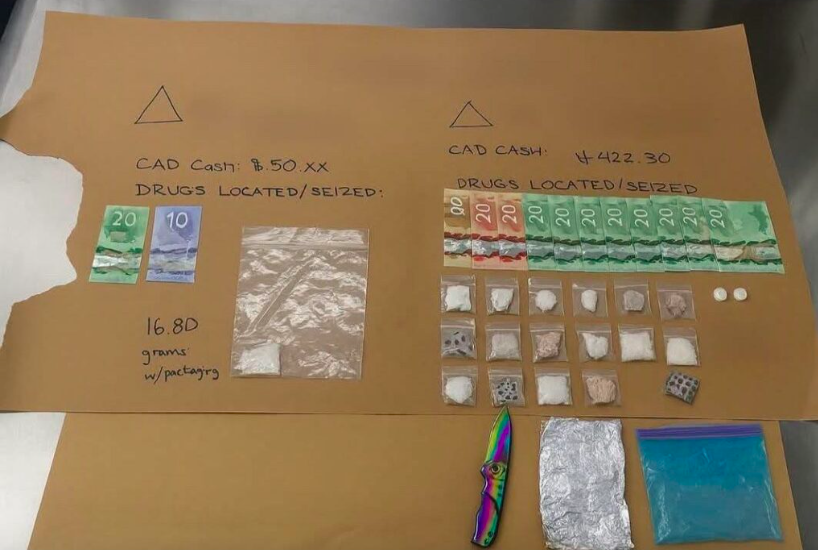
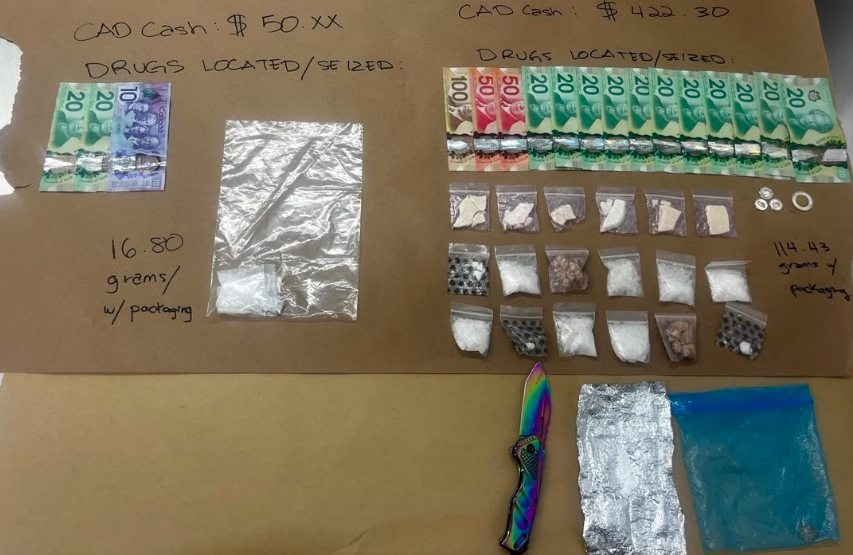
VPD posts, then removes, AI-altered photo of alleged drug-trafficking evidence
Obvious alterations — such as blurry bills that read “20” on $50s — drew an influx of public criticism to the post, which recapped an enforcement push near Commercial and Broadway and specifically mentioned welfare cheque week. An expert told CityNews that BC does not have the laws on government use of AI imagery that some provinces have brought in.
Ontario's housing ministry admitted internally that target of 1.5M new homes would not be reached
Hundreds of handwritten internal notes from late 2024, obtained by Global, show that bureaucrats conceded Doug Ford's 2022 campaign promise was not possible and cautioned against reiterating it or promising any more homes.
Canada rejected 59% of World Cup tourism applications, with stark disparities between countries and regions
Ghana had the most applications but saw just 11% approved ahead of its match in Toronto. Columbia was second-most and had 69% approved despite no game in Canada. Overall, acceptance rates were high for Europe and South America but low for Africa, the Middle East, and South Asia. Canada approved 96% of electronic travel authorizations (which are used mainly for European and English-speaking countries) but just 32% of visas. [CTV]
More news:
- Alberta looks at taking over voluntary treatment and detox beds for involuntary programs. [IJF]
- Canada privatizes photonic chip manufacturer, in another sign of the influence of the anti-regulation tech group Build Canada. [The Tyee]
- New complaints filed about profiling at Montreal North police station embroiled in racism scandal. [Pivot]
Happening this week:
- A Victoria councillor filed a motion for Thursday that calls to close the city's only safe consumption site. A nearly identical motion failed last year, and several other councillors have said they will not support this motion.
- Today is the last day to submit input to the federal consultation on 2027-2029 immigration levels.
- Alberta will launch new driver's licences on Thursday that include health number and citizenship status, raising privacy and discrimination concerns.
IN FACTO
Our corrections from last week
Last week’s photo of an encampment was captioned in the email as being from after the 2024 CRAB Park eviction; it was in fact from after a previous CRAB Park eviction in 2020.