How a Mexican woman’s 2013 death in custody of Canada’s ‘de facto ICE agents’ sparked a movement
Detained at a transit fare check, Lucía Vega Jiménez died awaiting deportation back to a violent ex-boyfriend. An inquest revealed shocking details

Content note: This story contains details of suicide and gendered violence. Canada’s Suicide Crisis Helpline offers support by phone or text at 9-8-8.
Lucía Dominga Vega Jiménez was 42 when she arrived at Vancouver’s Main Street-Science World SkyTrain station after working a hotel cleaning shift.
It was Dec. 1, 2013, and Vancouverites were starting to shop for the holidays.
But when Transit Police stopped Vega Jiménez without proof she’d paid her $2.75 fare, an officer heard her Mexican accent.
“With that, I could tell she wasn’t originally from Canada,” Const. Jason Schuss testified ten months later. “That’s the reason I tried to identify her.”
So he reported her to the Canada Border Services Agency (CBSA).
By Christmas Eve, Vega Jiménez would be dead, after hanging herself in a CBSA holding cell hidden deep within Vancouver’s airport.
“She was unconscious when I visited her in the hospital,” Rev. Eduardo Quintero, of Vancouver’s Our Lady of Sorrows Catholic Church, told this reporter a month later.
Before the 42-year-old was taken off life support, the priest administered her last rites at Mount Saint Joseph Hospital, with her sister beside her.
“Policies have pushed people to the point of doing unthinkable things,” Quintero reflected.

‘Non-compliance issues’
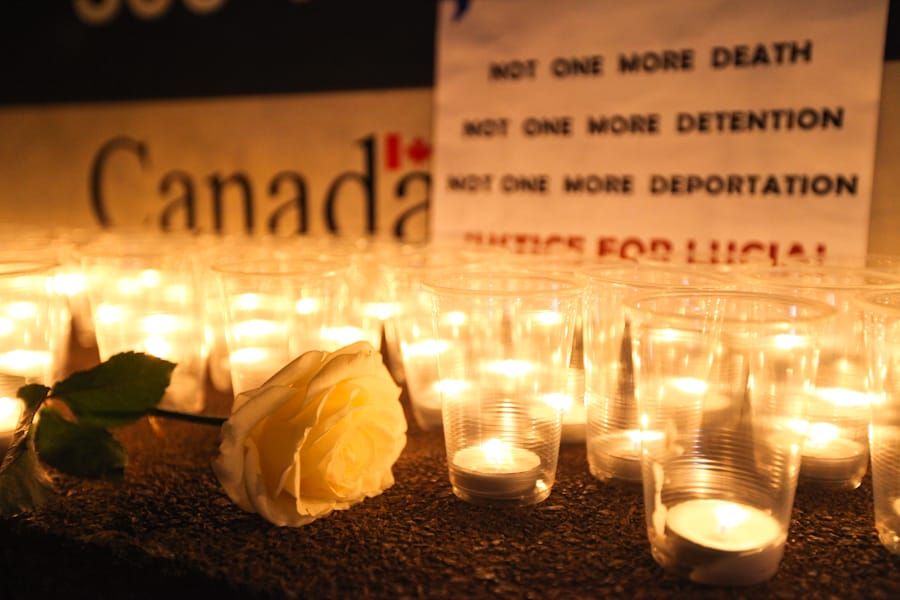
Vega Jiménez’s 2013 suicide, first revealed in 24 Hours and Toronto Sun newspapers, set off a cascade of vigils, protests, petitions, Official Opposition outcry, calls for an inquiry — and ultimately a BC Coroner’s inquest over a year after her death.
That seven-day proceeding — in which a jury examined the circumstances that led to Vega Jiménez’s death — shocked many members of the public and media.
Not only because Transit Police admitted they’d turned her over to CBSA because of a Spanish accent, instead of simply issuing her a fare-evasion fine.
It was entirely public pressure that brought her death to light, that shone the spotlight on the CBSA, and the public was demanding answers.
– Neil Chantler, Chantler & Co. Law
But also because it lifted the veil from immigration enforcement practices that had gone largely unreported and unnoticed in Canada, and which saw Transit Police notifying CBSA about a public transport rider almost every single day.
The inquest was a vital chance to finally get to the truth, recounted Neil Chantler, one of the lawyers who represented the BC Civil Liberties Association as an intervenor at the Coroner's inquest.
“It was only because of the dogged work of journalists and her community asking questions as to where she was, that the fact of her death became known,” Chantler told De Facto 13 years later. “It was entirely public pressure that brought her death to light, that shone the spotlight on the CBSA, and the public was demanding answers.
“Undoubtedly, that had some impact on the Coroner’s decision to call the inquest.”
Revelations included that the Vancouver airport Immigration Holding Centre (IHC) was actually contracted out to private guards with Genesis Security — and that on the day of Vega Jiménez’s death by suicide, the guards had falsified their cell-check records.
READ MORE:
 De Facto Journalism Co-op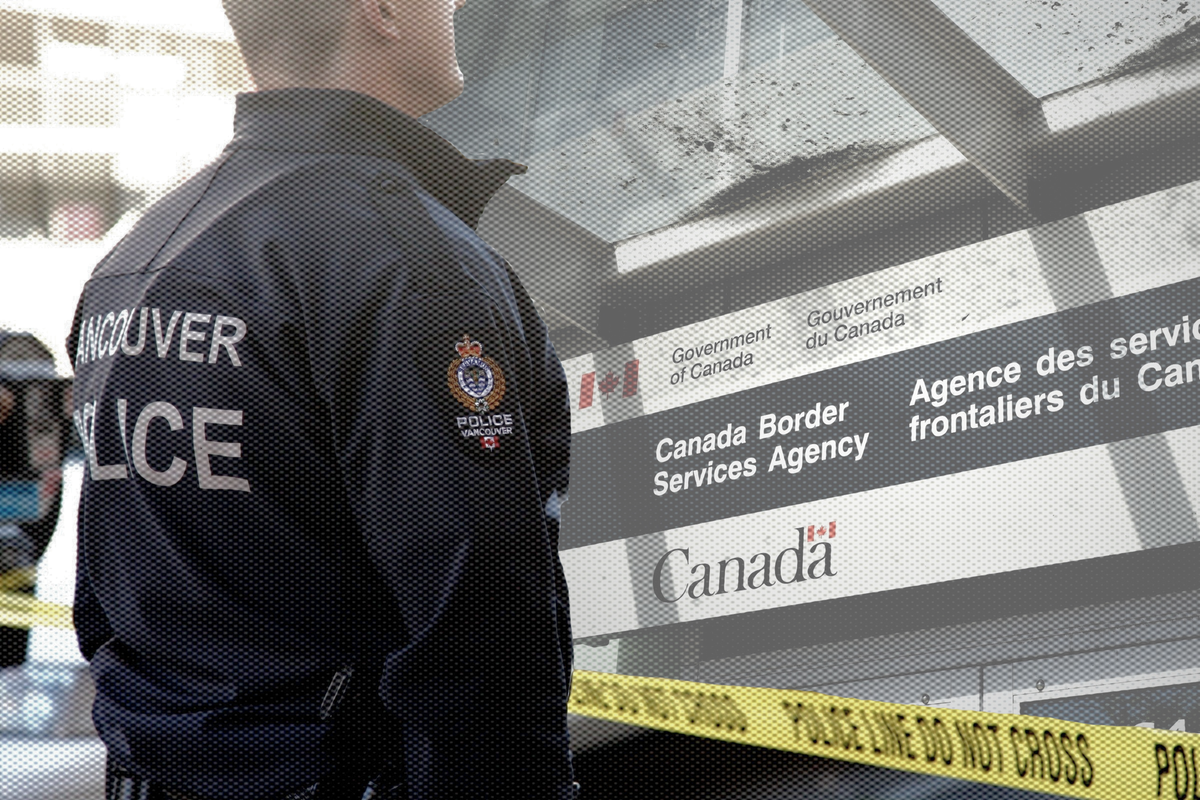
An access-to-information request filed by The Canadian Press also revealed that the Canadian Red Cross Society (CRCS) had inspected the facility six times between 2012-13.
The humanitarian agency confidentially warned CBSA that its IHC detainees “are at an increased risk of developing or exacerbating mental health issues, particularly persons who have experienced trauma.”
It found “non-compliance issues with regard to both national and international standards” including “mental health in detention” and “legal guarantees.”
“In the BC IHC there are no mental health services on hand,” the internal Red Cross report warned. “The CBSA must ensure that all immigration detainees, regardless of detention location, have access to appropriate mental health services.
“The CRCS continues to encourage the CBSA to work diligently to improve the detention environment.”
Support independent journalism that boldly shines a light on law, justice and rights. Sign up or donate today
CBSA said that it had “augmented oversight and monitoring” of the jail after Vega Jiménez’s suicide, and made changes to "reduce the risks for self-harm.”
While the agency retained private security guards, CBSA said these guards must now get “enhanced training, including suicide and self-injury prevention."
But calls to CBSA from local police continued to pour in the decade after her death. In that time, forces across the Lower Mainland made similar “immigration status checks” more than 7,000 times, De Facto has learned — with 15% of those calls alone in 2024, the most recent year of data.
‘Heartbreaking to find out more details’
Vancouver nurse Byron Cruz remembers the day he learned of Vega Jiménez’s death on Dec. 24, 2013.
“It was through the community on Facebook that I realized someone died in prison detention,” he recalled. “Then I started to talk to people, and finally we got more information.”
In the early 1990s, Cruz fled political repression in his country, Guatemala, and in 2011 he helped found the Sanctuary Health Collective in Vancouver.
For many undocumented migrants and temporary foreign workers in BC, he has become an essential and trusted contact in emergencies over the years.
Information about Vega Jiménez’s suicide slowly emerged — including what Rev. Quintero alleged to this reporter was a “non-disclosure agreement” CBSA asked Vega Jiménez’s sister to sign at the hospital, while she was on life support.
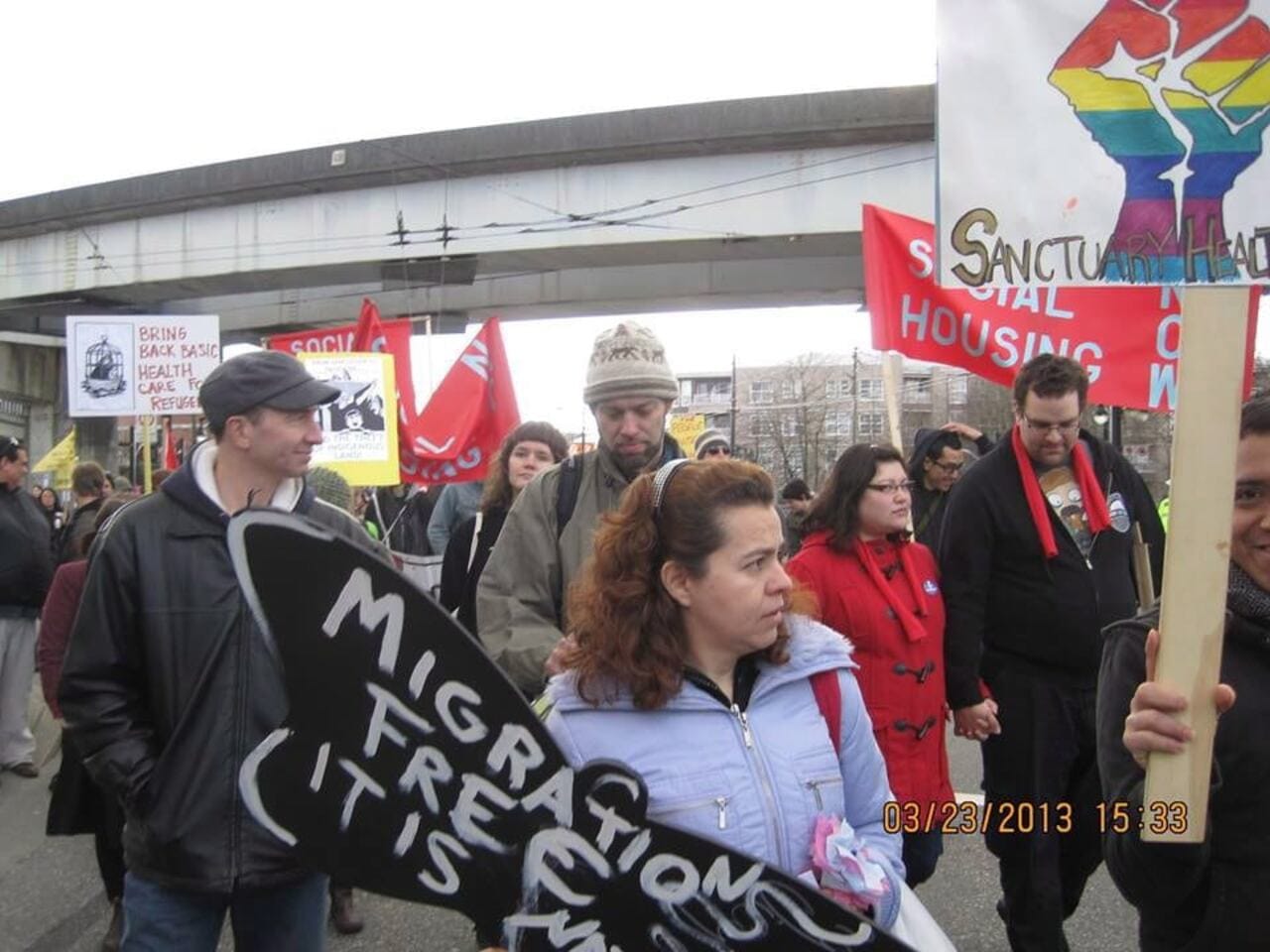
Lucía was actually involved in the antiracism march that used to happen every year on March 21. We have a photo of her marching.
– Alejandra López Bravo, Sanctuary Health Collective
But CBSA insisted it “never requested a confidentiality agreement from the family. Allegations that the CBSA attempted to conceal information are false.”
“It was not only shocking, but it was heartbreaking to find out more details about her death,” recalled Sanctuary Health co-founder Alejandra López Bravo.
She wonders if anyone would ever have known the 42-year-old had died, if she hadn’t been plugged into Vancouver’s Latin American community.
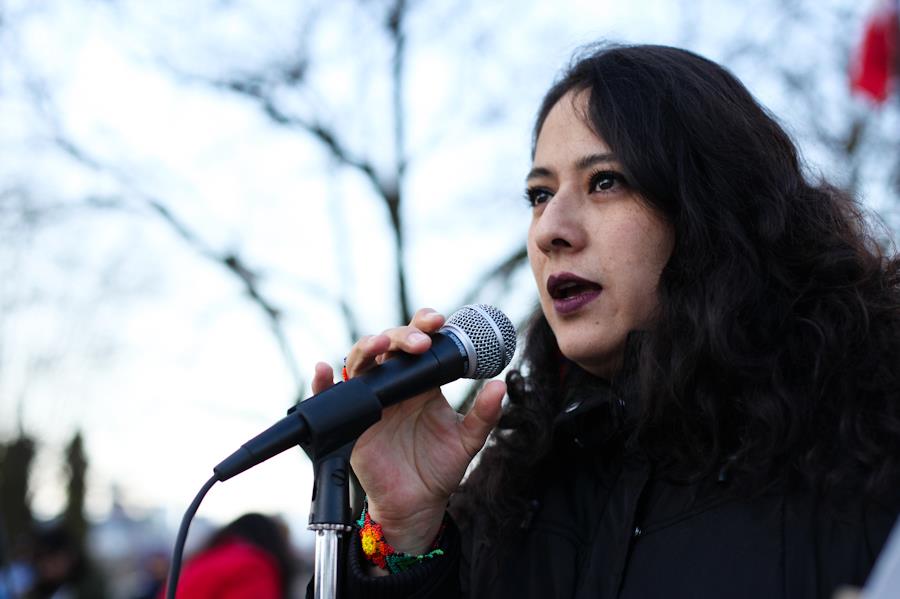
“Lucía was actually involved in the antiracism march that used to happen every year on March 21,” López Bravo said, referring to rallies once held on International Day for the Elimination of Racial Discrimination.
“We have a photo of her marching at Clark Park.”
Shining a public light on abuses
The tragedy became public roughly a month later, when 24 Hours and the Toronto Sun broke the story on Jan. 27, after receiving a tip from Surrey journalist Karla Lottini — who had herself fled threats in Mexico.
“She attempted to take her life because she was in desspair at her deportation order,” said Lottini at the time.
“I can imagine the despair in that situation … a lot of people are coming here to save their lives.”
The tip was corroborated by BC Coroner’s spokesperson Barb McLintock, who confirmed “she had been taken to hospital in the early morning hours of Dec. 20, 2013, from the Canada Border Services Agency holding cells at Vancouver International Airport.”
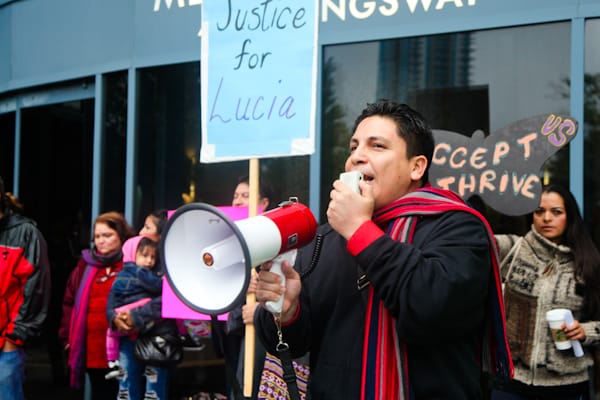
Four days after the story broke, migrant rights organizers with No One Is Illegal (NOII) called for a vigil outside CBSA’s offices in downtown Vancouver, which at the time hosted their own detention cells above the Vancouver Public Library.
NOII organizers Hasan Alam and Shireen Soofi announced the vigil and wrote a call to action on Jan. 31.
“Her relatives and her friends spoke to the fact that this woman was so scared of being deported back home because of the threat of torture, and all types of persecution that she was facing,” Alam, who today is a labour lawyer and president of the BC Civil Liberties Association, recalled in an interview with De Facto.
“Her case really mobilized community organizations — such as No One Is Illegal, the BC Civil Liberties Association, the Migrant Workers Centre, a host of organizations — to call on the government to take action.”
A lot of people with precarious status actually came forward ... This was just one small story of the vast amount of undocumented people who are often living in fear.
– Hasan Alam, President, BC Civil Liberties Association
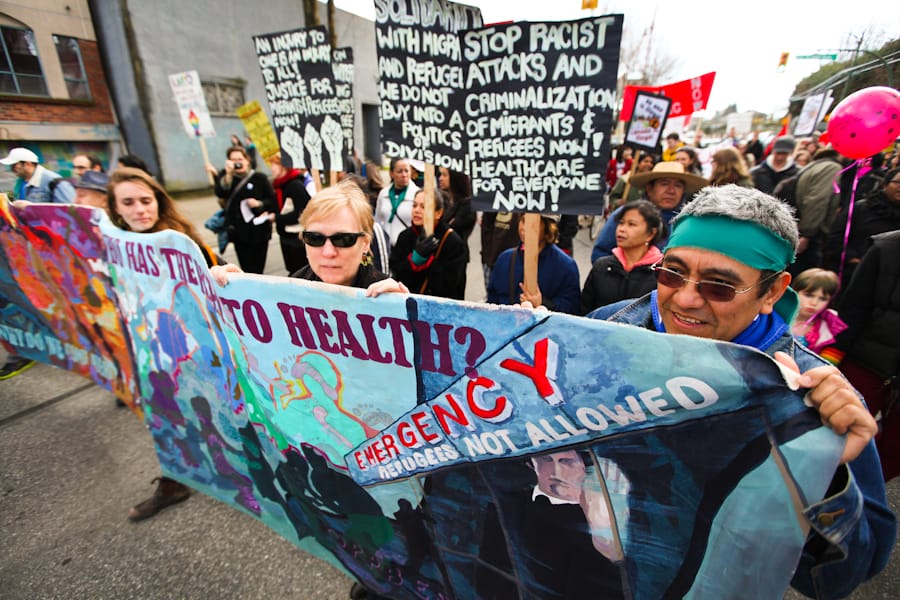
Within two months, the activists would organize the largest March 21 anti-racism march the city had seen in decades — and Vega Jiménez’s tragedy became “a central part” of the event, Alam recalled.
“It was a really amazing moment, because a lot of people with precarious status actually came forward,” he added. “This was just one small story of the vast amount of undocumented people who are often living in fear.”
As undocumented migrants spoke out that day, Alam remembered them saying things like, “I don't have status, but I have this community backing me; I'm going to come forward and talk about my story.”
‘Fear of torture and murder’
As community vigils, protests, and calls for a public inquiry progressed over the coming months, so too did the Coroner’s own internal investigation.
Chantler and another prominent human rights lawyer, Jason Gratl, were hired to represent the BC Civil Liberties Association, which was granted intervenor status at the proceedings scheduled for late September 2014.
Chantler knew that even though inquest juries can’t assign legal blame in deaths they investigate, they can make recommendations on how to prevent similar incidents from happening again.
And most importantly, Chantler explained, the Coroner would have the power to force witnesses to testify under oath.
“And that is different, of course, from any criminal investigation that might take place where witnesses might exercise their right to silence and to not incriminate themselves,” he said. “An inquest is a fairly unique process in the powers that the Coroner has to compel evidence.
“It was an excellent use of a Coroner's inquest to expose a system that we very rarely get to look into.”
The inquest heard from 29 witnesses over several weeks in fall 2014.
In the end, even though the Coroner and jury could not assign legal blame for Vega Jiménez’s death, their verdict was viewed by many experts as a scathing indictment of the CBSA’s deportation and detention regime.
Presiding coroner Margaret Janzen concurred with cellmates of the 42-year-old who testified “that she was afraid to return to Mexico for fear of torture and murder.”
The verdict also cited an expert witness’s testimony that Vega Jiménez’s “words ‘tortured and killed’ suggested that a group, possibly a cartel, was involved,” Janzen noted.
“Vega Jiménez asked a nurse … to document a number of scars which she stated she suffered as a result of abuse.”
For Chantler, her numerous failed attempts to file deportation appeal documents and get medical and psychological help should have raised red flags — and served as a wake-up call given the prevalence of gendered violence.
“Her particular circumstances — fleeing domestic violence and being deported back to the environment that she had fled — are probably all too common,” he said.
“It's just a terribly sad reality that many people can't access the kind of help and support and safety that they need when they come to a country like Canada in search of a better life.”
The verdict also took aim at CBSA outsourcing its jail to private guards with Genesis Security — the same company that patrols Rogers Arena.
It's just a terribly sad reality that many people can't access the kind of help and support and safety that they need when they come to a country like Canada in search of a better life.
– Neil Chantler, Chantler & Co. Law
“Private security guards contracted to staff the IHC were not trained to the level of the CBSA employees and there was a high staff turnover, possibly due to low wages,” presiding coroner Janzen concluded. “CBSA supervision appeared to be sporadic.”
“There was a significant disparity between what the guards were contracted to do and what actually was being done.”
Chantler told De Facto that “disparity” was a glaring departure from “standard practice” in legal detention — the failure to “suicide-proof” cells, falsifying of room checks, the amount of time she was left alone in a bathroom, and the fact that a ligature was available to her.
“The facts surrounding how she was allowed to die were quite shocking,” he said.
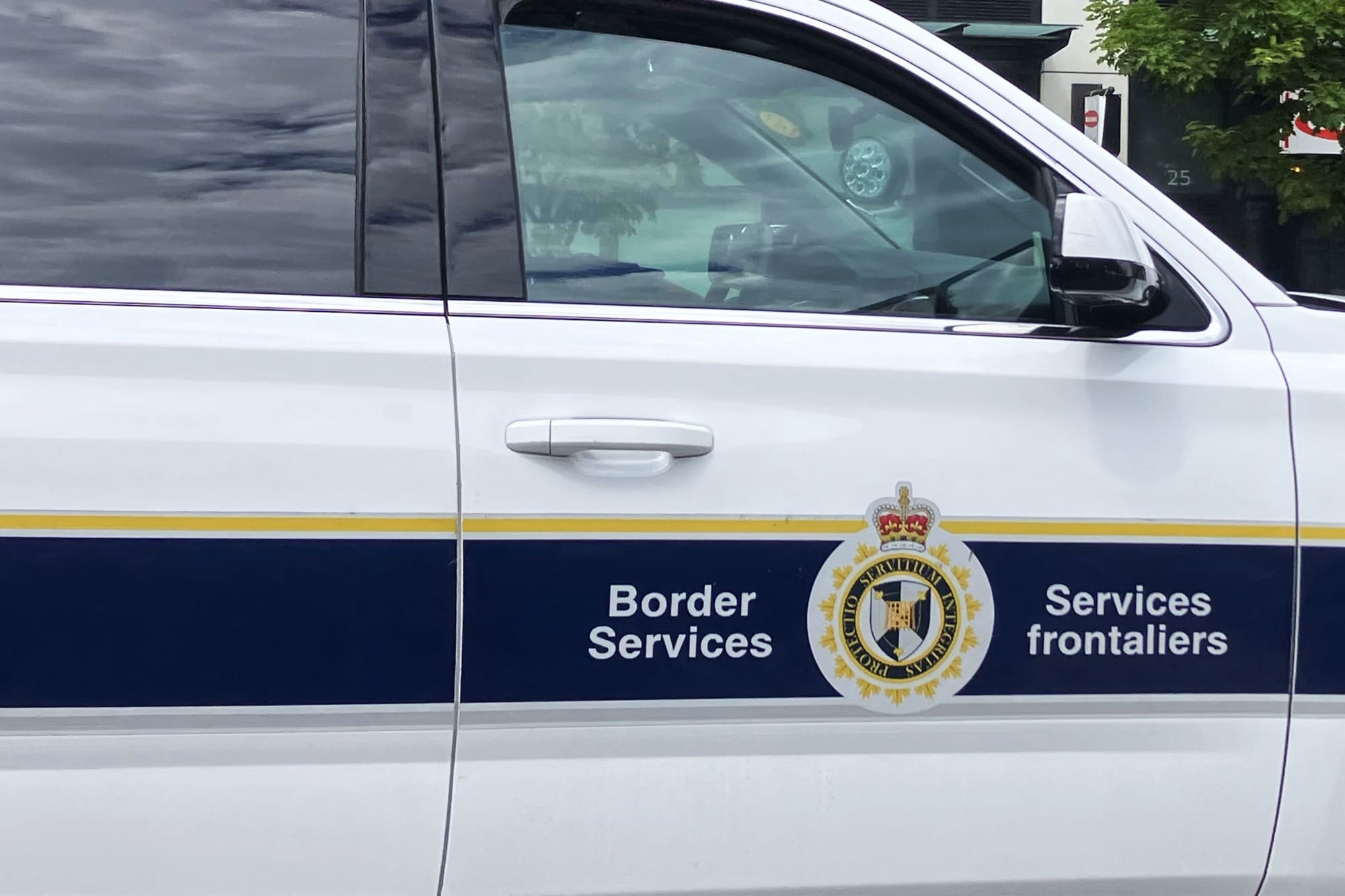
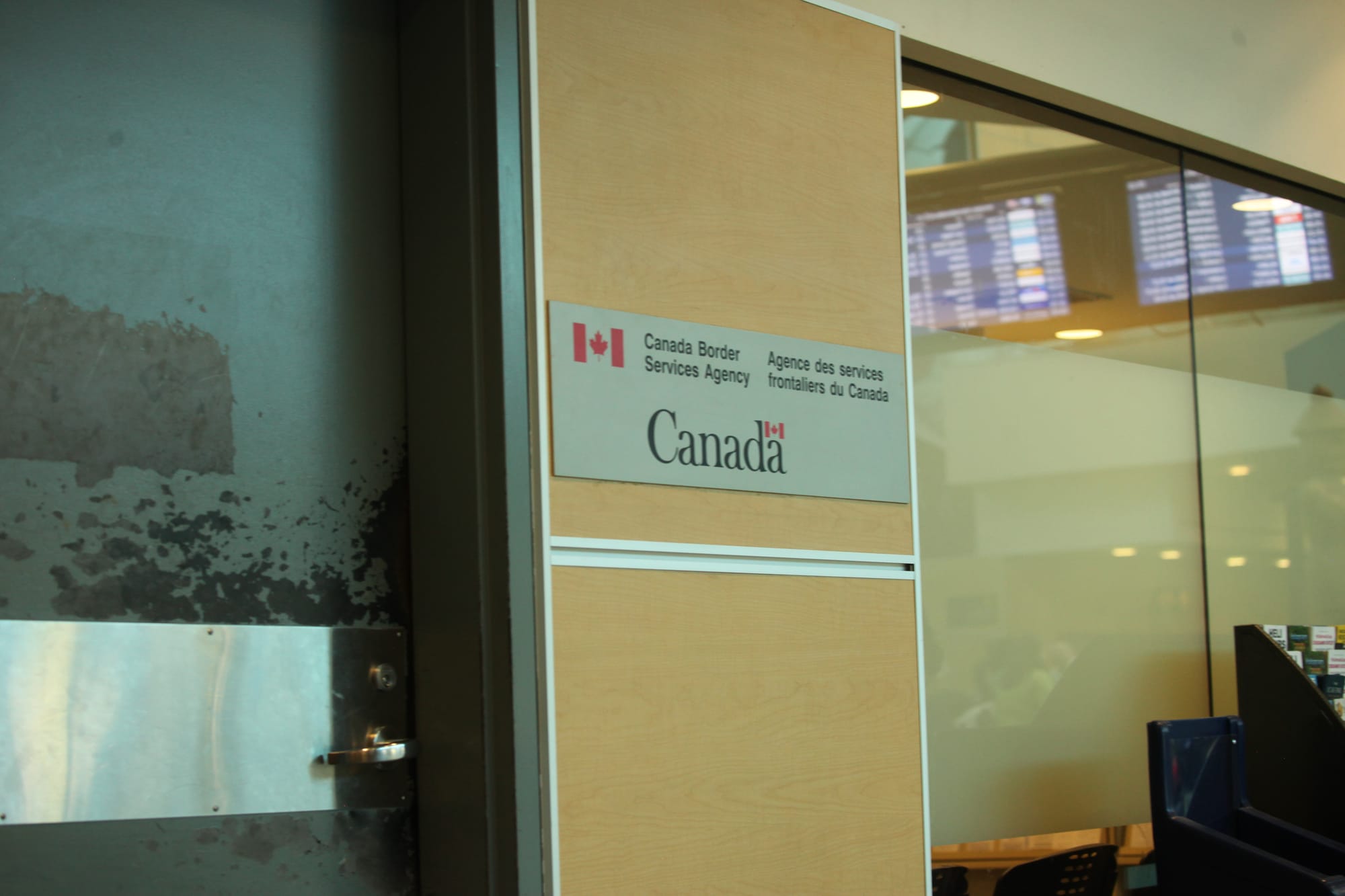
A Canada Border Services Agency vehicle in downtown Vancouver (left); CBSA's office in Vancouver International Airport. Photos by David P. Ball/De Facto
‘CBSA intentionally concealed this death’
The inquest jury called on CBSA to open a new holding centre “staffed solely by CBSA,” where detainees would have “access to legal counsel, medical services, NGO's, spiritual and family visits.”
The presiding coroner also called out the lack of watchdog over CBSA’s detention regime, noting “there was no independent, realistic method for immigrants to bring forward concerns or complaints.”
The jury urged Ottawa to “appoint an independent Ombudsperson to mediate any concerns or complaints put forward,” plus to “create a civilian organization to investigate critical incidents in CBSA custody.”
Chantler recalled that the most shocking revelation to him from the proceedings was that “CBSA had actually intentionally concealed this death.”
“Documents were revealed in the inquest that illustrated the efforts they went to cope with this tragedy without it becoming public,” he told De Facto. “The conditions that people were held in were abysmal at YVR.
“People have been calling for oversight of the CBSA for decades, and I think the government certainly has some answering to do for this still-existing lack of oversight.”
The fact that she had access to no support — no lawyer, nobody even knew that jail existed — was shocking on so many levels, and infuriating.
– Alejandra López Bravo, Sanctuary Health Collective
For organizer López Bravo, the inquest was a wake-up call for the public and media, increasing the pressure on leaders to do something.
The proceedings made public all the minute details of how Transit Police “were racial profiling,” she said, and as well as Vega Jiménez’s many unsuccessful attempts to file paperwork about her domestic violence fears — “trying to get status, being unable to claim asylum … fearing deportation because of the real threat to her life.”
“I thought I couldn't be shocked any more by things in the Canadian government and policing system,” López Bravo recalled.
“But the fact that she had access to no support — no lawyer, nobody even knew that jail existed — was shocking on so many levels, and infuriating.”
‘Access without fear’
Calling a Coroner’s inquest wasn’t the only demand of Vancouver’s migrant rights movement.
As vigils, petitions, and protests gained steam, organizers continued their long-standing efforts for governments to offer public services to migrants without reporting them to border agents.
Vega Jiménez’s death added new urgency to the campaign, spearheaded by groups such as Sanctuary Health and No One Is Illegal.
While some US cities have declared themselves “sanctuary cities” for undocumented immigrants, Canadian municipalities have far fewer powers, with immigration falling under federal jurisdiction.
The city can try to make it easier for you to access medical care or to access services without full identification.
Zool Suleman, Suleman & Co. lawyer and executive director of StopRacialProfiling.ca
“The term ‘sanctuary city,’ which is quite prevalent in America, has a different meaning,” explained immigration lawyer Zool Suleman, who said in Canada a city “cannot protect you from immigration laws.”
“But the city can try to make it easier for you to access medical care or to access services without full identification.”
Based on that idea of “access without fear” to public services, advocates found a sympathetic ear from the City of Vancouver’s government at the time.
Their point person on city council was Geoff Meggs, a former labour journalist who would later go on to become chief of staff to late BC Premier John Horgan.
He was among many shocked into action by Vega Jiménez’s suicide.
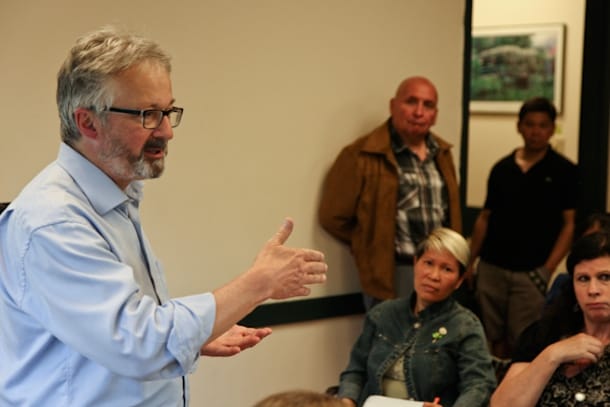
“People were outraged,” he told De Facto. “It was a heartbreaking story, and she'd done nothing wrong except try to have a better life.
“It actually struck me very hard. She had actually fled a domestic abuse situation from someone involved in organized crime. She had a belief that they knew enough people to hunt her down if she got sent back. So she killed herself.”
He remembered how much he learned quickly about asylum seekers and other migrants, and realized there was a “complete patchwork” of awareness about barriers they face accessing essential services.
“I had never been exposed to all of the realities of immigration,” Meggs recalled. “I realized that documented or undocumented people with precarious, uncertain or temporary status were contributing enormously to the economic success of the economy … and we've all liked the fact that they came here to work for so little.
“The city has no direct responsibility for immigration, but immigration has a profound effect on how the city grows and changes.”
City services should be delivered without regard to immigration status. That meant that we supported the right of immigrants — regardless of their status
– Geoff Meggs, former Vancouver City Councillor
With the support of Meggs and then-mayor Gregor Robertson, the city embraced the “access without fear” approach.
“We weren't seeking to subvert or undermine or contradict immigration laws,” Meggs said.
“We wound up saying that city services should be delivered without regard to immigration status. That meant that we supported the right of immigrants — regardless of their status — to have their kids go to school, because that's just good for everybody.”
It also meant pledging that nobody would ask for proof of citizenship or residency while checking books out of a library, attending programs at a community centre, nor during building inspections, for example.
Soon, senior officials in the Vancouver Police Department were in talks with advocates, in hopes they would commit to only enforce immigration laws if there was other crime involved.
Getting VPD to commit was trickier, advocates recall.
“They did have their concerns about, obviously, when dealing with a significant criminal issue or significant emergency to which identity or status was an important issue,” Suleman said.
“Then, of course, they would continue with their investigation and make inquiries.”
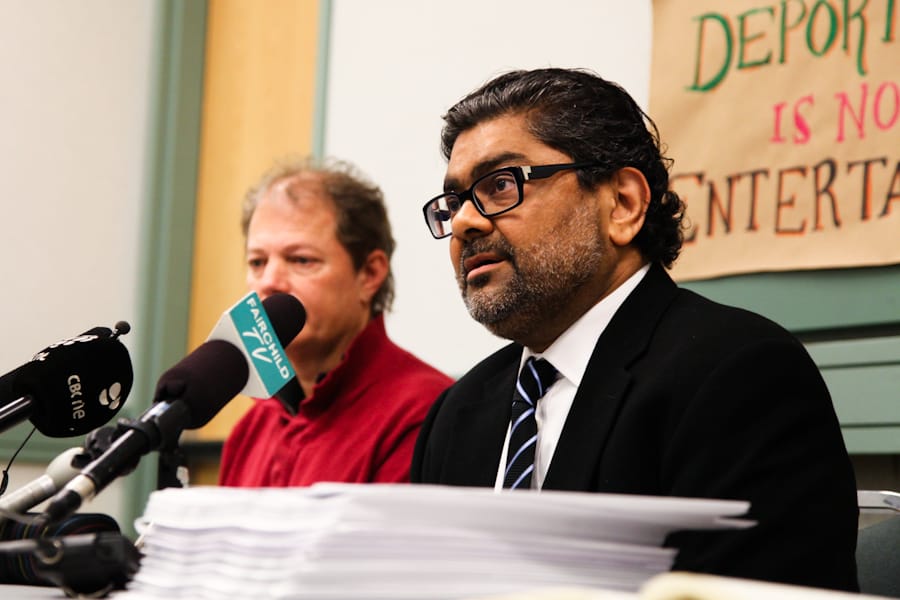
In the end, the force’s leaders ended up “actively saying that they would respect ‘access without fear,’” Suleman recalled. “Unless there was an emergency or something very serious going on, they would not inquire about status, but rather deal with the needs of the person in front of them.”
This was a huge victory for the migrant rights movement.
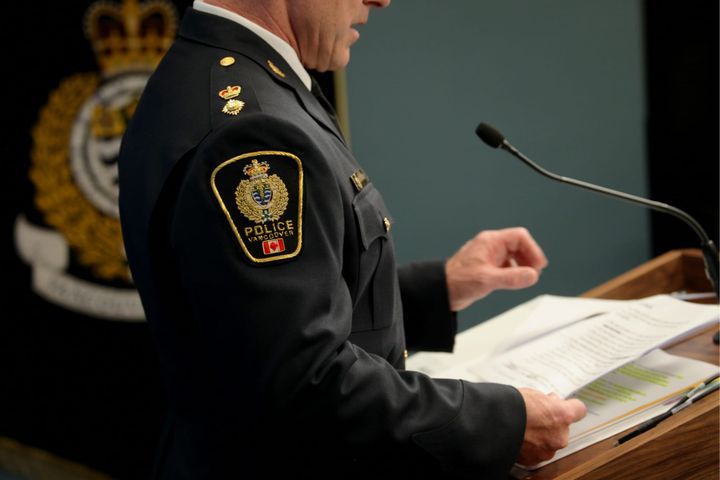
After public pressure, municipal leaders’ encouragement, and the Coroner’s inquest, Transit Police announced it was ending its controversial agreement to help CBSA.
“I can't stress enough the community mobilization that we saw in that moment: people from all different sectors coming together to mobilize against this — people from the legal sector, educational sector, health care workers showing up to meetings,” Alam said.
“The severing of the ties as a result of that mobilization between the CBSA and Transit Police … and just the public awareness around this was really huge in that moment.”
Lucía’s legacy and impact endures
Alam believes the tragic injustice of Vega Jiménez ultimately led to real change.
“I think it would have been an unspoken marginal issue that was happening in the shadows, where people were too scared to speak up against it,” he told De Facto. “Tragically, it was her taking her own life which really brought this to the forefront.”
López Bravo agrees that her death was a catalyst for a movement.
“Unfortunately, it started with a tragedy,” she said. “But it brought a lot of people together that were angry.”
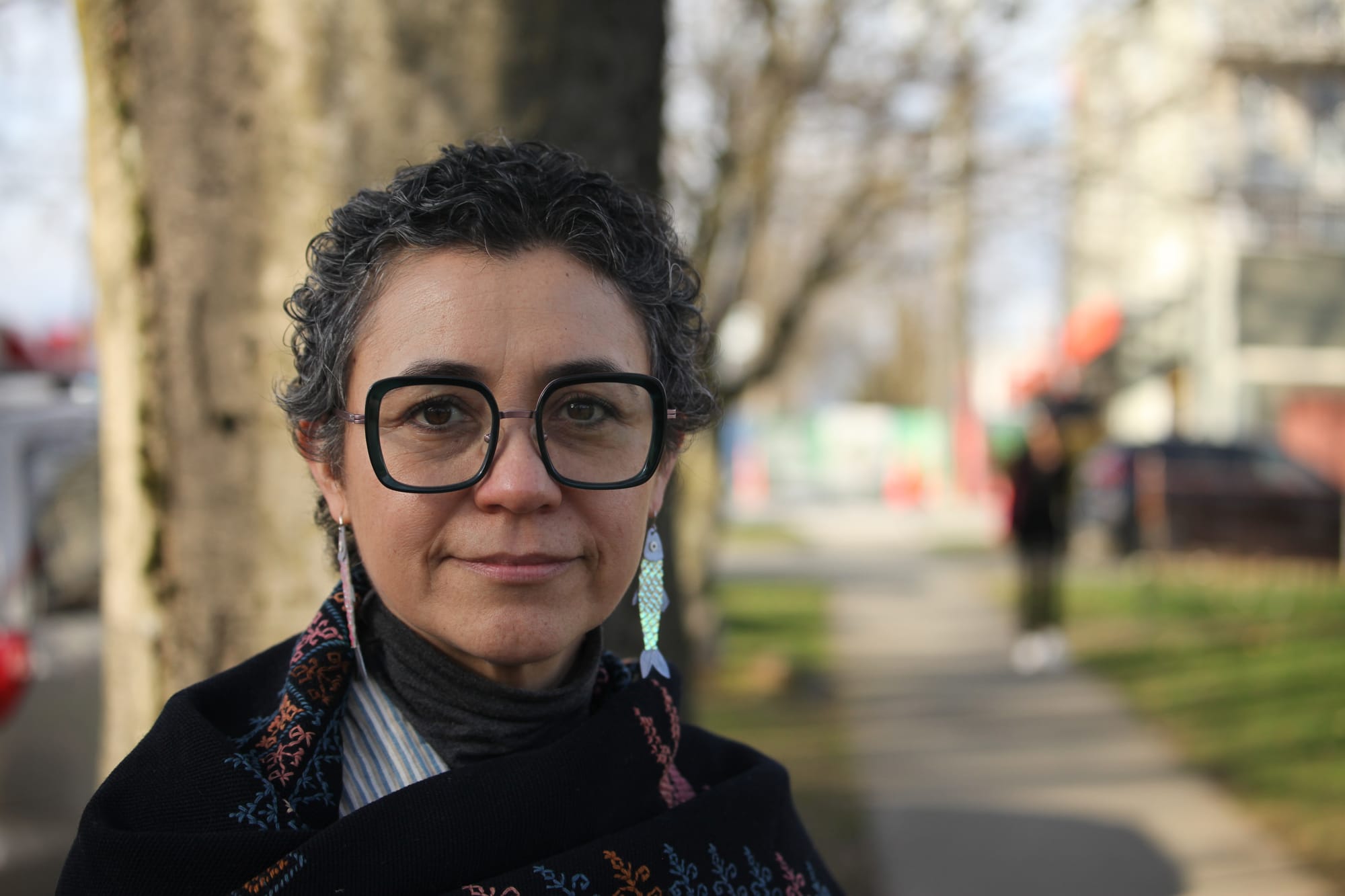
“It was a really beautiful moment where you saw community coming together and really doing something tangible,” Alam added. “But it has fallen off people's radars.
“And now ICE and its actions in the States south of the border have dominated the headlines. In reality, these things do in fact happen at our doorstep.”
Alam expressed dismay seeing the new data obtained by De Facto — proving that in the last decade, more than 7,000 Metro Vancouverites have been called in to CBSA by Metro Vancouver police forces.
And the rates of immigration status checks by municipal officers have increased to nearly three people a day in the most recent year’s data available.
These are wild statistics that show a real trend ... We need to be more public about this. The public needs to know.
Hasan Alam, President, BC Civil Liberties Association
“These are wild statistics that show a real trend,” Alam said. “Our law enforcement agencies are playing a direct role in reporting these individuals to the CBSA.
“We need to be more public about this. The public needs to know.”
Whether data or tragedies are enough to once again galvanize the public and politicians into action is another question, López Bravo reflected.
She hopes the death of Vega Jiménez will not be forgotten.
“Unfortunately, it's still so relevant today,” she said. “We're moving in a direction where it's normalized to be just xenophobic and racist, and to blame migrants for every gap in the social infrastructure.
“But the fear of detention and deportation is real — and has life-and-death consequences.”

Editor: Brishti Basu. With files from Dustin Godfrey and Emma Arkell.
Correction (May 4): An earlier pullquote in this story misstated Zool Suleman's law firm; it is Suleman & Co., not Edelmann & Co.
David P. Ball
David (he/him) is a De Facto member and a reporter, editor, podcaster and photojournalist based in Vancouver, BC, on Sḵwx̱wú7mesh, xʷməθkʷəy̓əm, and səlilwətaɬ territories. He has worked in media for more than 25 years, including as staff reporter at CBC News, TorStar, and The Tyee, and has been published in The Globe and Mail, Agence France-Presse, Al-Jazeera, VICE, and National Post. He's won awards from the Canadian Association of Journalists, Jack Webster Foundation, and Canadian Journalism Foundation. Read his reporting