Transit Police are calling border enforcement more — but you wouldn't know that from their own records
In 2024, Metro Vancouver transit cops’ immigration calls reached their highest in a decade. But not even a tenth of them went into daily duty reports as required
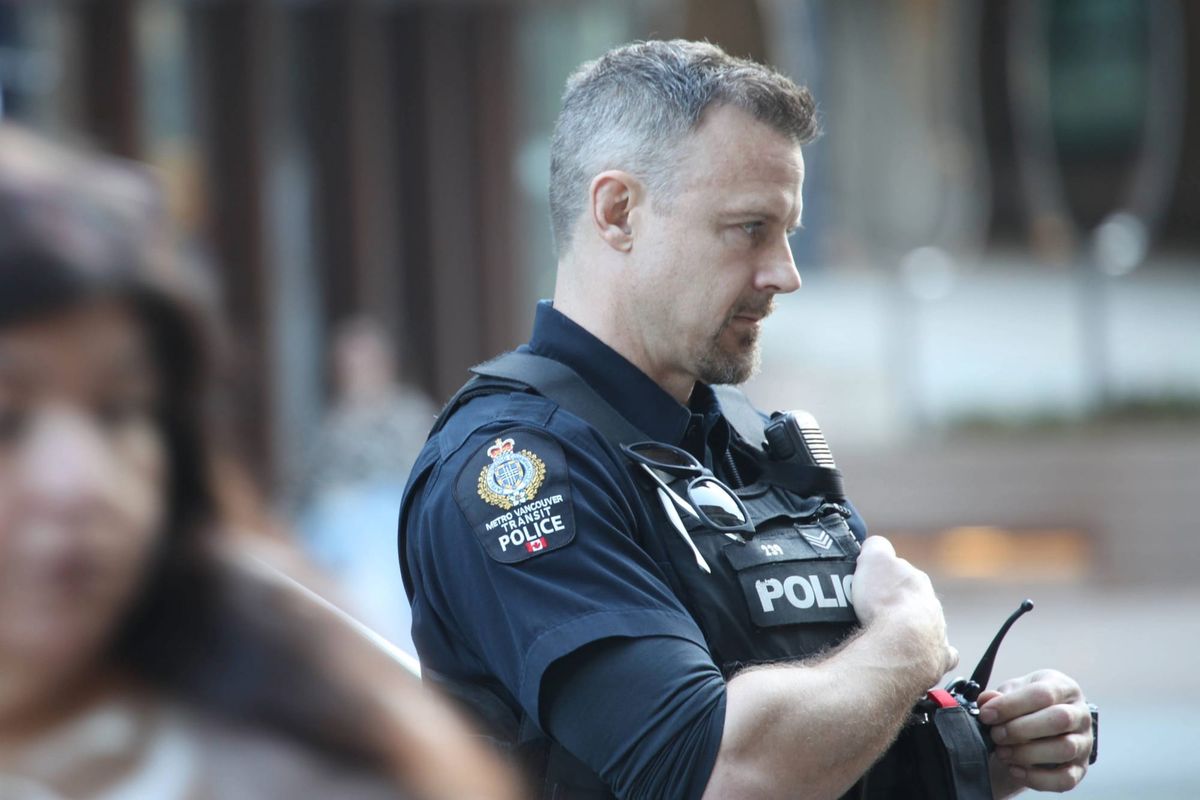


Twice per week on average, Transit Police officers checked the immigration status of a member of the public in 2024, according to Canada Border Services Agency (CBSA) data obtained by De Facto.
That’s the highest rate of status inquiries since 2015, when the regional force ended its co-operation agreement with CBSA following the death of an undocumented woman after a fare-check.
De Facto got the data through a federal access-to-information (ATIP) request filed in December 2024, which revealed Metro Vancouver Transit Police contacted CBSA 91 times between Jan. 1-Oct. 31 that year.
Of those, 79 were “immigration status checks.”
But only eight of those calls to CBSA actually made it into daily duty reports in that time, according to data provided by Transit Police through a separate provincial freedom-of-information (FOI) request.
After disclosing the eight daily duty reports, Transit Police followed up the next day with an additional eight CBSA calls that were recorded in the provincial police reporting database PRIME-BC — but not in officers' daily duty reports.
Transit Police total calls to CBSA (January-October 2024)
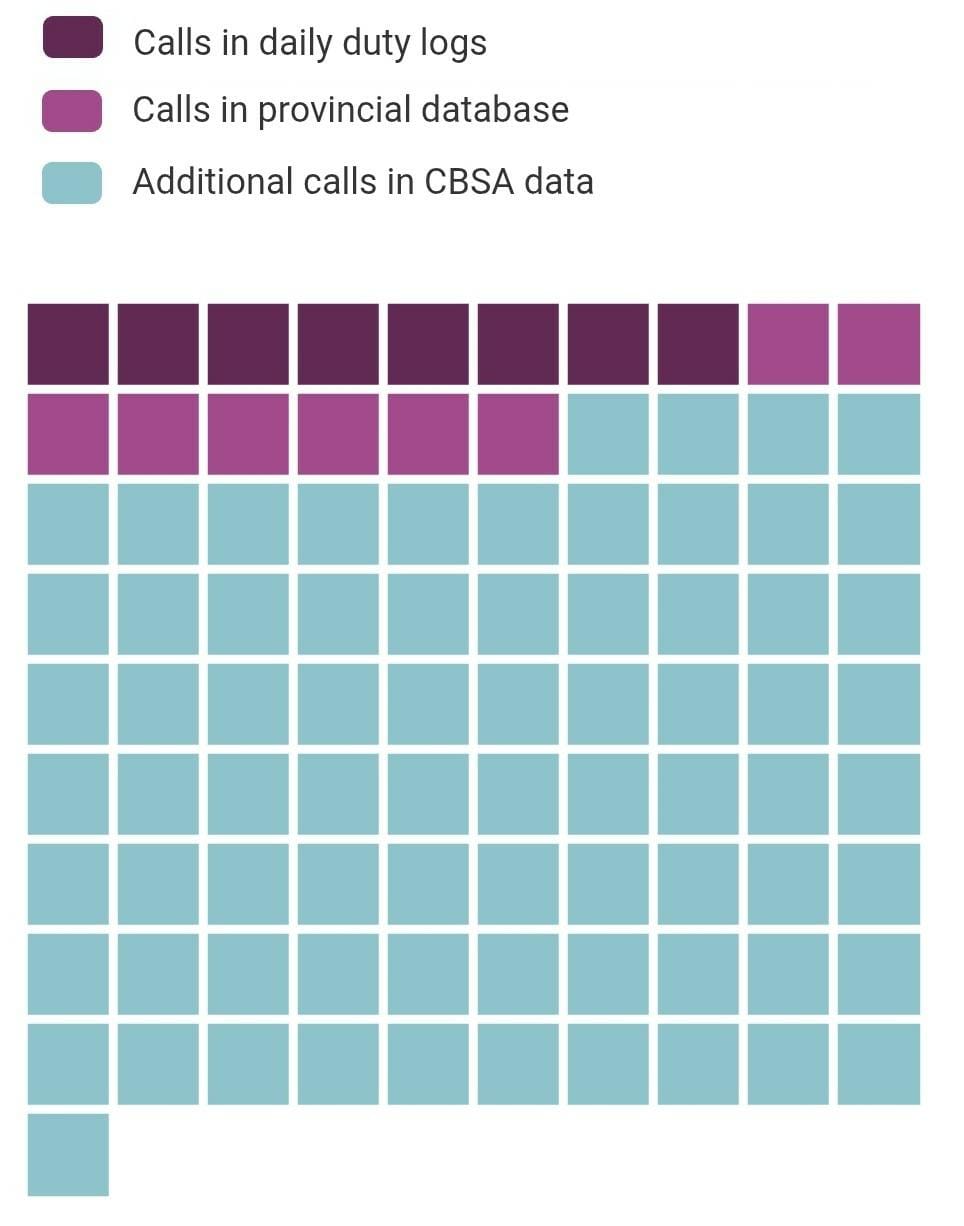
That’s despite a policy requiring all calls to CBSA to be recorded in officers' daily duty reports — suggesting Transit Police may be violating the policy upwards of 90% of the time.
Only a fraction of the calls in 2024 appear to have been properly documented in police records.
(The data covers the period up to late 2024 because De Facto filed our information request that December, and only received documents roughly a year later.)
Although 2024 saw Transit Police make its most immigration status checks in a decade, it is hardly an anomaly.
The force made a total of 602 immigration status checks to CBSA between 2015 and 2024, alarming advocates who'd successfully fought for Transit Police to end a controversial co-operation agreement with CBSA in 2015.
Data ‘divergence' suggests cops may not be following rules
De Facto compared our ATIP data with Transit Police's own documents, which were obtained in a separate request by Sanctuary Health, a collective advocating for access to public services regardless of immigration status.
The group was at the forefront of a push to end immigration status checks in the mid-2010s.
To Sanctuary Health member Omar Chu, the “divergence of data” between Transit Police’s FOI disclosure and CBSA’s ATIP release suggest the police force may not be properly recording their collaboration, as required.
Policy from police is not something we can hang our hats on ... They pass these policies and they don't follow them
– Omar Chu, Sanctuary Health Collective
“What the FOI and ATIPs show is that, in some senses, policy from police is not something we can hang our hats on,” he told De Facto in an interview.
“We need to be thinking of other ways of resisting, because basically they pass these policies and they don't follow them.”
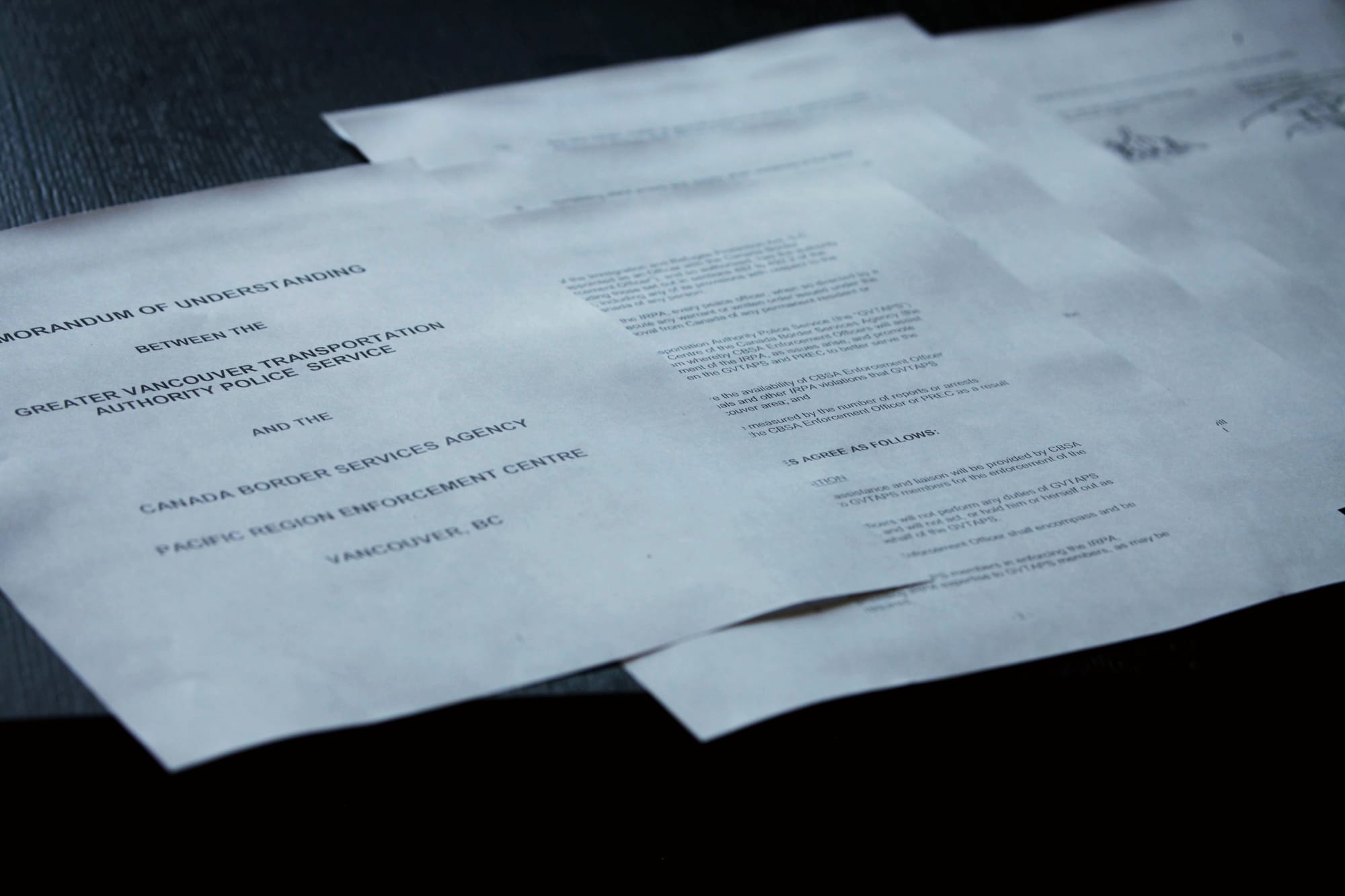
In 2015, Transit Police announced the end of its memorandum of understanding for its officers to assist CBSA.
That decision came just over a year after a woman died following a fare-enforcement check, a tragedy that galvanized a campaign against targeting undocumented migrants using public transit.
Transit Police also committed to policy changes around contacting CBSA.
“They were not supposed to call CBSA in the course of an ordinary fare check,” said Chu.
“And if they did call ... they'd have to get permission from their supervisor before making the call — and they would have to record it.”
READ MORE:
 De Facto Journalism Co-op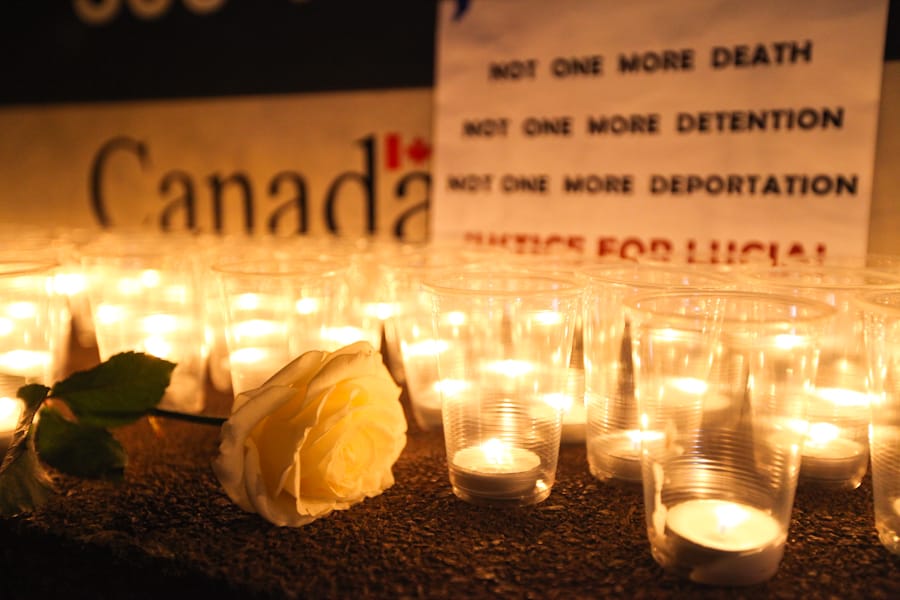
Many communities fear any interaction with transit enforcement
Chu’s group says many people with precarious immigration status are increasingly terrified that any routine interaction with officers on a bus or SkyTrain could get them deported.
“The presence of Transit Police on SkyTrains and things like that makes the life of undocumented people really tough,” said nurse and fellow Sanctuary Health member Byron Cruz, “always thinking about alternative routes and alternative ways to get to the working site or to do anything.”
The presence of Transit Police on SkyTrains ... makes the life of undocumented people really tough
– Byron Cruz, Sanctuary Health Collective
Aman Chandi, director of programs and funding with Movement, a regional transit advocacy group, said her organization has heard similar things in engagement with urban Indigenous and newcomer communities, particularly in Surrey.
“They see their peers being targeted by Transit Police, and there’s this perception that they’re being singled out,” Chandi said.
And she said that discourages people from using public transit already in car-centric communities, such as Surrey and other suburbs.
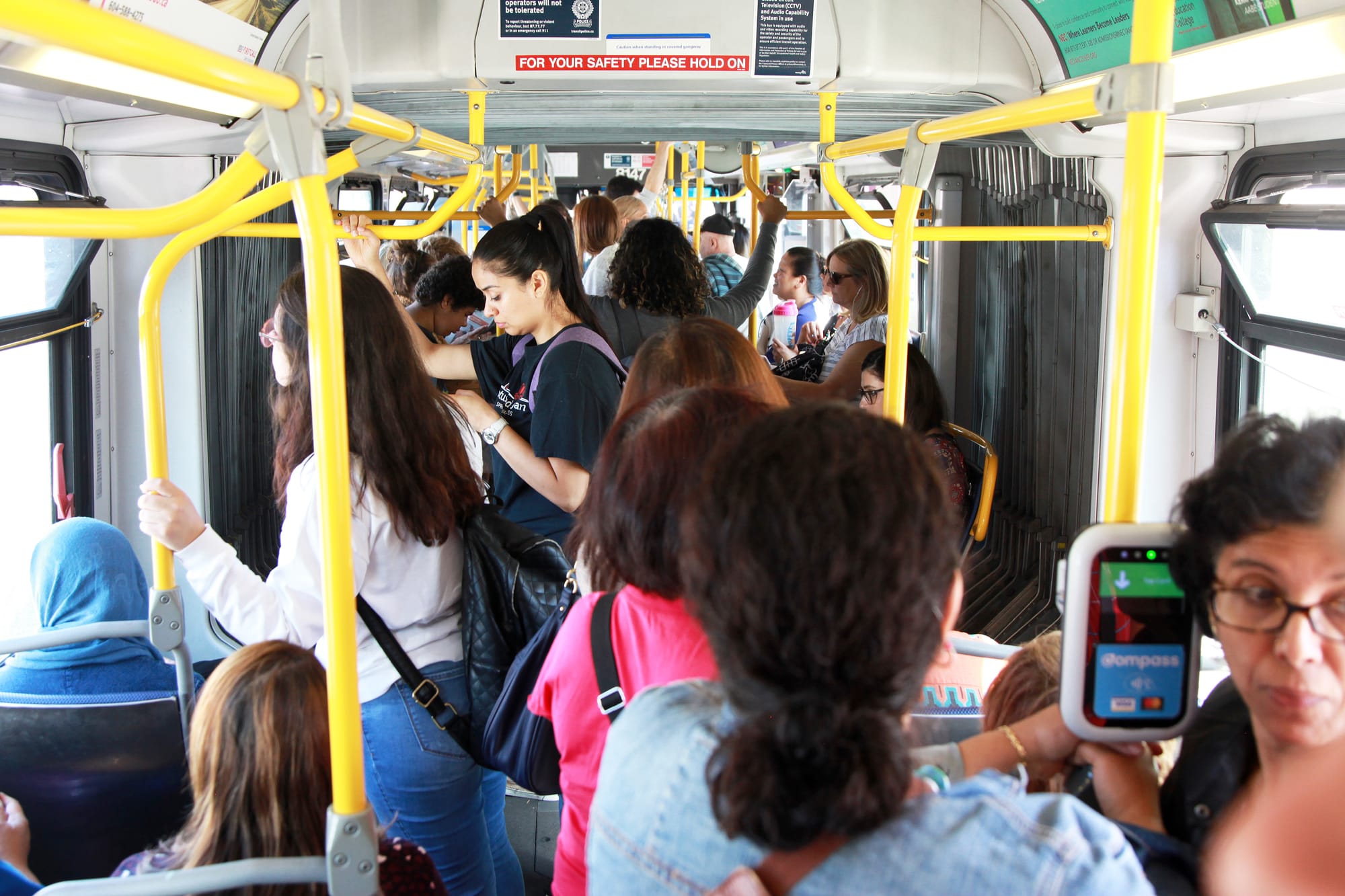
For human rights lawyer Hasan Alam, co-founder and steering committee member of the Islamophobia Legal Assistance Hotline, Transit Police enforcement actions are pushing some Muslims in the region to avoid public transportation altogether.
Last month, Alam hosted a workshop about Islamophobia for youth in Surrey.
“There was a hesitancy to deal with police,” he told De Facto.
“A lot of immigrant communities are choosing not to take transit now, in general, because of the fear.”
Support independent journalism that boldly shines a light on law, justice and rights. Sign up or donate today
He recounted participants talking about experiencing incidents of racism and Islamophobia on transit.
"Transit Police will not stop those incidents or intervene," he said.
"But they'll be on top of checking their tickets and policing them, and making them feel singled out as individuals who are very visibly from marginalized communities.”
Alam, who is also president of the BC Civil Liberties Association (BCCLA), recalled that several of the people who spoke were women who wear a hijab.
“That intersection of racism and of over-policing of these bodies was something that really stuck with me,” he reflected.
Police claim checks are used to verify identity
Transit Police denied that there has been a change in policy regarding the protocols officers must follow before calling CBSA.
Media relations Const. Sunny Kainth told De Facto that officers are prohibited from contacting CBSA during fare evasion checks unless officers have exhausted all other means of identification and the individual “has self-identified that they are from out of country.”
Kainth did not explain, when asked, how checking someone’s immigration status helps to identify them.
It is up to the officer’s discretion whether they solely issue a fare infraction notice, or if they proceed to a more substantive investigation.
– Const. Sunny Kainth, Transit Police
“Once an officer has confirmed an individual’s identity, it is up to the officer’s discretion whether they solely issue a fare infraction notice,” he said in an emailed statement, “or if they proceed to a more substantive investigation, such as if there are related criminal warrants/breaches.”
Kainth said this explains the difference between the data recorded by Transit Police and the data recorded by CBSA.
He didn’t clarify, when asked, how that explains the difference.
Policy was meant to act as 'disincentive' to calling CBSA
Lately, undocumented migrants Sanctuary Health supports have been raising the “most frequent complaints” about Transit Police compared to any other law enforcement agency, Cruz said.
On top of cancelling the MOU, Transit Police agreed to implement policies requiring officers to get permission from higher-ups to contact CBSA.
And the force said it would bar officers from detaining people solely on immigration law matters, according to Chu, who was part of the campaign.
Chu said advocates at the time were happy to see the limits on officers’ ability to call CBSA without a supervisor’s permission.
READ MORE:
De Facto Journalism Co-op
“[We were] just hoping that the effort of that — the effort of having to call your boss to be able to do something and then record it — would be a disincentive to actually calling,” Chu said.
“Our hope is that there are zero calls ever made. The nice thing about the policy is that hopefully that would be a disincentive.”
But the fact that Transit Police have records of fewer than a fifth of its officers’ CBSA inquiries suggests those officers may simply not in fact be getting the required permission from watch command, said Chu.
Immigration calls from Transit Police have surged — why?
In recent years, immigration status calls to CBSA from Transit Police have increased substantially.
Between January 2022 and July 2023, officers called CBSA for immigration status checks an average of just over three times per month. Between August 2023 and November 2024, that more than doubled to an average of eight status checks per month.
That also marks a 45% increase over the 5.5 status checks a month between 2015 and 2019. Calls between law enforcement agencies and CBSA were down across the board in the early years of the pandemic.
They see their peers being targeted by Transit Police, and there’s this perception that they’re being singled out.
– Aman Chandi, Movement
The reason for the increase isn’t entirely clear. TransLink referred De Facto to Transit Police when asked for comment.
But ramped-up enforcement against fare evasion may be one factor.
“The 15% increase in interactions resulting in phone calls to the CBSA, since 2019, is likely a result of the increase in frontline officers out on the transit system,” said Transit Police spokesperson Kainth.
Though an enforcement blitz officially began in mid-2024, documents obtained through a freedom-of-information request indicate enforcement started to climb earlier, in 2023.
“Since 2023, Transit Police and Transit Security have conducted over three million fare inspections,” notes an Oct. 24, 2024 fare-evasion enforcement update to TransLink’s joint finance committee.
“This represents a 200% increase of inspections over previous years.”
Additionally, TransLink implemented a new methodology for measuring fare evasion in fall 2023, according to a report the following June, Integrated Action Plan to Target Fare Evasion Reduction.
The aim of the action plan is to reduce fare evasion by one percentage point, which the agency estimates could save $5 million a year.
Though it includes educational, public awareness, and other measures, the bulk of the initiative is enforcement, with TransLink launching a dedicated fare-evasion enforcement team with eight security officers.
Those eight transit security staff were expected to cost $648,000. It’s not immediately clear what additional expenses, if any, Transit Police expected from increased enforcement.
Enforcement push is affecting everyday life
For migrant rights advocates who support people with precarious status, the enforcement blitz has a chilling effect on people’s feelings of safety getting to work, school, groceries, health care, or home.
“Transit, of course, is such a central piece of working people's lives, in terms of going to their jobs and accessing stuff, so the chill effect [is] very, very real,” said lawyer Alam. “People rely on these things and do not want to feel like they're under the threat of being detained or deported just because they're accessing public services.”
“When the police stop someone under the suspicion of doing something wrong, most of the time they haven't done anything wrong. They're operating based on stereotypes and racial biases; there's racial profiling taking place.”
People rely on these things and do not want to feel like they're under the threat of being detained or deported just because they're accessing public services.
– Hasan Alam, president of BC Civil Liberties Association
Chandi added that it further discourages people from using transit in communities that are already car-centric, like Surrey and other suburbs.
“In Surrey, we don’t have a complete sidewalk network, so sometimes we have people walking and sharing the road with cars,” Chandi said.
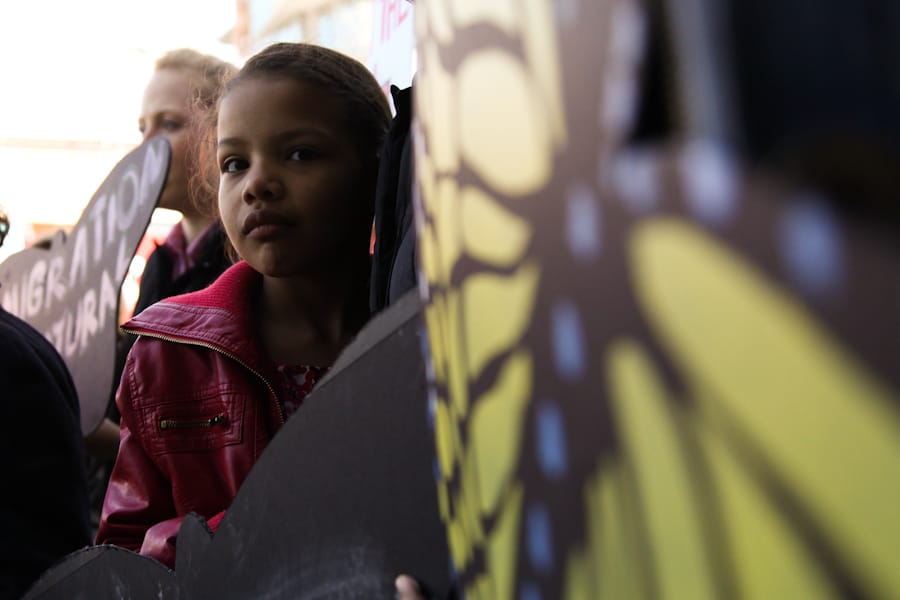
But while the Transportation Not Deportation campaign celebrated its victory a decade ago, the continuation of similar practices today raises concern about an already vulnerable population.
“The communities are getting poorer,” Cruz said, “to the point that people have a hard time paying for transportation … Transit Police takes advantage of that.”
Community fears of Transit Police officers have become so heightened that even undocumented children are scared, Cruz said.
In one case, he heard of a child fleeing the SkyTrain on his way home to his family — because he saw officers asking riders for their identification.
“He was already living with fear of the Transit Police,” Cruz said. “For a 10- or 11-year-old [to be] living in fear — that's strong.”

Editors: David P. Ball & Cam Welch. With files from David P. Ball

Dustin Godfrey
Dustin (they/them) is a De Facto member and a reporter based in so-called Vancouver, BC, on Sḵwx̱wú7mesh, xʷməθkʷəy̓əm, and səlilwətaɬ territories. Their work has also appeared in The Guardian, The Tyee, The Globe and Mail, The Maple, Filter Magazine and an independent newsletter where they’ve focused on policing, drug policy, health and housing. They've won awards from the Jack Webster Foundation, Canadian Community Newspaper Association, BC and Yukon Community NewsMedia Association. Read their reporting

Emma Arkell
Emma Arkell (she/her) is a member of the De Facto co-operative and a reporter, photographer and documentary filmmaker in Vancouver, on Sḵwx̱wú7mesh, xʷməθkʷəy̓əm, and səlilwətaɬ territories. She is currently the labour reporter at PressProgress. Her work has been featured in Chatelaine, Xtra, The Tyee, Jacobin, In These Times, The Maple, and Briarpatch Magazine. She's won awards from the Canadian Association of Journalists and Rafe Mair Award for Excellence in Journalism, and a shortlisted finalist for a National Magazine Award and a Canadian Online Publishing Award. Read her reporting