'All I have left’: As election cycle spotlights homeless crisis, bylaw seizures ‘devastating’ for Victoria’s unhoused
Many cities are seeing bylaw enforcement ramp up. BC’s capital is a case study — and it’s hurting those already most vulnerable


This is the second part of a series on bylaw enforcement and unhoused residents' possessions. Read the first part here — and sign up for our newsletter to get alerted as soon as our next story is out.
Mar Hamel teared up as she listed off the litany of personal items authorities have taken from her over the five years she’s lived on Victoria’s streets.
“There's been so many Christmas presents from people, family photos, so many different bikes, and that old vintage stroller,” she told De Facto. “The blanket my kids wore when they were babies.”
Some of the seized items were deeply sentimental for her. Others were essential to get through cold nights and wet weather.
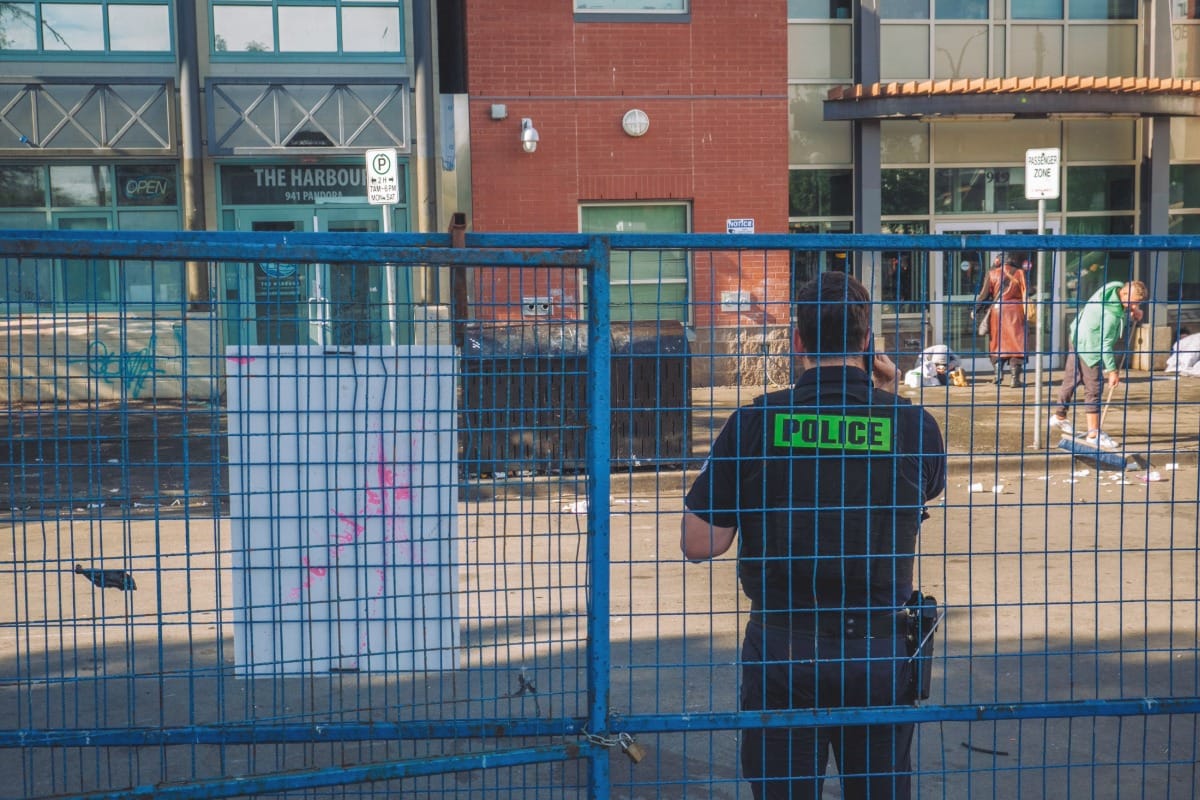
And one brought joy to her community. Hamel described a puzzle game in which people on Pandora Avenue would put their minds together to help a red car escape a maze of traffic.
“Everybody would sit and play it, and they were focusing on something that was, you know, healthy, and fun to do — something they enjoyed,” she said.
Until, she recalled, bylaw officers took it from her.
“They threw it in the garbage,” Hamel said. “I was like, ‘Why?’
“We were doing something that was good. We were all participating in it.”
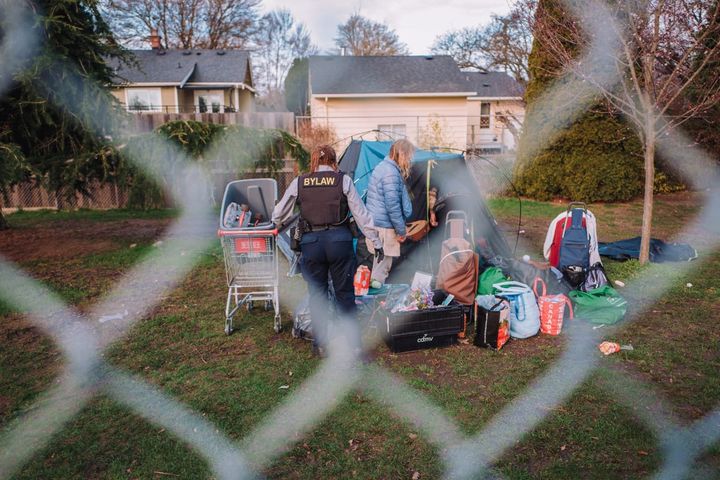
De Facto spent months investigating what happens to unhoused people’s belongings after they’re confiscated, as part of daily sweeps that have become a tragic routine for people on the streets.
 De Facto Journalism Co-op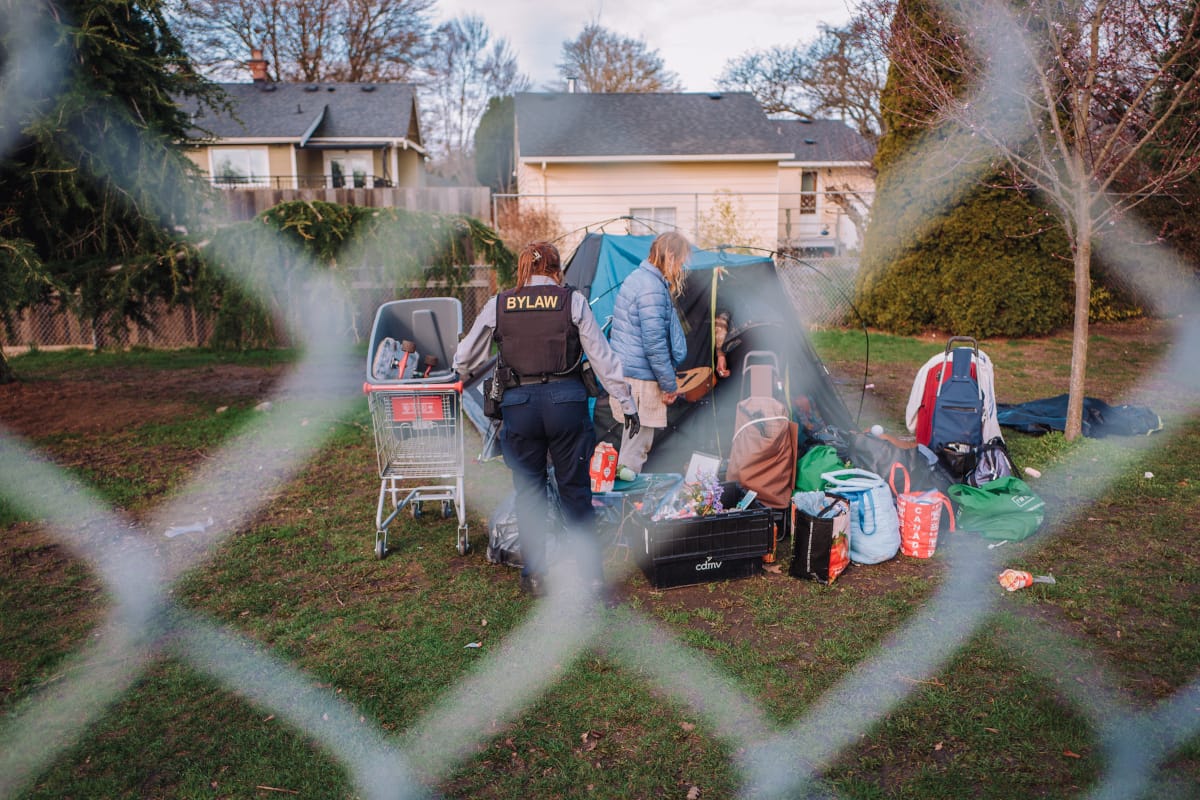
With the recipients’ knowledge and consent, we placed Apple AirTags in new donations provided by The Backpack Project's Niki Ottosen.
De Facto tracked the journey of their new possessions to the garbage dump — within days, in multiple cases — despite the City of Victoria’s insistence no such thing happens to new or otherwise functional items.
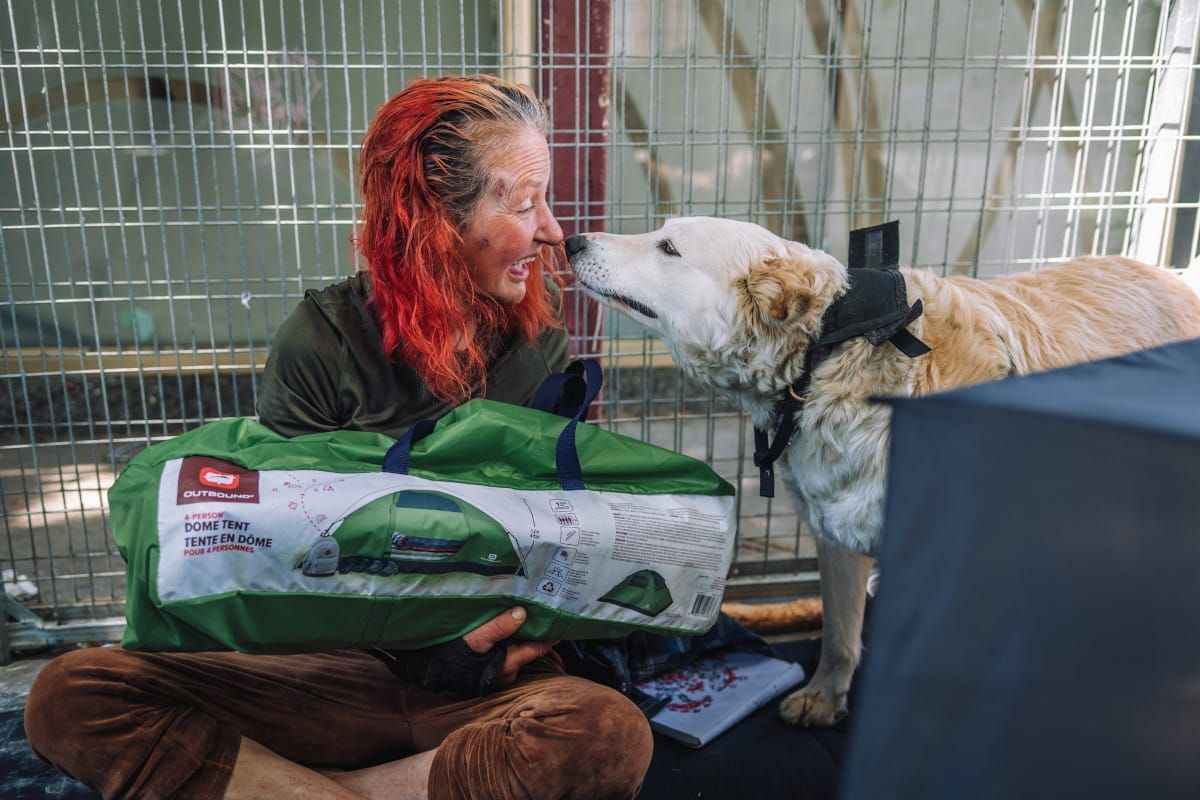
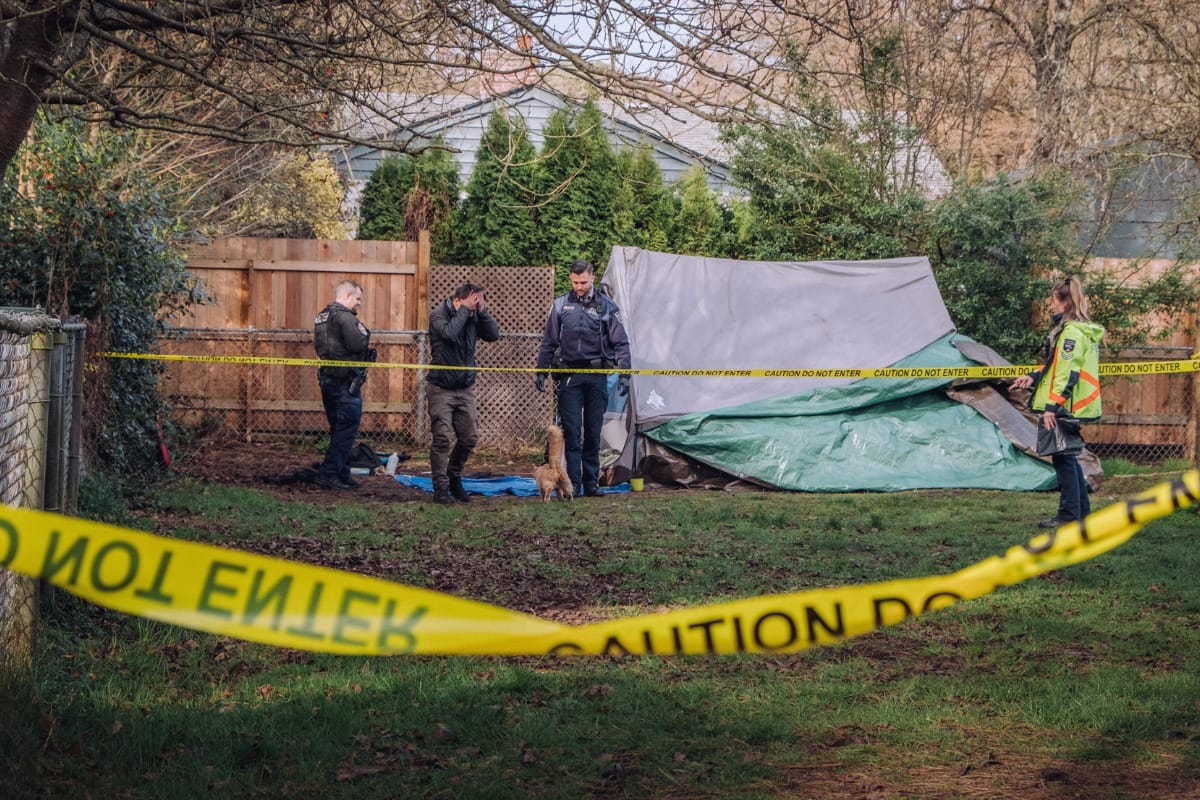
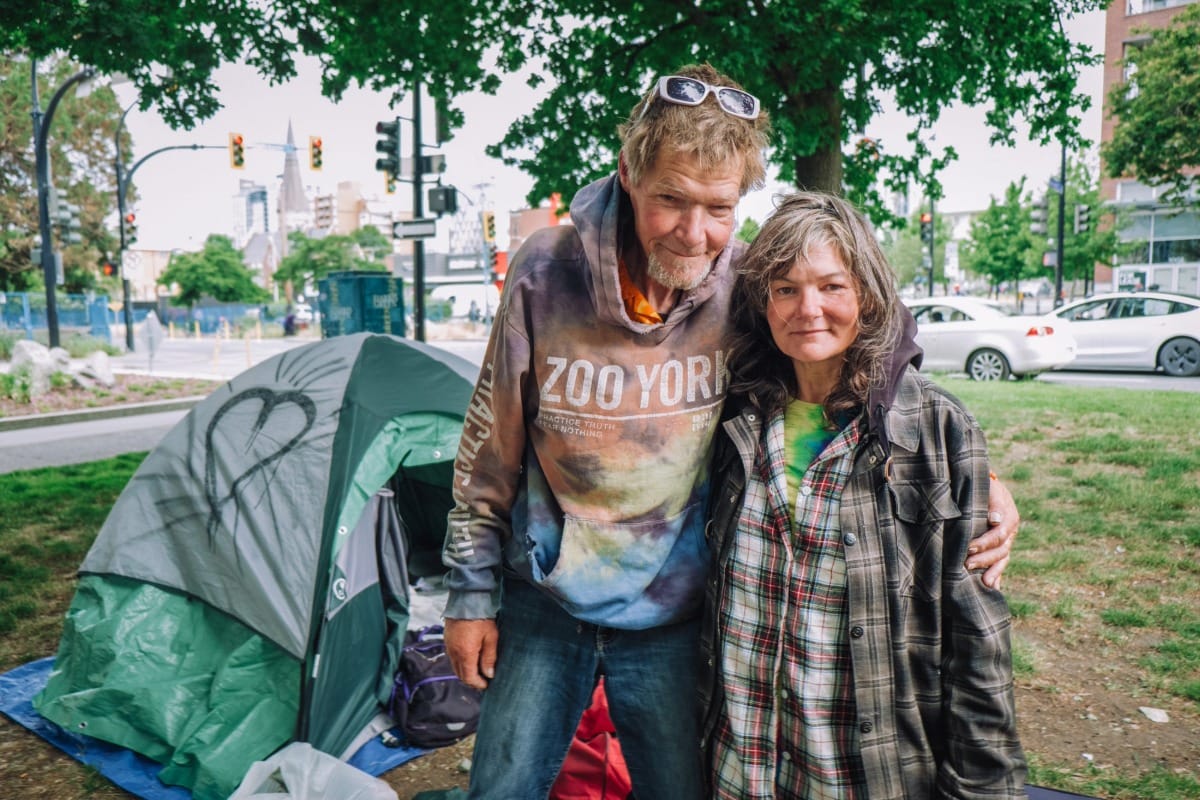
A tent given to Hamel ended up seized and taken to the city landfill just a few days later.
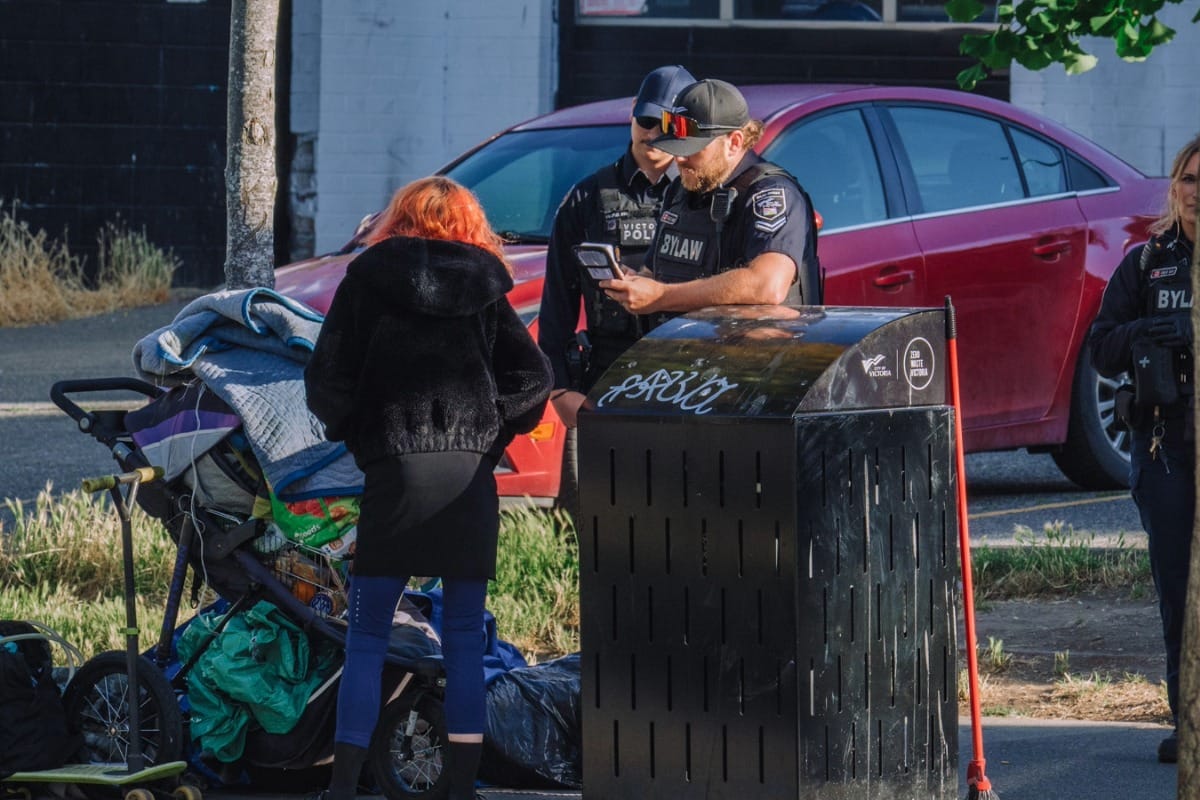
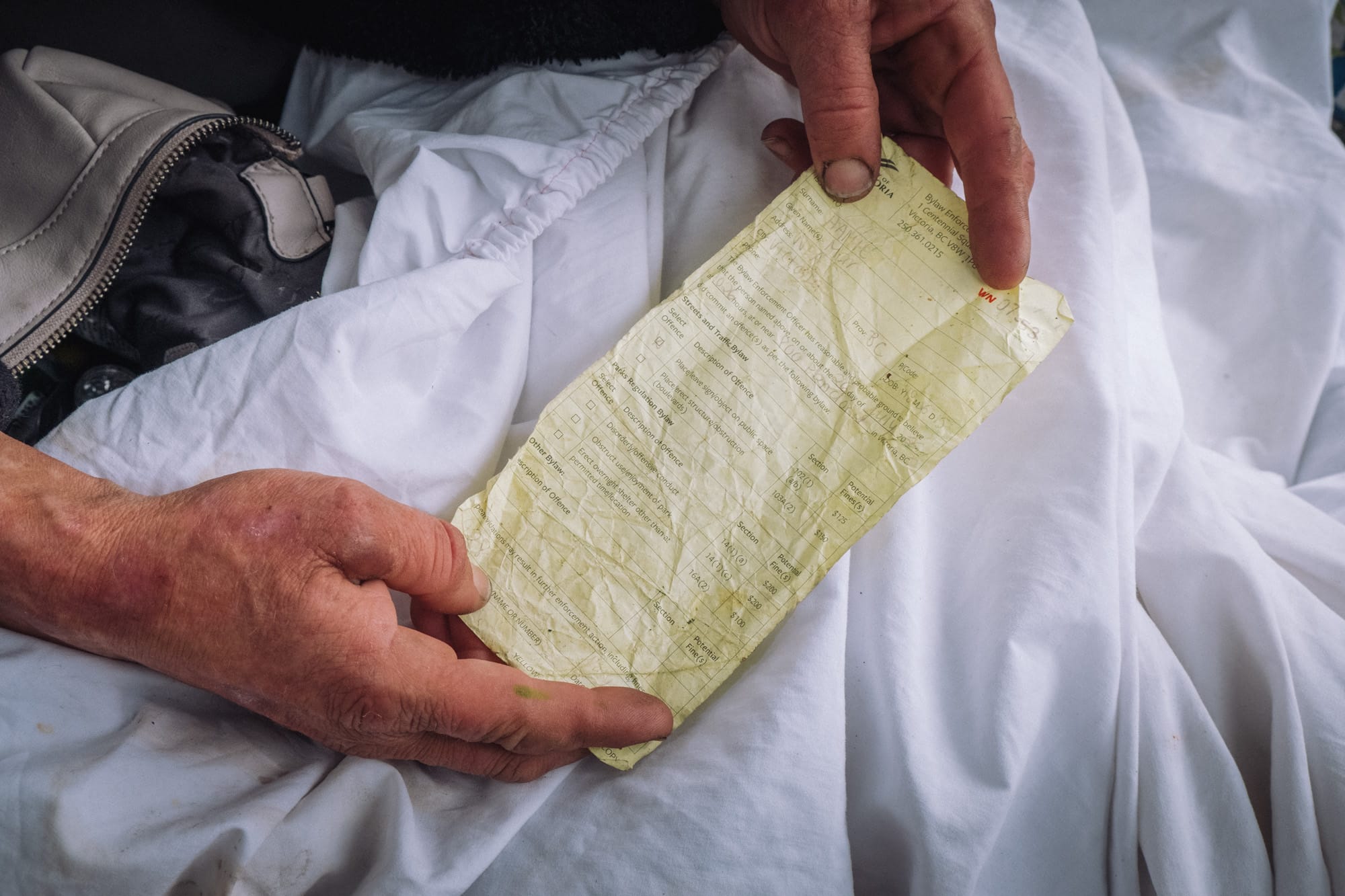
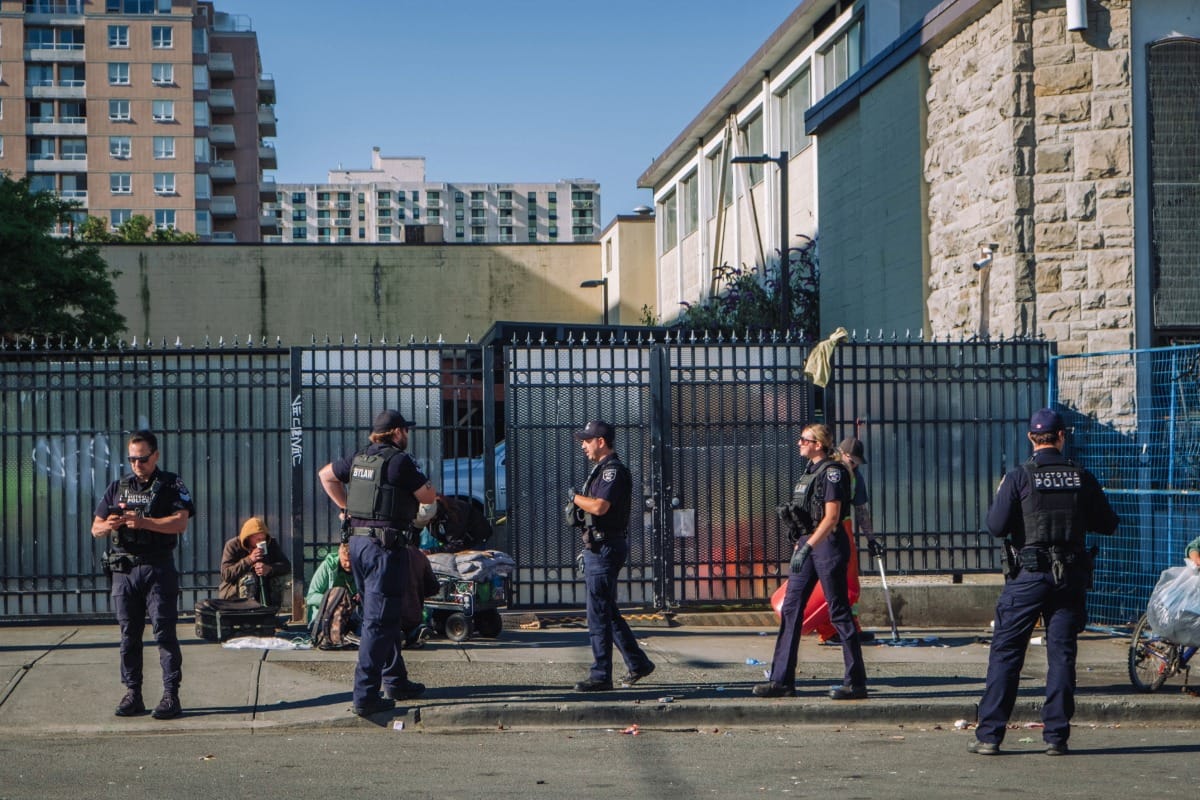
Unhoused Victoria resident Mar Hamel (left) speaks to bylaw officers and police as they enforce the city’s Streets and Traffic Bylaw on July 7. Later that month, authorities issued her a City of Victoria Bylaw Enforcement notice, warning of a 'potential fine' of $125 for the offence 'place/leave sign/object on public space.' Photo by Mike Graeme/De Facto
In April, Hamel started documenting bylaw enforcement on her phone and posting videos to her Facebook page, “Homeless Victoria Bylaw experiences.”
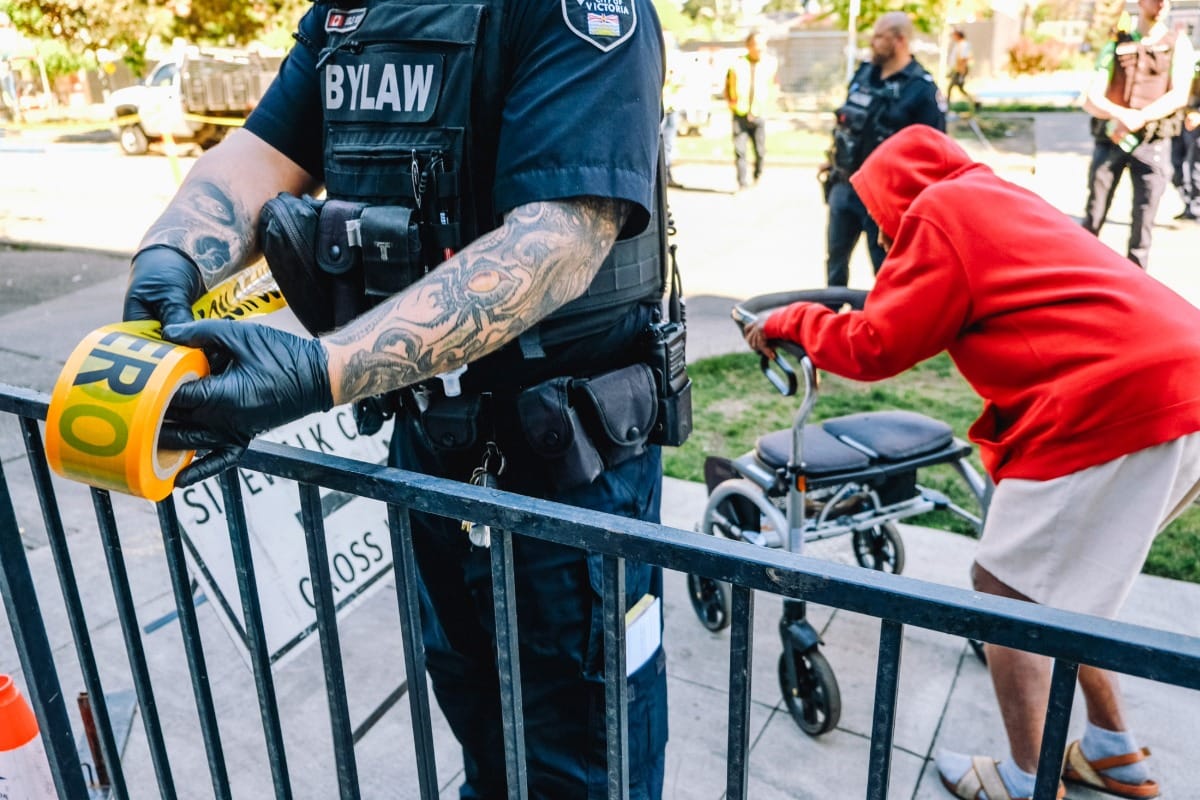
One wet spring day, she filmed bylaw officers taping off the area surrounding her belongings.
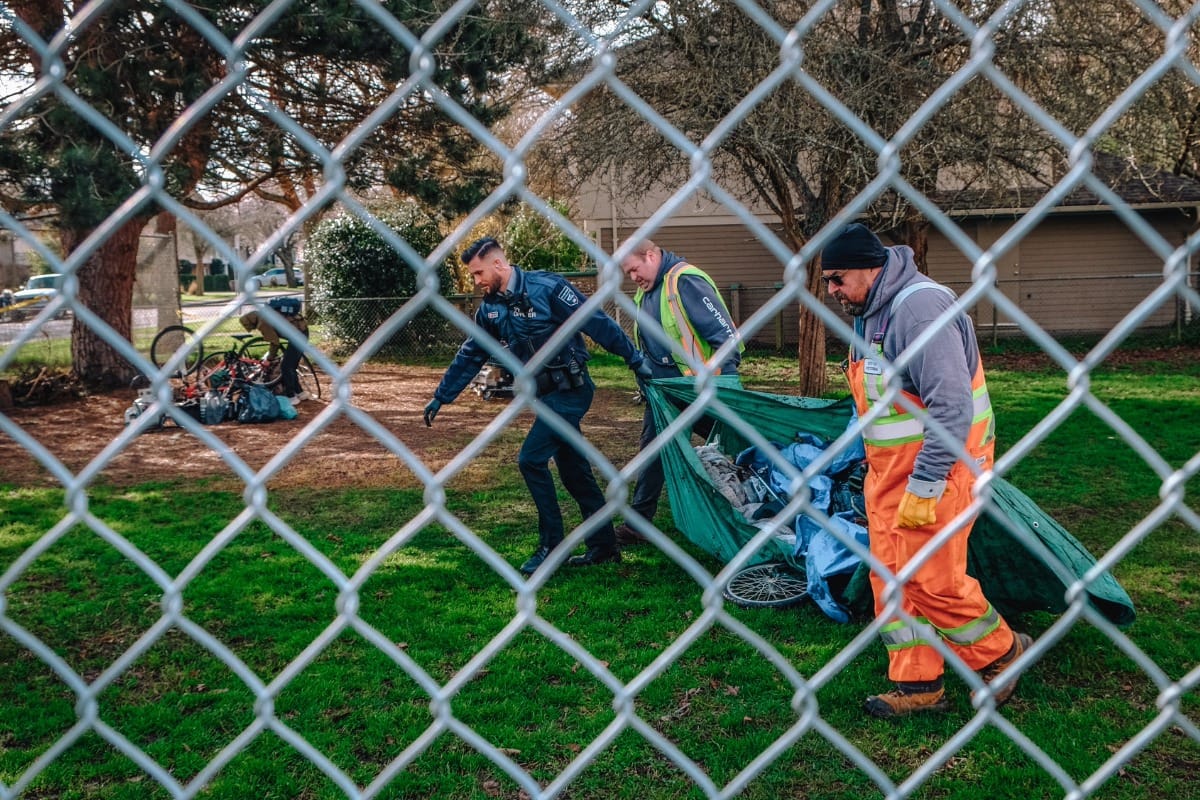
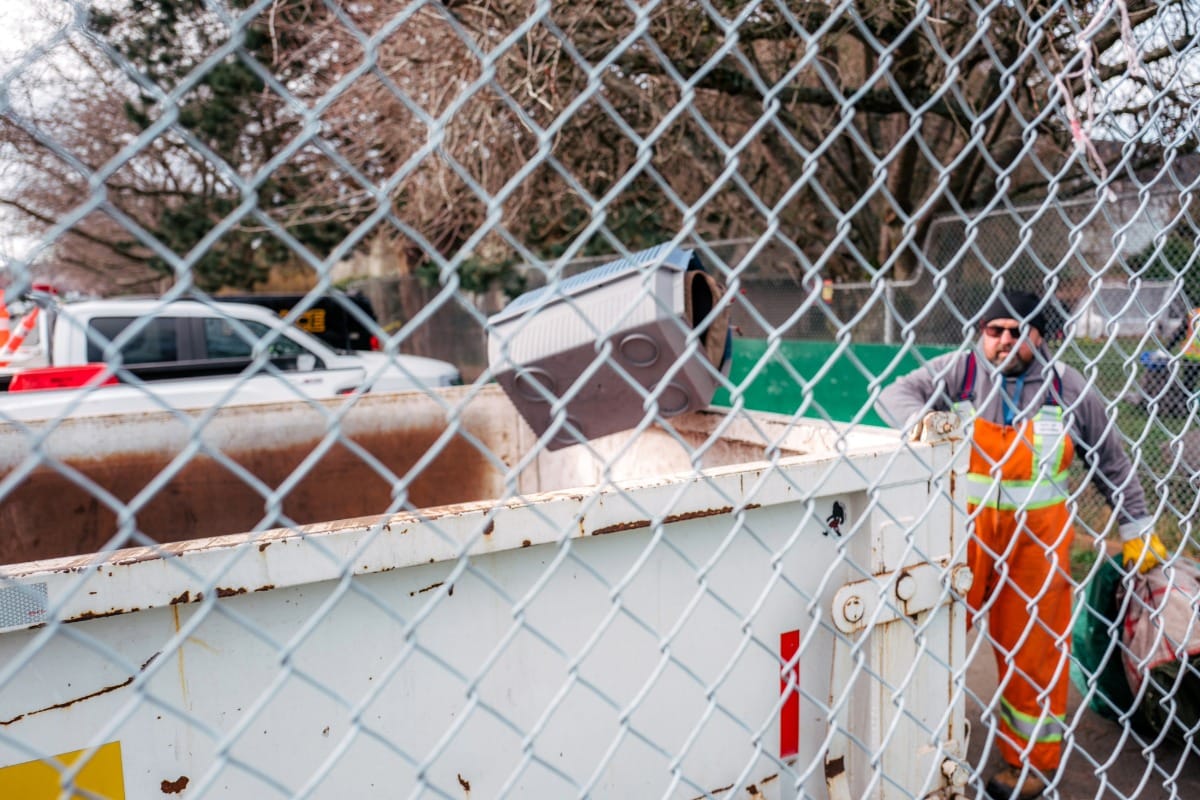
They then took her essential survival gear — including her wool blanket, a down jacket, and an umbrella — and tossed them in a waiting disposal truck.
“That keeps me alive,” Hamel is heard saying, as a city worker drags her items away.
“Not my wool blanket!” Hamel shouted as she tried to grab it — before a Victoria police officer intervened. Victoria Police patrols regularly accompany bylaw officers during their enforcement rounds.
‘Spiritually, emotionally, and physically devastating’
Joe Hermer, co-author of The Bylaw State, explained that for unhoused people, the few possessions they carry with them are often a matter of survival.
“It's not just tents,” he said. “They may be harm reduction materials, it may be medication, they may be spiritual or religious items, they may be keepsakes.
“And that's basically what often allows them to survive — so it's absolutely devastating when they lose that. It can be spiritually, emotionally, and physically devastating.”
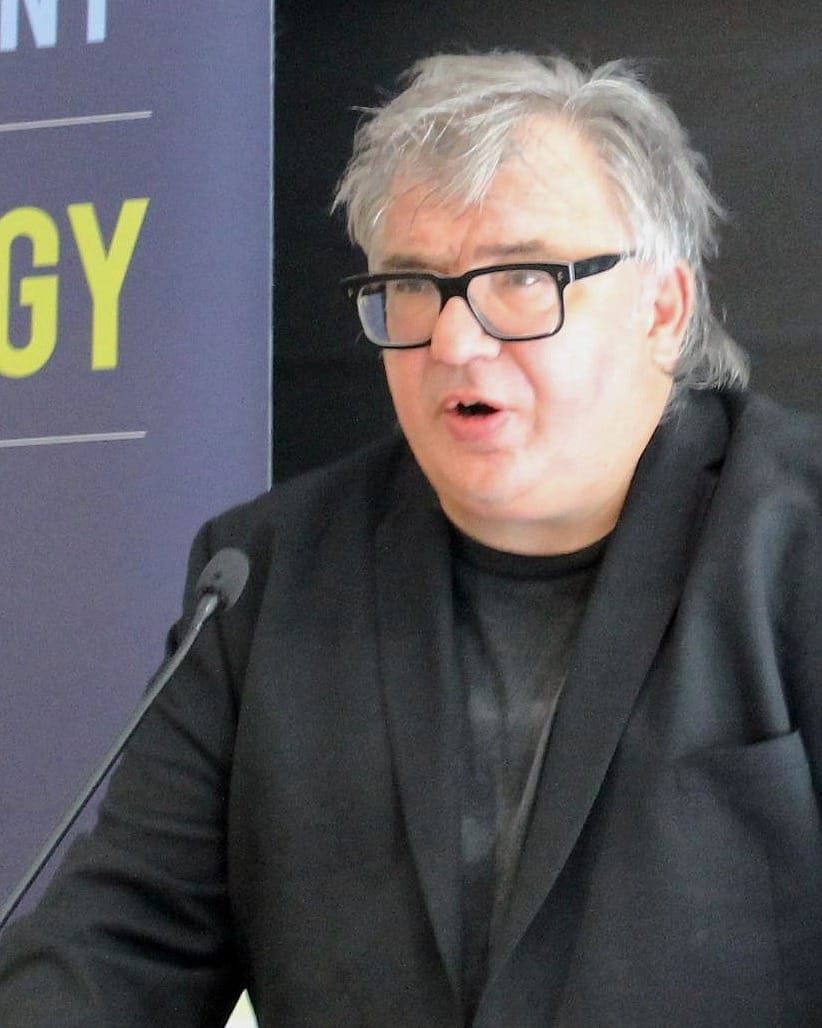
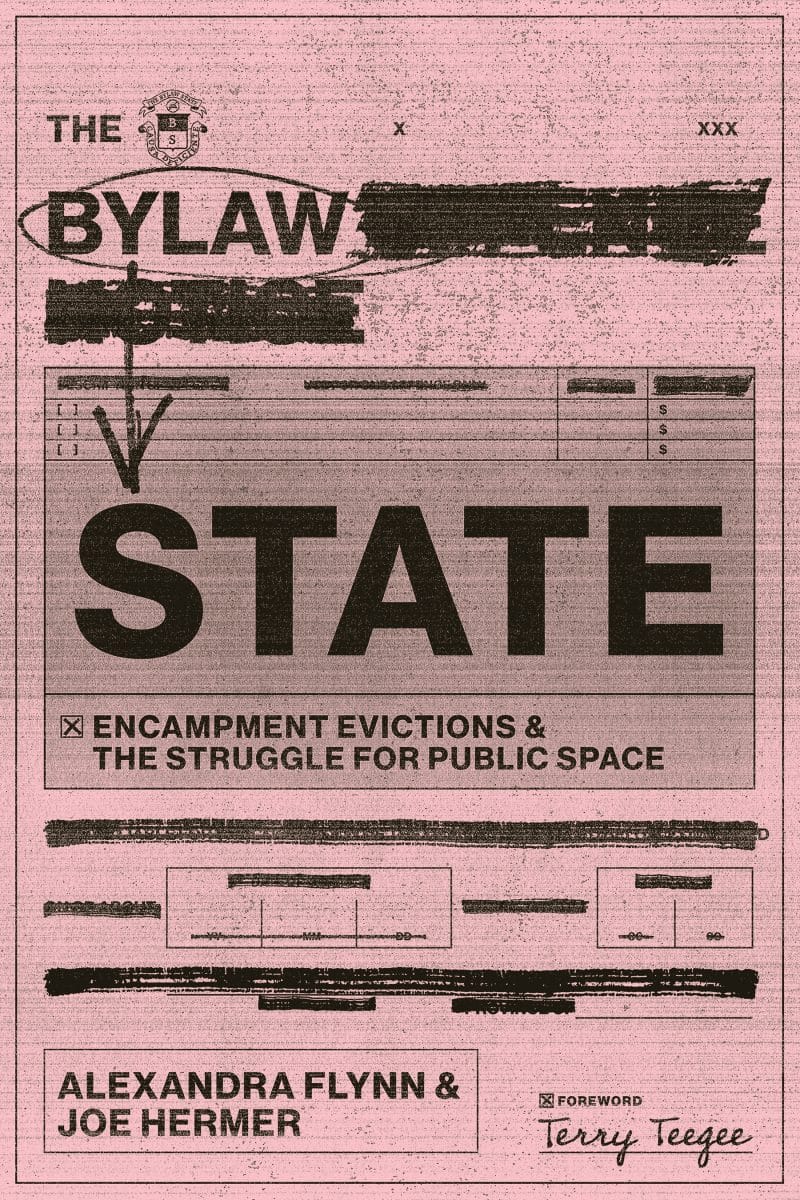

University of Toronto sociology professor Joe Hermer (left) co-authored the 2026 book The Bylaw State with Alexandra Flynn (right), associate professor at University of BC Allard School of Law. Images courtesy UofT/Fernwood Publishing/UBC
Residents, researchers, and advocates alike told De Facto that bylaw enforcement can destabilize unhoused people’s lives, often pushing the already vulnerable population further into life-or-death situations.
Family and street medicine doctor Jill Wiwcharuk said an unhoused person died this year within 48 hours of a bylaw sweep that threw away the rescue medication needed for their lungs, along with other belongings.

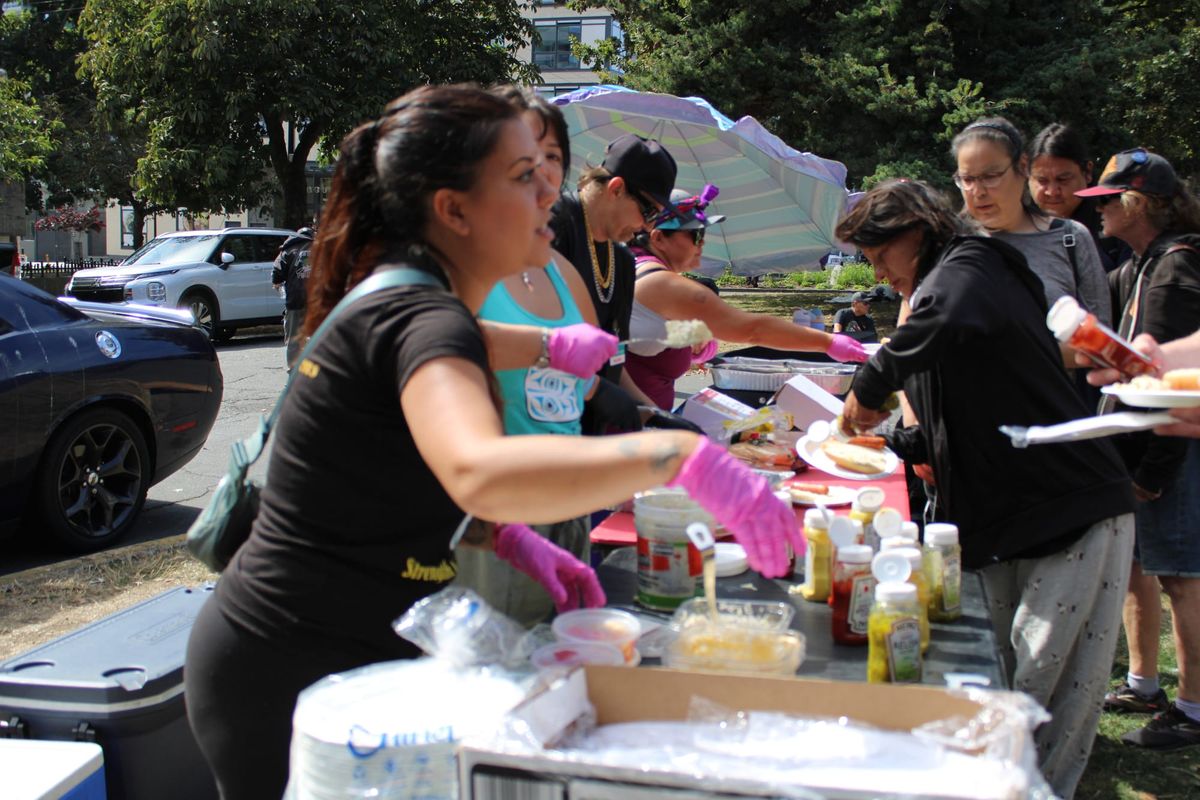
“It’s so hard for folks when they need to get to social assistance, when they need to get to medical appointments, visits with their children, going to see their parent who's unwell in the hospital,” Wiwcharuk said.
“These things are so hard because they can't even leave their stuff because they're afraid everything's going to be taken.”
Hermer told De Facto bylaw enforcement can disrupt critical support networks in other ways, too.
"They can't even leave their stuff because they're afraid everything's going to be taken."
– Dr. Jill Wiwcharuk
“Unhoused people survive on the street through their relationships with other unhoused people, and through very small but incredibly important things,” said the associate sociology professor at University of Toronto Scarborough.
Bylaws “essentially target the minutiae of public space,” he explained.
“They become perfect instruments to interrupt these survival activities — and essentially make the space of the public unlivable for unhoused people, who really are there as a very last resort.”
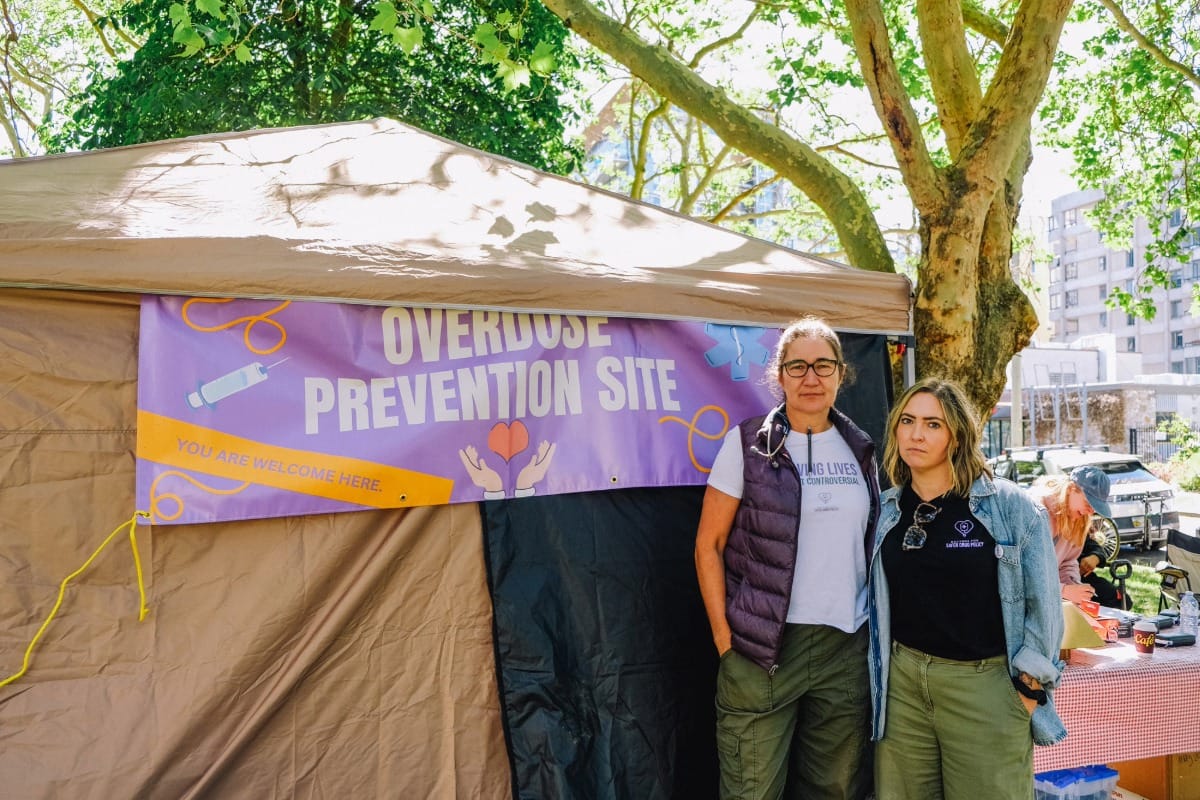
‘Taking Narcan kits away’: Sweeps exacerbate drug crisis
He added that bylaw enforcement is linked to an increase in overdose deaths for people who use drugs.
“Much of this bylaw enforcement creates circumstances where people are overdosing because of the poison drug crisis, and they're using alone” after enforcement happens.
Since BC declared a health crisis in 2016, toxic drugs have claimed more than 18,000 lives.
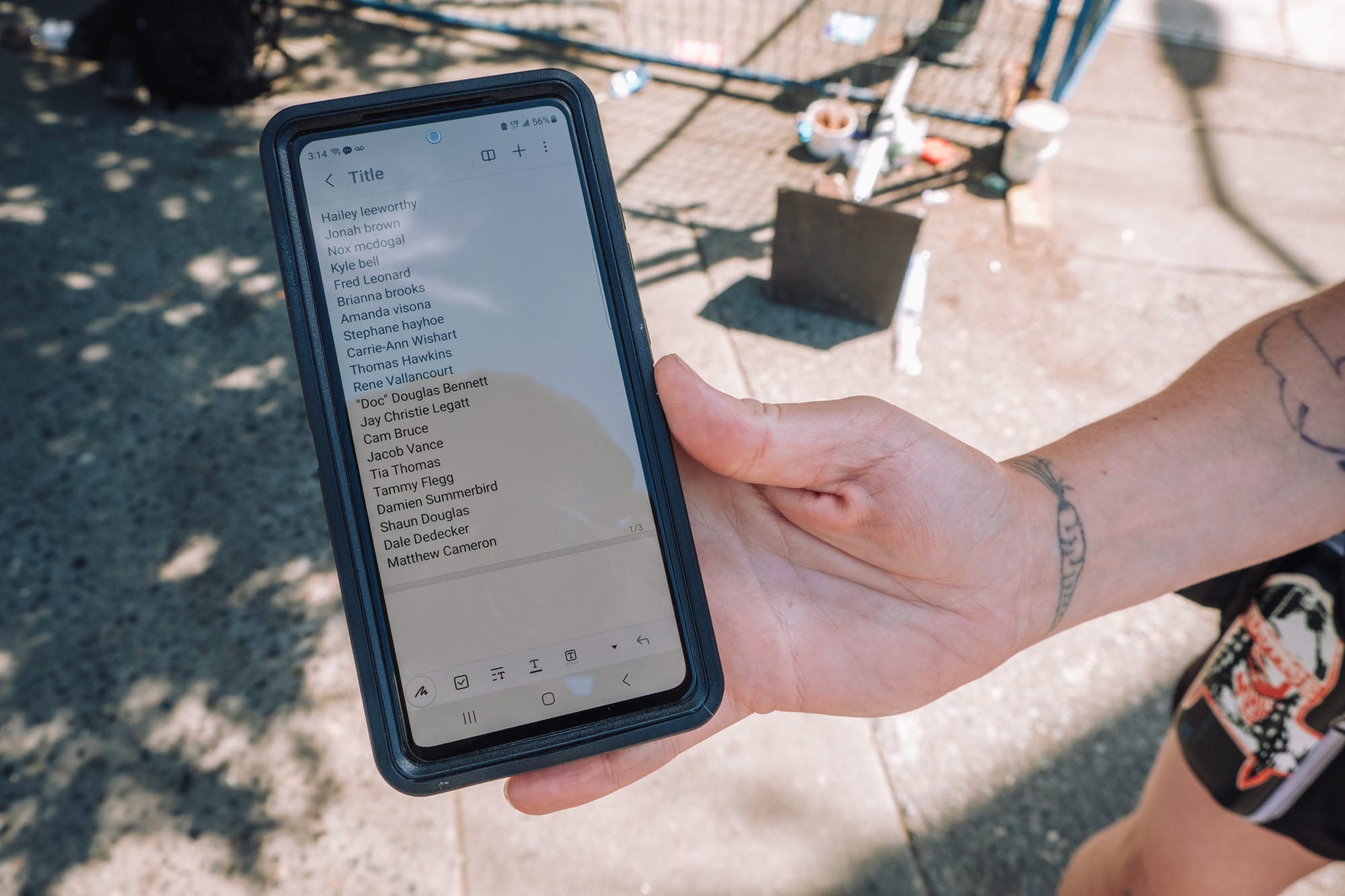
According to Peers Victoria Resources Society, people living unhoused in BC are 24 times more likely to die of drug overdose than those who are housed.
Indigenous people experience homelessness at a rate of three times the general population (for both those in shelters and unsheltered).
And though they make up 3.4% of Canada's population, they accounted for nearly 16% of toxic drug deaths last year.
“They're taking the Narcan kits away when they know what kind of streets those are.”
– 'Shorty' Larose, Victoria resident
“Shorty” Larose — a Wet’suwet’en woman who was unhoused for several years before finding housing — said she and others began to hang overdose-reversing kits from Pandora’s fencing, to respond faster to emergencies.
“We post them up on fences so they're accessible for us,” she said.
But, she alleges, city staff have disposed of them during enforcement.
“I just can't wrap my head around why they're taking the Narcan kits away when they know what kind of streets those are.”
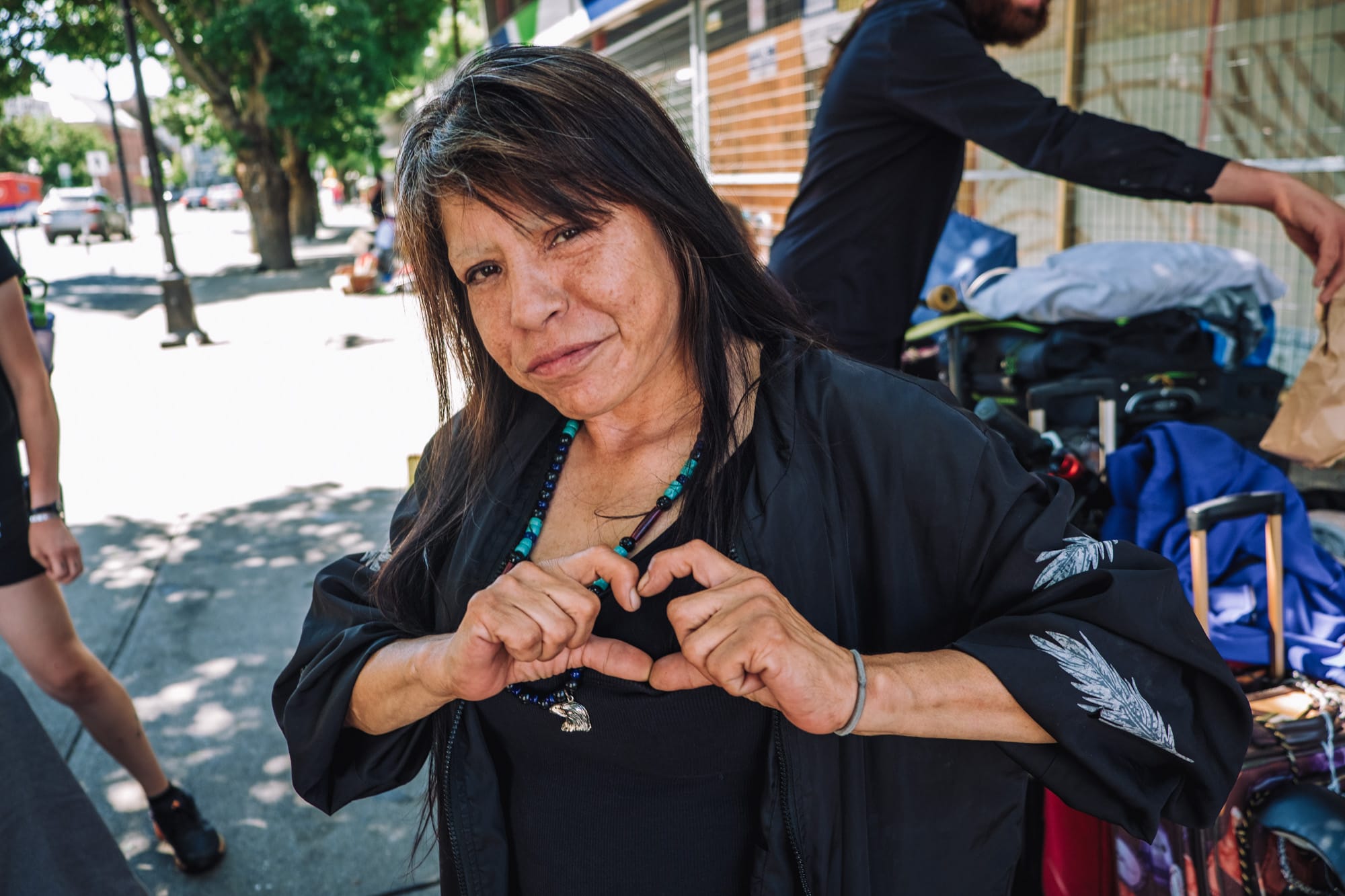
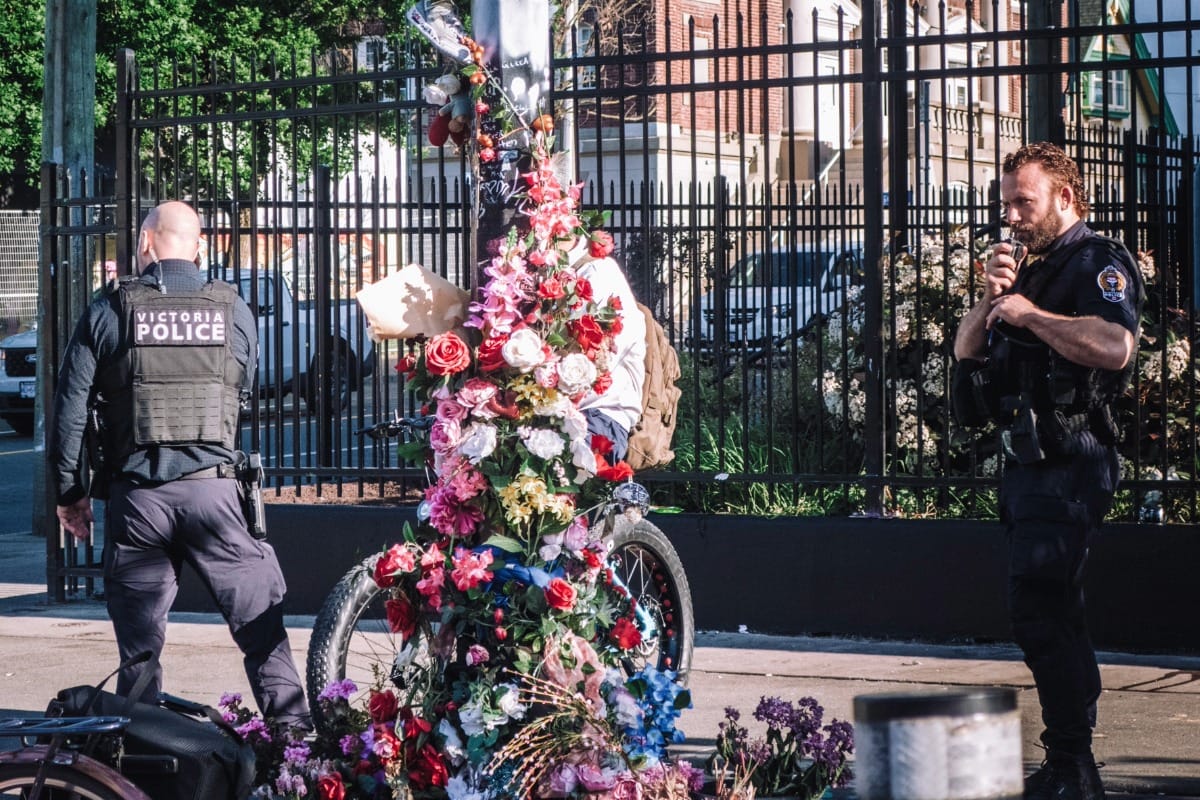
Larose described losing many friends on Victoria’s streets. Unhoused residents on Pandora Avenue have created memorials for neighbours who have died.
Larose created one for a friend, and others, but said bylaw officers later removed and disposed of it.
“There are so many things that are sentimental to us,” she said. “You can't replace the things that people put on a memorial.”
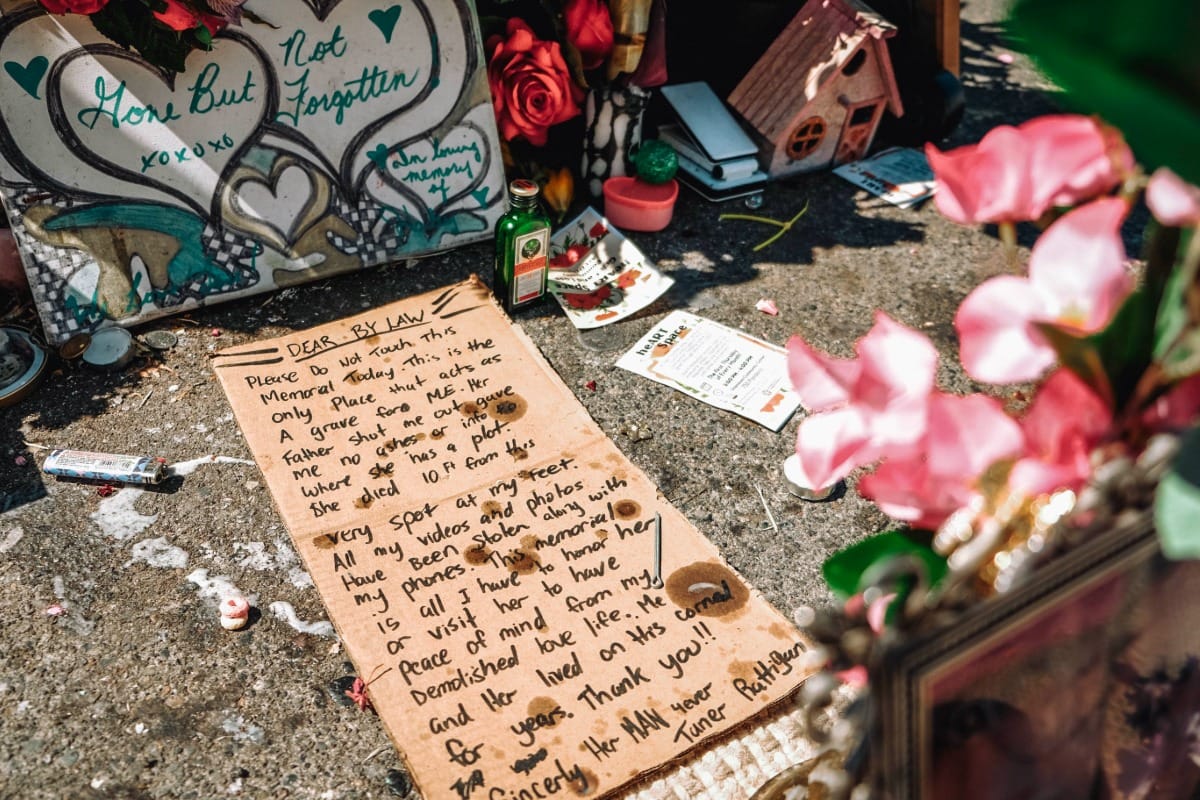
"There are so many things that are sentimental to us ... you can't replace."
– ‘Shorty’ Larose, Victoria resident
Municipalities ‘put in a very, very tough position’
As housing becomes less affordable in Canada, stories like those from unhoused people in Victoria's streets are growing more common.
Unsheltered homelessness quadrupled between 2018 and 2024, according to an August report by the Canadian Alliance to End Homelessness, whose researchers studied 36 communities across Canada.
Communities grappling with the steepest increases in housing costs saw the most dramatic spikes in homelessness — a crisis Hermer said is exacerbated by local governments' limited resources, staffing, budgets, and expertise.
"Municipalities are put in a very, very tough position,” he explained. “On the other hand, what can municipalities do?
"Well, one of the things they can do is to not pass bylaws that are going to make the situation worse and increase the suffering of unhoused people.”
"What can municipalities do? ... Not pass bylaws that are going to make the situation worse and increase the suffering of unhoused people."
– Joe Hermer, University of Toronto associate sociology professor
In an interview with De Facto, Victoria’s incumbent mayor Marianne Alto — who is running for reelection this week — said she considers the city’s approach to be as well-rounded as possible.
Alto has been on Victoria council since 2010, and was elected mayor in 2022.
But she acknowledged that the way individual bylaw officers approach their duties can differ.
She said the city has hired bylaw officers from "different backgrounds," noting those recruits tend to have been "trained differently."
“A number of folks have come from a diversity of areas," Alto explained, "where they have brought what we would consider to be … a more compassionate approach than traditionally some bylaw have had.
“But having said that, it's a process of evolution, and this is the direction we're going — we're not there yet.”
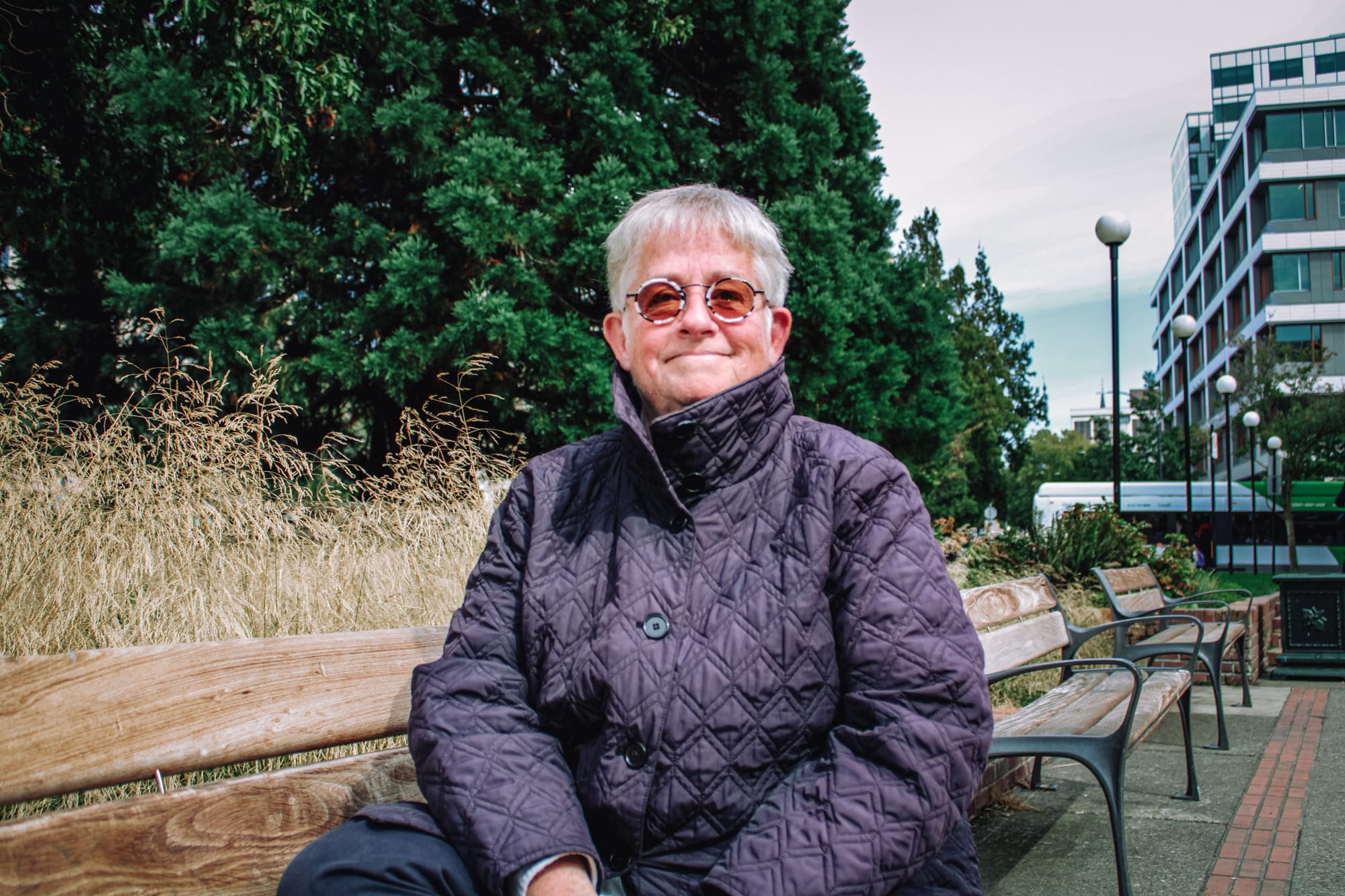
"It is without a doubt the most challenging piece of work anyone in local government is facing."
– Victoria Mayor Marianne Alto
Blurred lines
In his research, Hermer said he’s observed a general shift towards more aggressive behaviour in bylaw enforcement across Canadian municipalities over the last 30 years.
“The reality is that the line between what you would call traditional police services and bylaw enforcement now is blurred,” he said. “And it's no surprise, it seems inevitable, that bylaw officers now think of themselves more doing policing work than municipal service work.
“And there's a huge difference. So it seems inevitable that, unfortunately, you get attitudes in some bylaw services with regard to that type of aggressive policing.”
"The line between what you would call traditional police services and bylaw enforcement now is blurred."
– Joe Hermer, University of Toronto
Quite often, he explained, this blurring of lines is increasingly visible, as more and more cities' bylaw officers work directly with police, "proactively policing.”
This blurring is apparent in Victoria’s Community Safety and Wellbeing Plan.
The plan includes two new hubs downtown now serve as deployment bases for both bylaw and Victoria police, through which bylaw officers are accompanied daily by Victoria police officers during their enforcement actions.
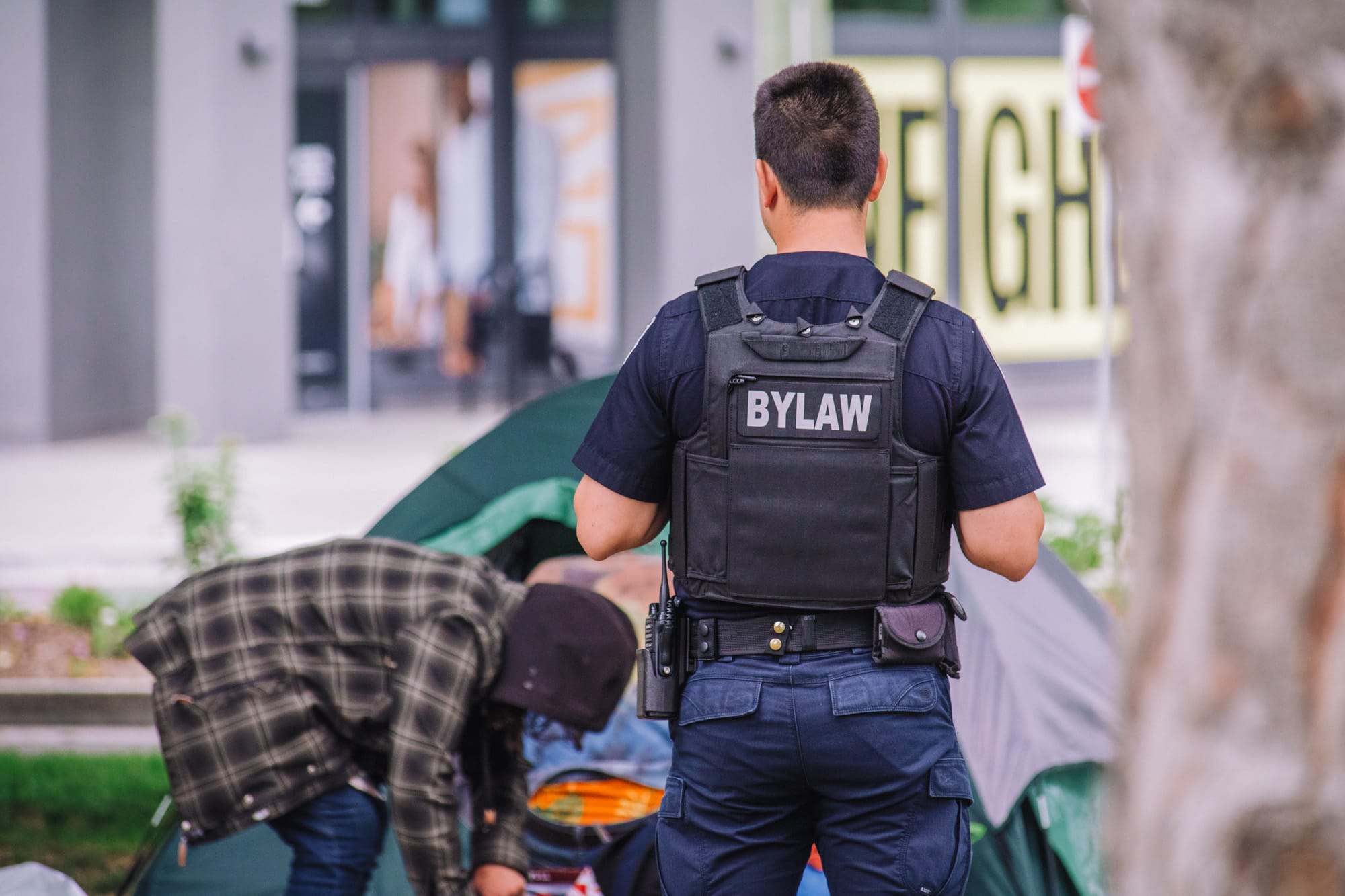
Adopted last year, the plan allocates more than $10 million to reorganize city staff to address “homelessness, social disorder and isolation, the toxic drug crisis, unmet mental and physical health needs, and poverty.”
In its first year of implementation, the plan has also led to the city opening nearly a hundred shelter beds and housing spaces at different nonprofits.
But one of the largest budget items in this plan — exceeding $3 million — was slated for police and bylaw.
Nearly $2 million went to hiring a dozen bylaw officers specifically to patrol Pandora and Princess avenues (another downtown area with tent sheltering). And over $1 million per year went to hiring nine new Victoria police officers.
This has resulted in a marked increase in enforcement for sheltering bylaws this year.
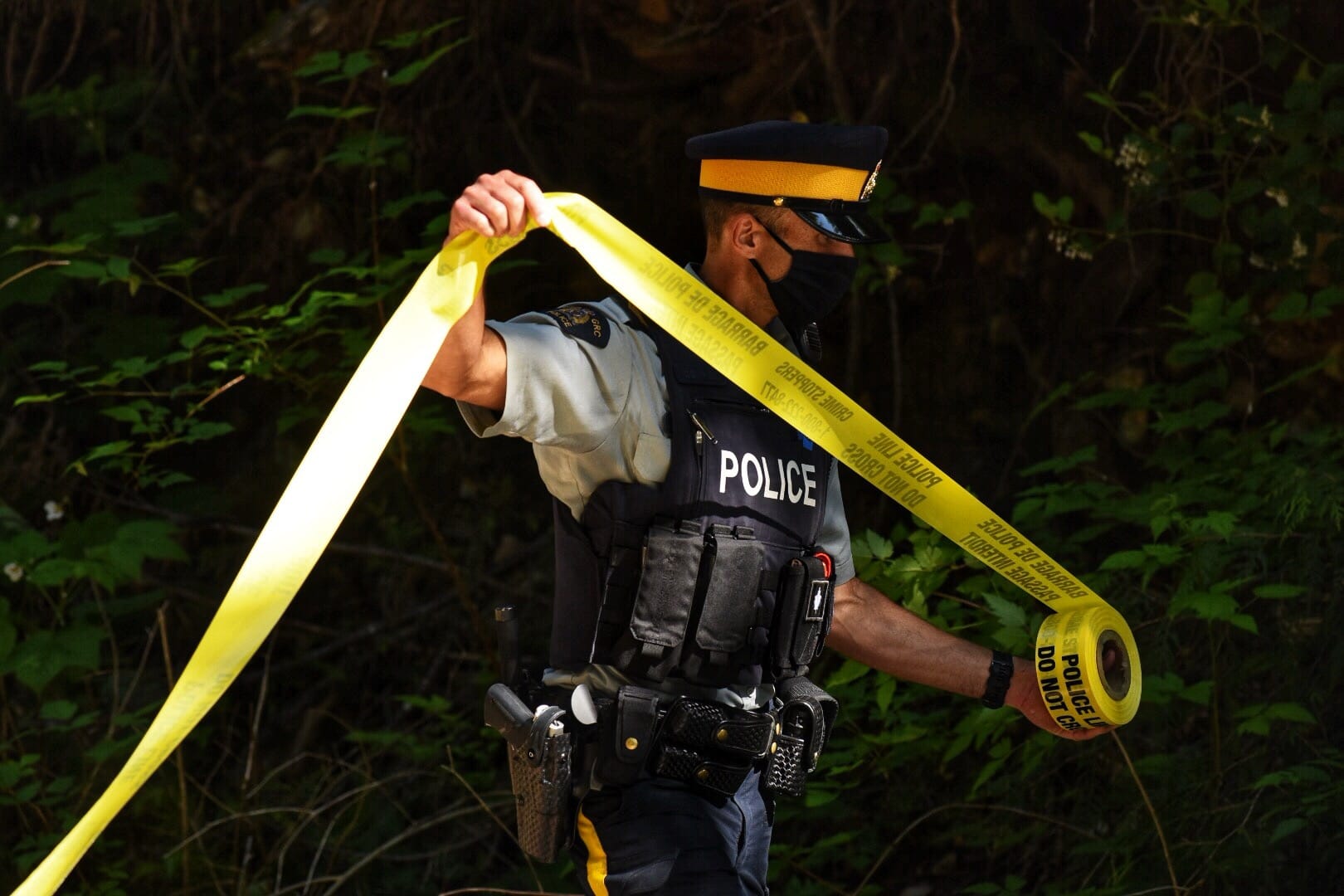
Two new hubs downtown now serve as deployment bases for both bylaw and police officers, through which bylaw officers are accompanied daily by VicPD members during their enforcement actions.
 Community Newsletter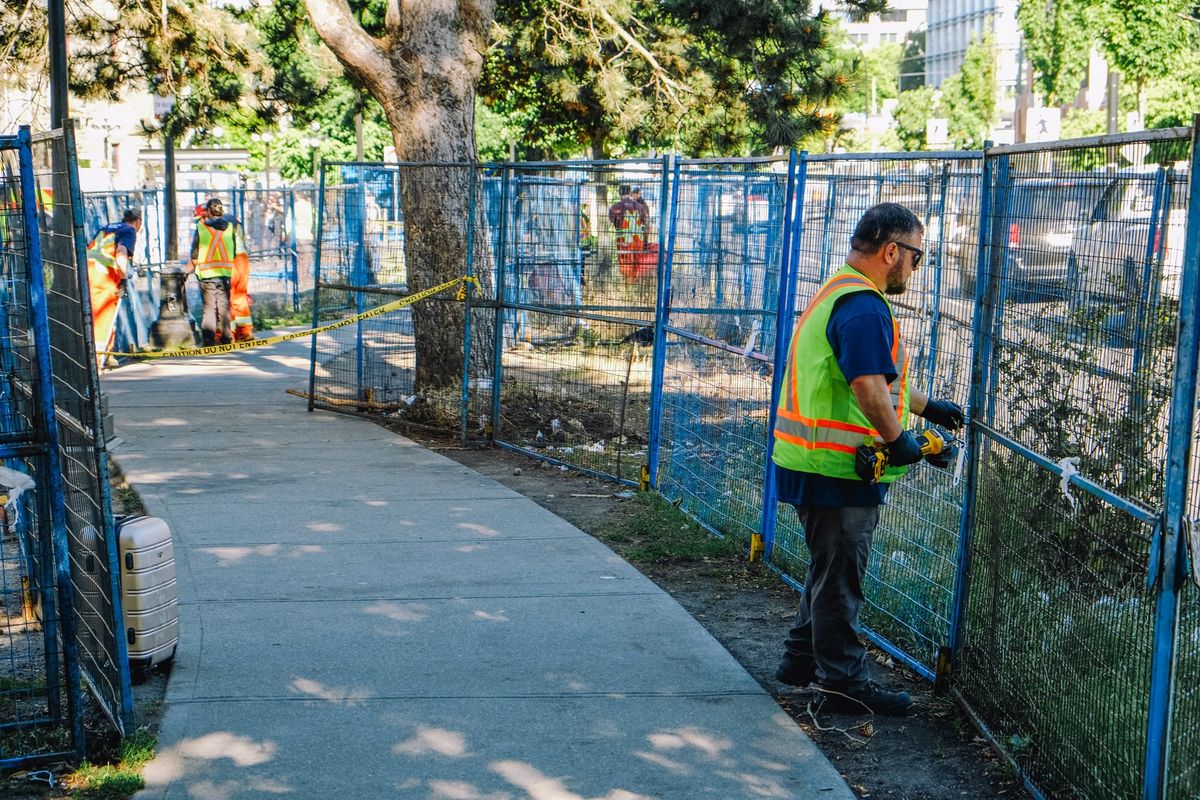
The increased enforcement has also raised questions about how consistently officers apply the bylaws.
Susan Kim, an incumbent Victoria councillor running for reelection on Oct. 17, said the way that bylaws are written can leave room for any given officer’s interpretation — which can have significant impacts on unhoused people.
To her, there appears to be “an inconsistency” in how the city is applying its own bylaws.
“It can vary between different bylaw officers and different police officers, and I mean that's just human nature too,” she told De Facto.
"It's irrefutable — and also it's deeply frustrating to me — that it required a group of journalists putting money into [tracking belongings] in order to validate what we've been hearing for years from people and apparently don't believe.”
Advocates Wiwcharuk and Ottosen have each presented to city council this year about the realities facing unhoused people. Both said Kim was the only councillor who reached out afterwards.
Kim wants the city to establish an appeals process for unhoused people to retrieve their confiscated belongings — one that is both clearly defined and consistent — akin to the appeals available to homeowners whose short-term rental license applications are denied.
"There is no such thing for folks on the street,” Kim said. “And that is a very glaring example of how processes are just set up differently for different classes of people.”
"A very glaring example of how processes are just set up differently for different classes of people."
– Victoria City Coun. Susan Kim
The Community Safety and Wellbeing Plan also allocates a total of about $5 million to fund a number of other elements: public works, shelter and temporary housing spaces; non-profit community service providers who offer healthcare and transitional support; and transportation to move unhoused people away from the downtown core.
“When you look at the numbers, is there a little bit more that's gone into enforcement at the start? Yes,” Alto said.
“But the impact of what has been invested with the non-profits and with the creation of [shelter] spaces has been unbelievably high.”
If reelected mayor, Alto said her priority would be a “significant reordering of emphasis” on increasing funding for non-profits as well as plans to add daytime shelters.
Support independent journalism that boldly shines a light on law, justice and rights. Sign up or donate today
“Even when you invest heavily in sheltering and supportive housing, and even if you invest heavily in responsive enforcement, you still have that gap in the middle: where do people go during the day if they don't actually have a place to be once they're moved?” Alto said.
“That gap is one that I think must be addressed very directly, and it's certainly something that I have many plans about, should I have the opportunity in a few months.”
A few weeks after being interviewed by De Facto, Alto, Kim and incumbent councillor Matt Dell introduced a motion to look into creating such day spaces.
A multi-governmental crisis
Bylaw State co-author Alexandra Flynn — a University of BC associate law professor and director of the UBC Housing Research Collaborative — pointed to other municipalities across Canada experimenting with human-rights-based approaches.
Toronto, for example, has an advisory committee that reports to council on how its policies and conduct can align with human rights law with regards to homelessness.
That city also receives oversight from an ombudsman who investigates complaints and advocates for accountability, including around the right to adequate housing.
"If we want to take human rights seriously, we cannot use bylaws to regulate a human rights crisis."
– Alexandra Flynn, UBC Allard School of Law
Meanwhile, London, Ont. provides washrooms, hot water, health care, and social services directly at encampments, rather than removing those supports or displacing unhoused people away from them.
While municipalities can develop more supportive approaches, Flynn said they cannot solve homelessness on their own — echoing advocates’ longstanding calls for more federal and provincial housing funding.
“If we want to take human rights seriously,” she said, "we cannot use bylaws to regulate a human rights crisis.”
Flynn also highlighted Dunn House, a Toronto housing project that provides 48 unhoused residents with homes on hospital grounds, supporting people who frequently rely on emergency care.
Residents receive permanent housing, tenancy protections, and ongoing support from healthcare providers they are familiar with.
The project reportedly saved nearly $1.7 million in its first year. It’s now set to double its capacity, with construction on additional housing expected to begin begin in the coming months.
The expansion is an example of a successful multi-pronged approach by governments: Toronto’s $10-million investment is backed by $21 million in federal funding, while Ontario will contribute $2.6 million annually.
But Flynn said this type of multi-jurisdictional action is rare and has been at a stand still in many cities across Canada.
“It's like that Spider-Man meme,” she said. “They're all pointing their fingers at each other and not really stepping up.
“No government is really stepping up to say we're going to deal with this issue — this human rights issue — using human rights instruments.”
"It's like that Spider-Man meme. They're all pointing their fingers at each other, and not really stepping up."
– Alexandra Flynn, UBC Allard School of Law
Under the National Housing Strategy Act, Canada recognizes adequate housing as a fundamental human right affirmed in international law.
Flynn said Section 7 of the Canadian Charter of Rights and Freedoms — protecting "life, liberty and security of the person" — has also been central to successful legal challenges against municipal bylaws affecting people living in tent encampments.
“If Canada is going to take seriously its Charter of Rights and Freedoms and the right to adequate housing — and it's a signatory to both of these legal obligations — then it should be doing something different,” she said.
Victoria’s incumbent mayor addressed the challenge of municipalities having to respond to a ballooning housing and healthcare crises, but also argued that in her view, responses must also “include enforcement at some level.”
“Local governments, your governments, are trying to deal with issues that they have never faced before, with the same amount of resources that they've had for decades, if not longer,” Alto said, "with an expectation from the general public that we'll do something, and at the same time having to balance out the needs of the most vulnerable.”
“It is without a doubt the most challenging piece of work anyone in local government is facing right now.”
Seized items cost the poorest both cash — and housing
While governments point fingers, unhoused people living in Victoria continue to have their belongings and shelters taken from them, interfering with their ability to secure housing.
When researchers with the Canadian Housing Survey examined pathways out of homelessness, they found that financial factors were cited by unhoused people as the most significant driver.
Financial factors contributed to 69% of people exiting sheltered or unsheltered homelessness, and 66% of exits from hidden homelessness.
 Ricochet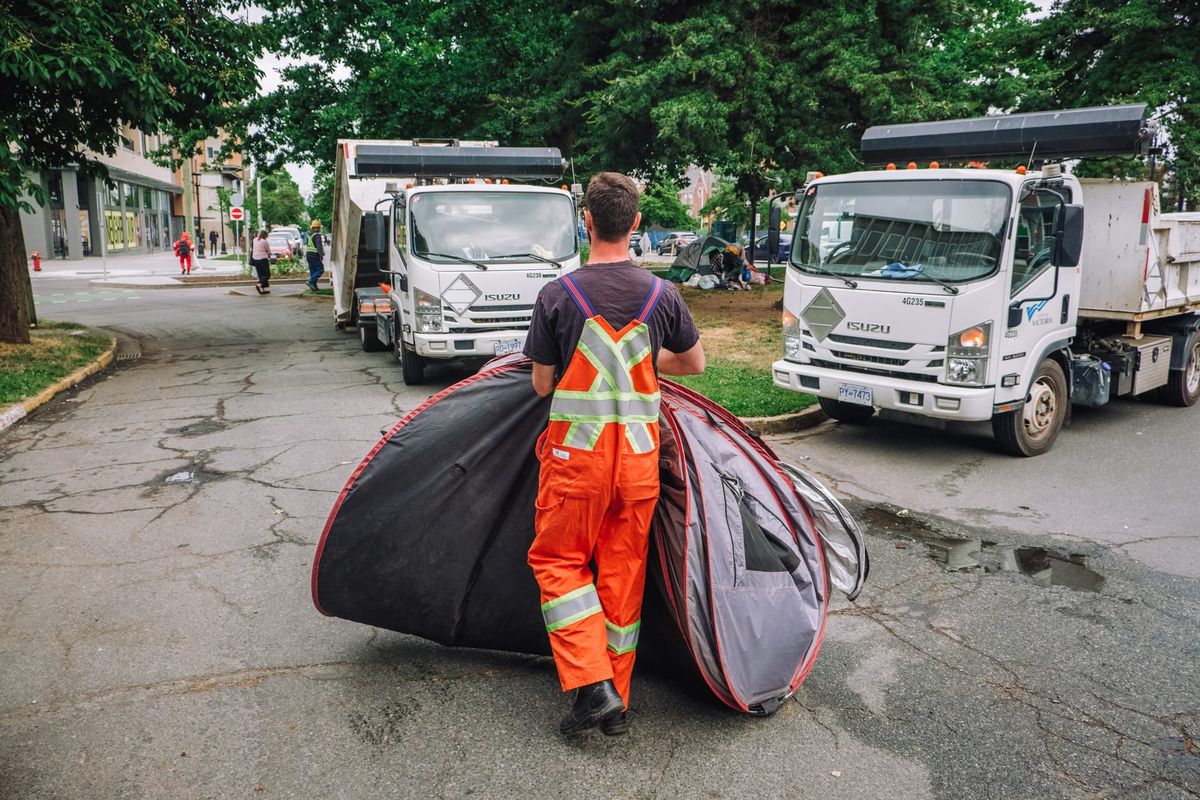
Some unhoused people we spoke with say they’ve lost hundreds or even thousands of dollars to bylaw enforcement.
Tyler said he can face dispossession by Victoria bylaw enforcement up to 10 times per month, and had his bike taken on August 19.
“My bike that I had been building for the past four months was a BMX bike and it was about a value of like $1,500,” he alleged. “They threw it out and put it in the recycling bin.”
Tyler’s losses to Victoria bylaw have also been covered in Saanich News. He said he’s had over two dozen bike locks permanently confiscated, and that the losses dig into his ability to find stable financial footing.
“They threw away my bike lock four times in a month,” he said. “At 80 bucks a piece for locks is like $240 plus tax. So like you're looking at over $300, $350 in locks just for one month.”
On one of the days Tyler encountered bylaw officers, a private security guard stationed on the block was standing nearby and told De Facto they'd overheard bylaw officers discussing targeting Tyler specifically.
"This bylaw officer jumped out of his truck ... and said, 'Whatever you have, we're taking it. It doesn't matter where you go,'" alleged the guard, asking not to be identified to protect their job.
"Tyler started running with all of his stuff. And this bylaw officer said to all of his colleagues, 'It doesn't matter where he goes. We're taking all of his stuff, period.'"
"Whatever you have, we're taking it. It doesn't matter where you go."
– Bylaw officer, according to a private security guard witness
Internally, the City of Victoria’s bylaw department has been embroiled in allegations about bullying and discrimination — resulting in 10 workplace conduct investigations since 2021, as reported last year by CTV.
Externally, Tyler is just the latest unhoused person to tell De Facto about alleged discriminatory and aggressive conduct from bylaw officers.
 Drug Data Decoded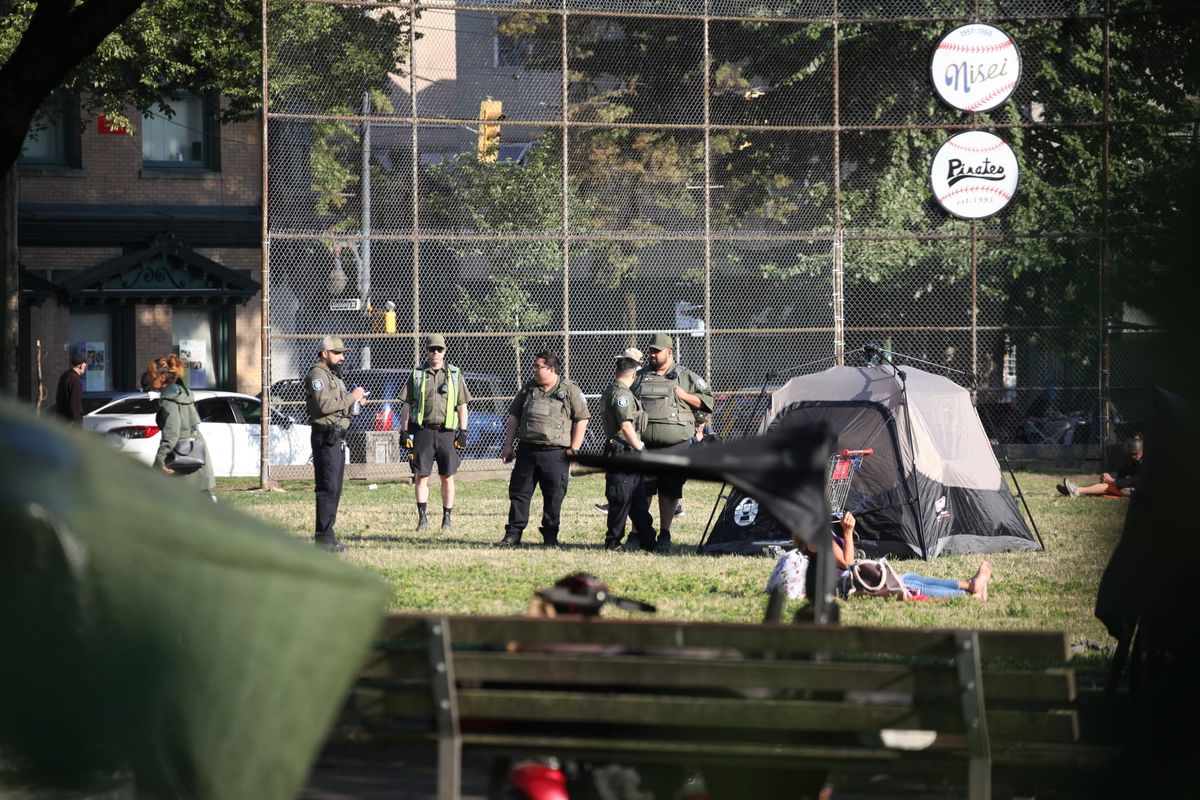
In response to this allegation, city spokesperson Colleen Mycroft told De Facto in an email, "Staff recognize that each person is a unique individual and consequently staff do not target individuals, they treat everyone in the exact same manner.
“Each person is evaluated for their ability to comply in any given time and place.”
She added that “impounding someone's property for punitive or discriminative reasons would be subject to an investigation and, if substantiated, potential discipline.”
An easy retrieval process — in theory
In the first part of De Facto's investigation, we tracked new items city employees disposed of at the Hartland Landfill within days of them being donated to unhoused residents.
Using AirTags, we followed a cart given to Fred, a tent given to David, and another tent given to Hamel. All three said the confiscation of their belongings is a frequent ordeal.
Despite much of her survival gear and possessions going straight to the garbage, Hamel said she’s had opportunities to retrieve some of her items through Victoria bylaw’s impound system.
“If it's impounded, I go and get it,” she said, adding that even then “there's not much left.”
According to Mycroft, the impound retrieval is fairly free of barriers.
“You could call us. You could wave us down. You could come to City Hall. You could knock on bylaw's door,” Mycroft told De Facto.
“You could ask a service provider to call us, and we will actually drive your belongings to you wherever you are.”
But for Hamel, the process hasn’t always been straightforward.
When she went to the bylaw impound office to retrieve what she could of her belongings on April 14, she was turned away.
The employee at the office informed Hamel that there were currently no officers available to help her with her request, and that the time slot for retrieval had just been rescheduled to 8-11:30 a.m.
“Sure would have been nice to have some blankets tonight,” Hamel said in a video documenting the interaction.
“I know,” the city employee responded. “It’s a new change as of today — it’s new.
"It’s not your fault you came at the previous time. Come back tomorrow morning.”
The obstacles and delays in getting her belongings back drain both time and energy, Hamel said, leaving her with less ability to focus on securing housing and finding stability.
“It puts me off visiting the housing [programs] or doing more things like that,” she said.
Beyond the wasted effort and another night without her essentials, Hamel said the new timeframe concerns her because it coincides with the time daily bylaw enforcement is most active
With too much to carry, she can’t bring everything she owns to the impound office, so she’s forced to leave items unattended on Pandora Avenue during the busiest enforcement hours.
“I have to risk the things that I leave behind in order to pick up what’s here at the office,” she said. “We do have to worry about our things being taken by bylaw whilst we are coming to pick them up from bylaw.”
Mycroft chalks up this change in timing and lack of notice to “an unfortunate miscommunication.”
“Staff involved had a debrief and we haven’t had an issue like that one since,” she wrote in an email.
"The best advice that our bylaw officers can offer is ... keep the property they have with them to what they can pack up each day."
– Colleen Mycroft, City of Victoria
Mycroft also said it's up to individuals to reduce the amount of their possessions to those they can manage to keep with them.
“The best advice that our bylaw officers can offer is that people who need temporary overnight shelter in lawful locations in city parks,” she said, is for them to “keep the property they have with them to what they can pack up each day and be mobile with.”
Doing so, she added, would "allow compliance with the community standards set out in the Parks Regulation Bylaw.”
But it's difficult to “pack up each day and be mobile," and comply with the city's advice, if bylaw officers throw out one's mobility aids.
Fred, whose cart was taken to the landfill, and many others who spoke to De Facto said that has in fact happened to them.
“It's one of these things that people just don't realize,” said Hermer. “Unhoused people have to carry all their stuff around with them all the time.”
For many unhoused Victoria residents, the frequent routine of bylaw sweeps have become one more distressing ordeal associated with becoming homeless.
But although they happen daily with methodical efficiency, the bylaw officers don’t always enforce city policies evenly across the board.
In the interaction Hamel filmed of bylaw officers seizing her wool blanket in April, one tells her that Pandora Avenue simply cannot be her or anyone’s home.
“We have rules for our society — and we’re not going to have people set up here on the sidewalk,” says the officer.
“But where am I supposed to be?” replies Hamel. “This is all I have left.”

Editors: David P. Ball and Cam Welch

Mike Graeme
Mike Graeme (he/they) is a white settler photojournalist and member of De Facto cooperative documenting stories of resistance and justice on the unceded lək̓ʷəŋən and W̱SÁNEĆ territories. His photos and writings have appeared in more than 25 media outlets and nonfiction books across Canada and the US, including The Narwhal, The Tyee, IndigiNews, and The Nation. He's won a Jack Webster Foundation award, and been a shortlisted finalist for two John H. McDonald Excellence in Student Journalism Awards. Read their reporting

Brishti Basu
Brishti Basu (she/her) is a member of the De Facto co-operative and a reporter/editor living on unceded lək̓ʷəŋən and W̱SÁNEĆ territories, otherwise known as Victoria, BC. Her reporting over the last eight years can be found in over 15 Canadian and international publications, including CBC, Capital Daily, VICE, National Geographic, and BBC. She's been a shortlisted finalist for awards from the Canadian Association of Journalists, Jack Webster Foundation, and Canadian Online Publishing Awards. Read her reporting