How frontline workers are tackling Victoria’s overdose crisis
On the block on Overdose Awareness Day
Victoria grassroots groups marked International Overdose Awareness Day — and called for transparency around treatment centres

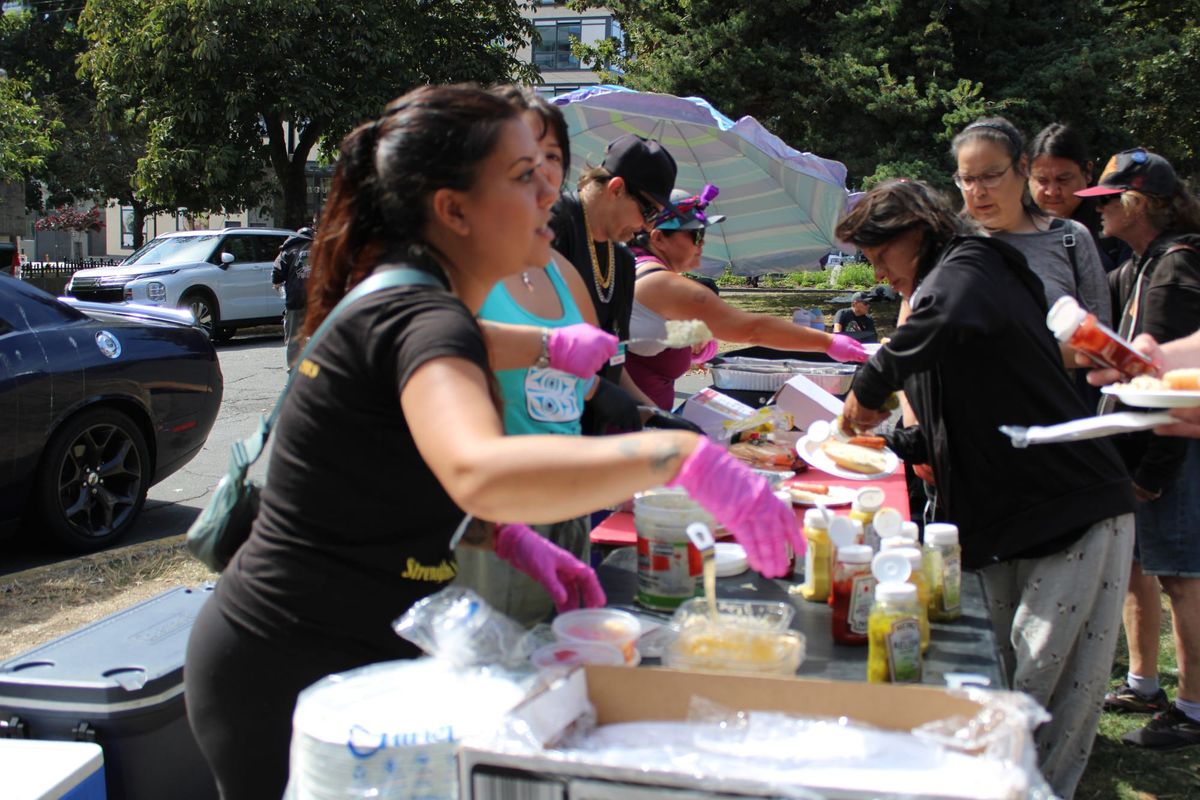
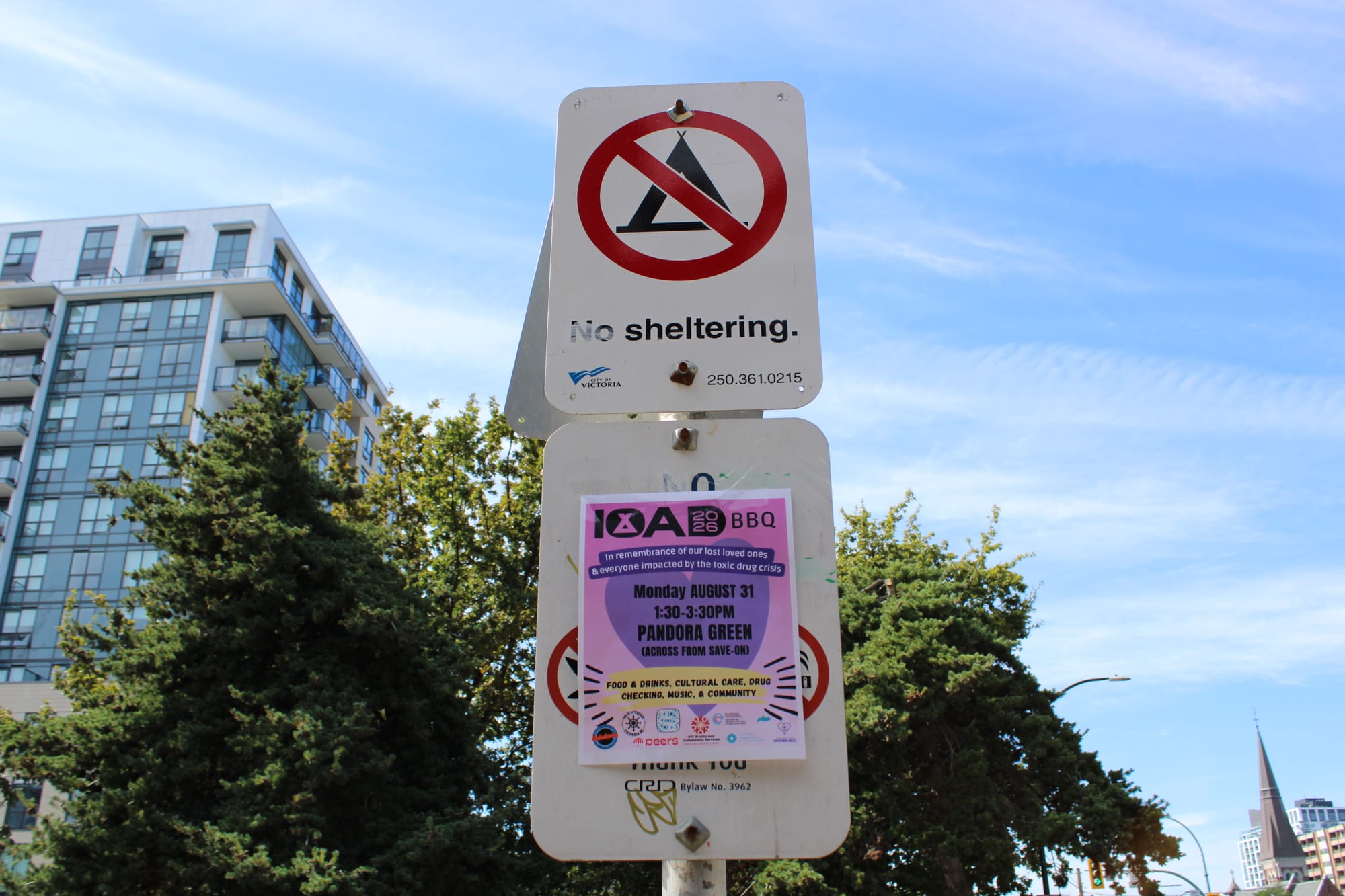
On a grassy median just steps away from the 900-block of Pandora Avenue in Victoria, a number of grassroots non-profits set up to mark a sombre occasion.
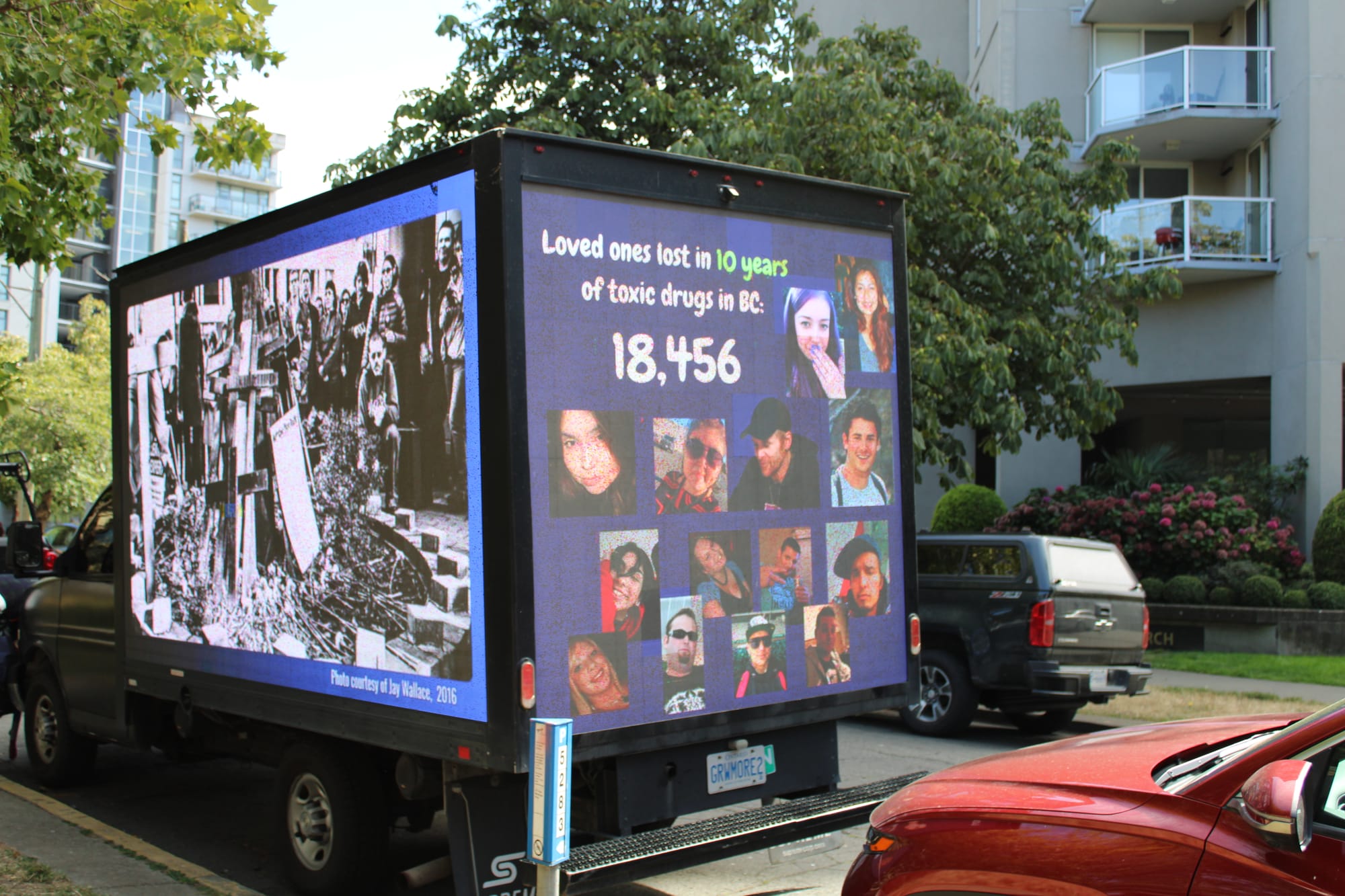
It was the 25th anniversary of International Overdose Awareness Day (IOAD) on Monday, August 31. But in BC, the toxic drug crisis is in its 10th year, having claimed more than 18,000 lives since it was first declared in April 2016.
In spite of the heaviness of the occasion, the event itself had a lively air, and a focus on how to keep supporting people who are currently in the throes of homelessness, addiction, or both.
It offered a chance for local support groups to come together and pool their services in one place, as close as possible to the city block where the most marginalized people tend to gather and shelter overnight.
“We're here if folks have samples that they would like to get checked,” said Katy Booth, coordinator of Substance Drug Checking, who was setting up one of the many tables on the public lawn as we spoke. “We usually see about 200 to 250 people every year.”
At another pop-up drug checking event on Pandora Ave earlier this year, Booth said her group had detected medetomidine — a powerful veterinary sedative that’s been circulating in the street drug supply in BC — and various other substances that people were not expecting to see in their drugs.
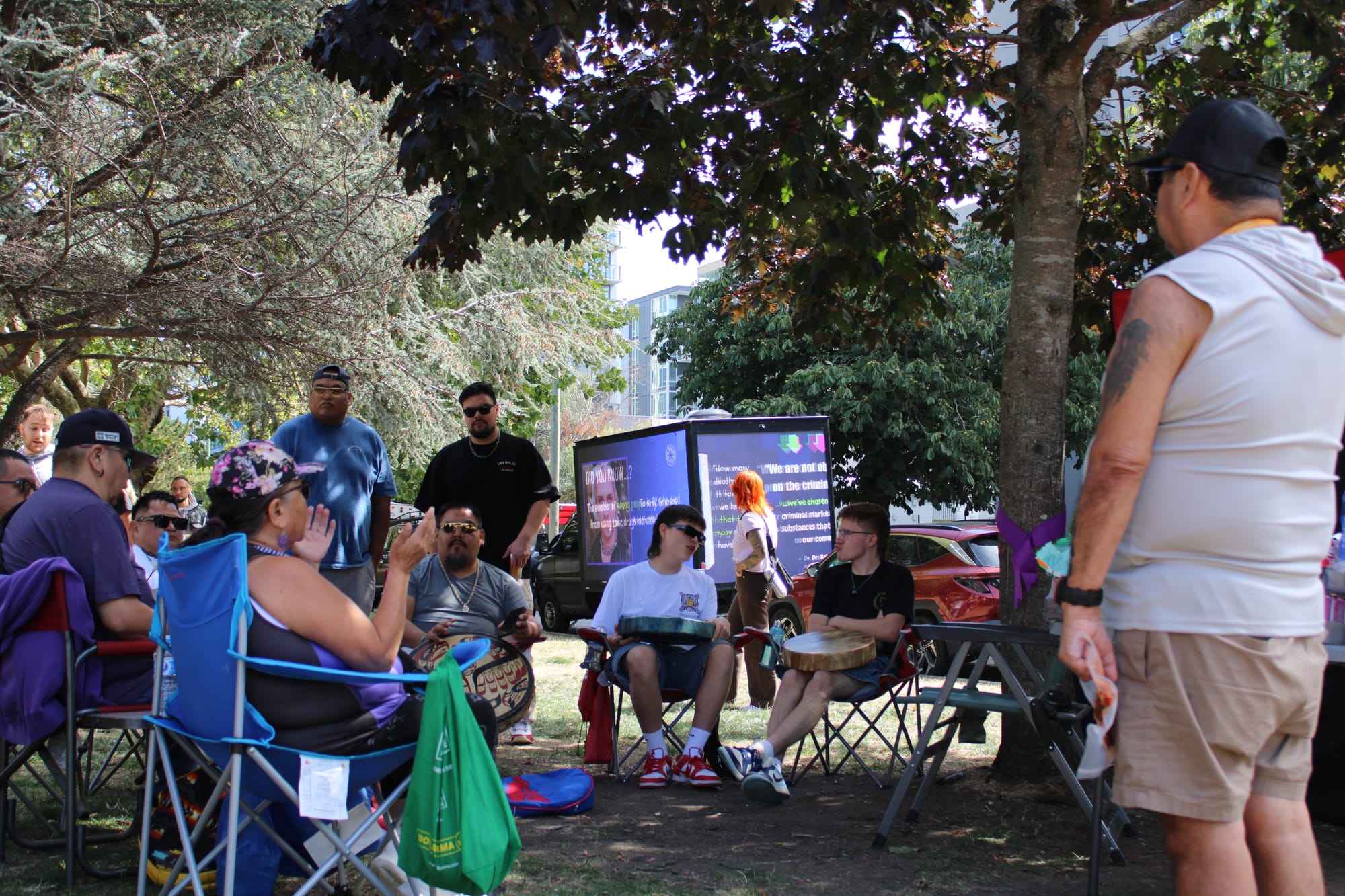
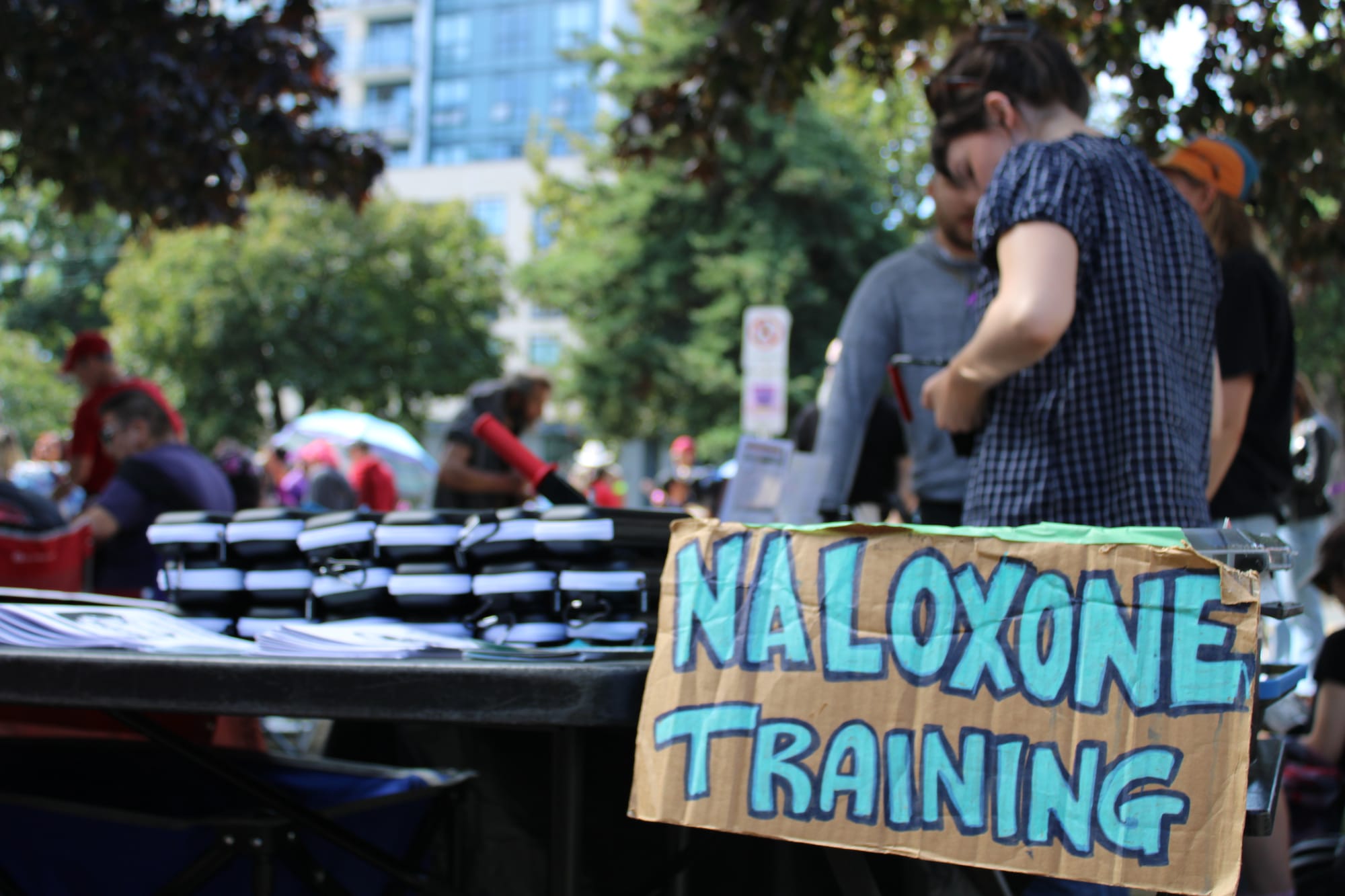
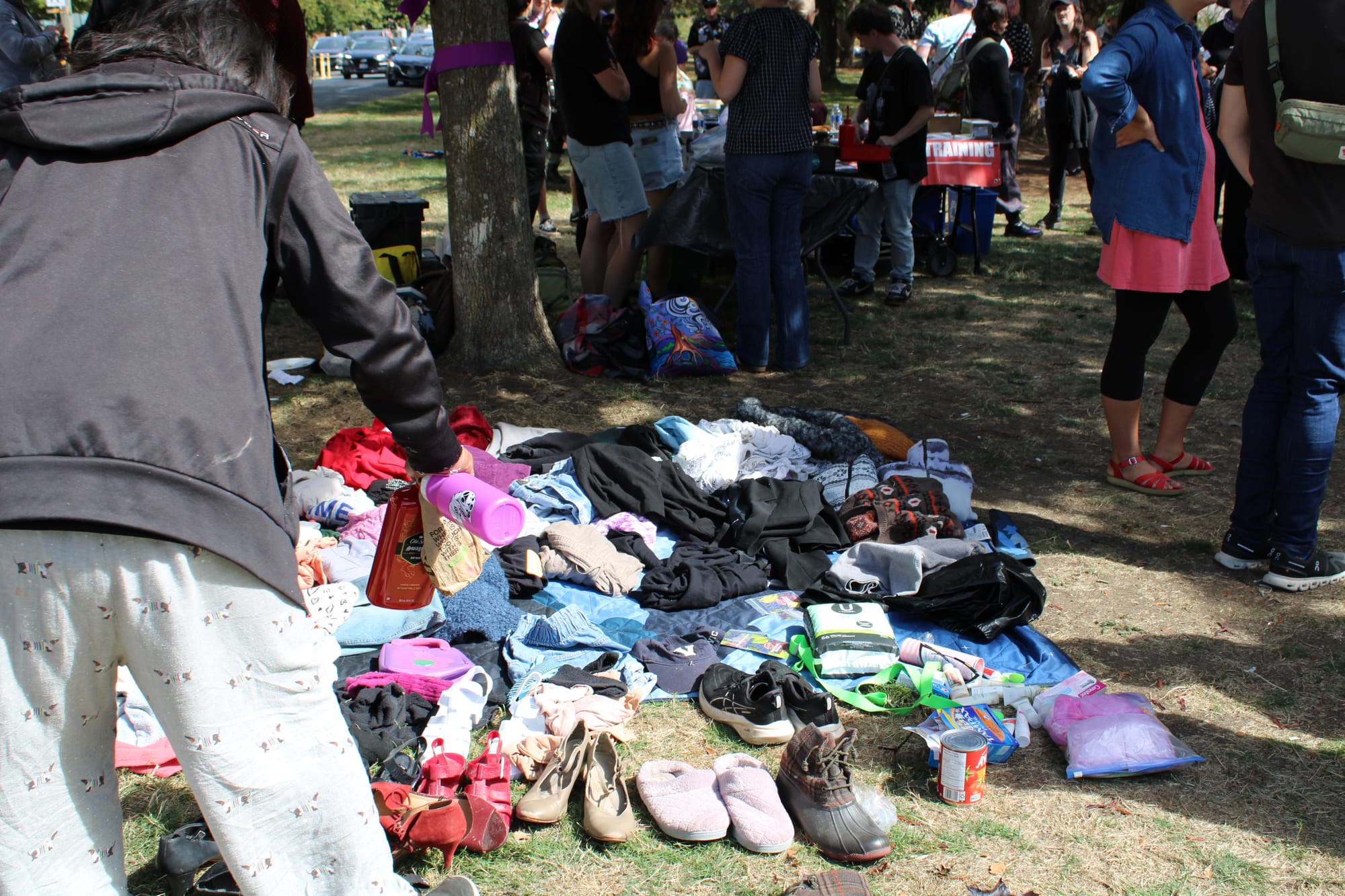
In addition to drug checking services, the event featured a barbecue and drum circle by Indigenous harm reduction group QomQem; a cedar brushing tent; a naloxone training table set up by AVI; a clothing and shoes donation drive; and the beginning of a letter writing campaign to the provincial government set up by local physicians with Doctors for Safer Drug Policy.
Off to the side, a truck with billboard displays on all sides stood flashing overdose death rates, the faces and stories of the people affected, and further statistics about the crisis, including its excessive impact on Indigenous people.
Support for and by Indigenous people
First Nations, Inuit, and Métis people across Canada are disproportionately impacted by the toxic drug crisis, with Indigenous people in some regions more than six times as likely to experience toxic drug-related harms as non-Indigenous folks.
“There aren’t many outreach teams that are solely Indigenous-led,” said QomQem program manager Amalia Paterson-Andino, “So having our workers be able to have those connections and bring culture is really huge. Going out in community, you just see [that] building those relationships is huge.”
QomQem began with just two Indigenous outreach workers in 2020 when Victoria, like many other cities, saw a rise in rates of homelessness and overdoses.
Victoria’s IOAD event also featured a space where support workers and others seeking a moment of levity could go to get a cultural cedar brushing from John and Sophia, a couple from Songhees and Cowichan First Nations.
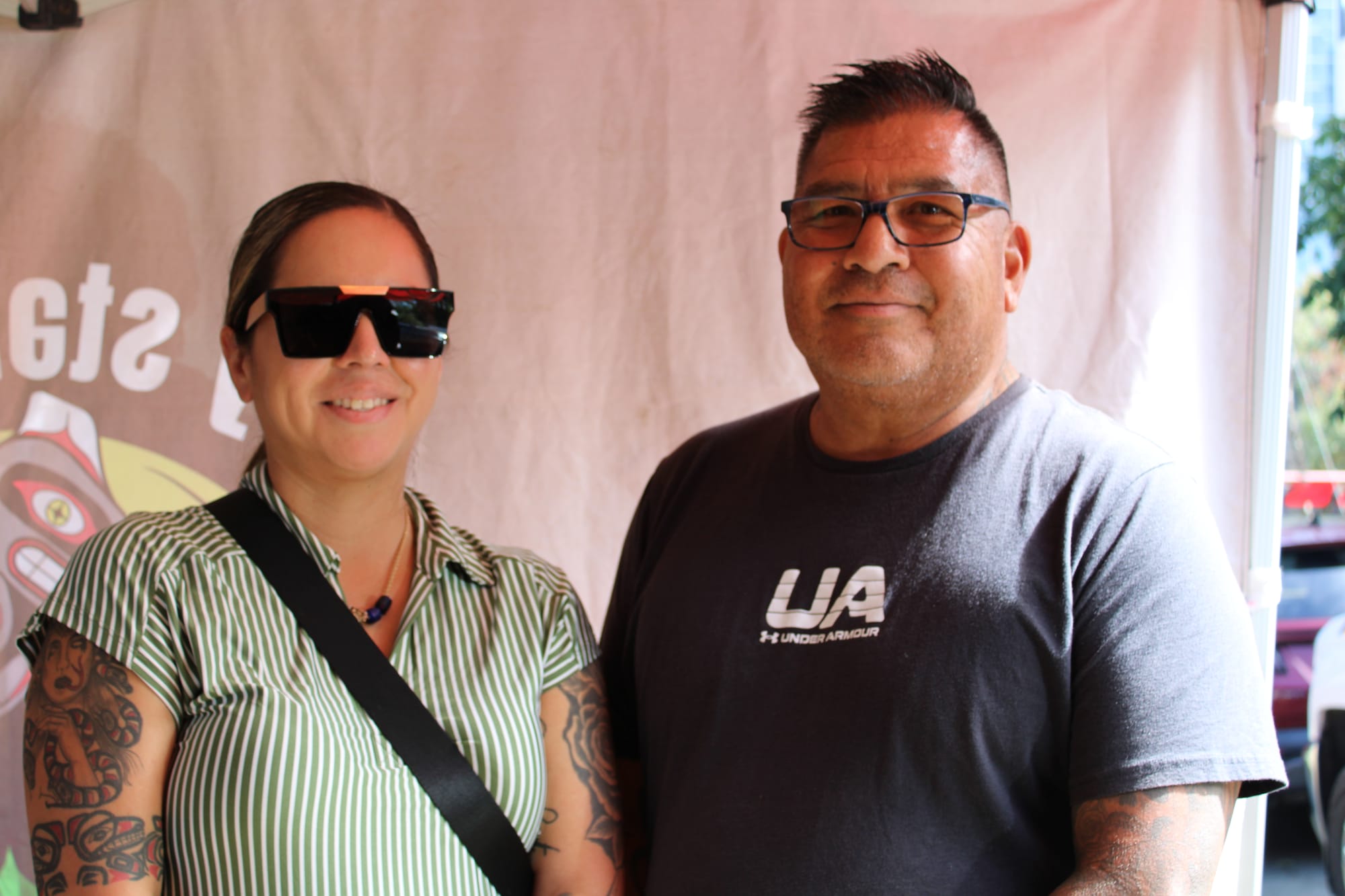
“We use cedar branches, so we start from your head and go down,” Sophia explained. “It takes off heaviness, hurt, anger, any sort of heaviness that you don't need to carry. That's what we take off of everybody.”
According to John, the couple often attends events alongside QomQem, Peers Victoria Resources Society, SOLID Outreach, and other local groups, whose staff are often the first responders to show up when an unhoused person is in crisis.
“They're still here, so I have to raise my hands,” John said, speaking of the resilience of these workers. “They've been going through it for years, and they're still here today. They're passionate for what they're doing, but it does take a toll on them.”
Seeking evidence about treatments at hand
At a table at one end of the gathering, Doctors for Safer Drug Policy had a stack of letters and envelopes, inviting passersby to learn about their new campaign and add their names to a letter addressed to BC auditor general Bridget Parrish.
“Essentially, what it is about is asking the government for an audit of treatment centres, recognizing that we simply don't have data from treatment centres that are in BC currently because they aren't required to provide very much of it,” said Dr. Kelsey Roden, a family doctor and formerly Island Health’s South Island Addiction Medicine lead.
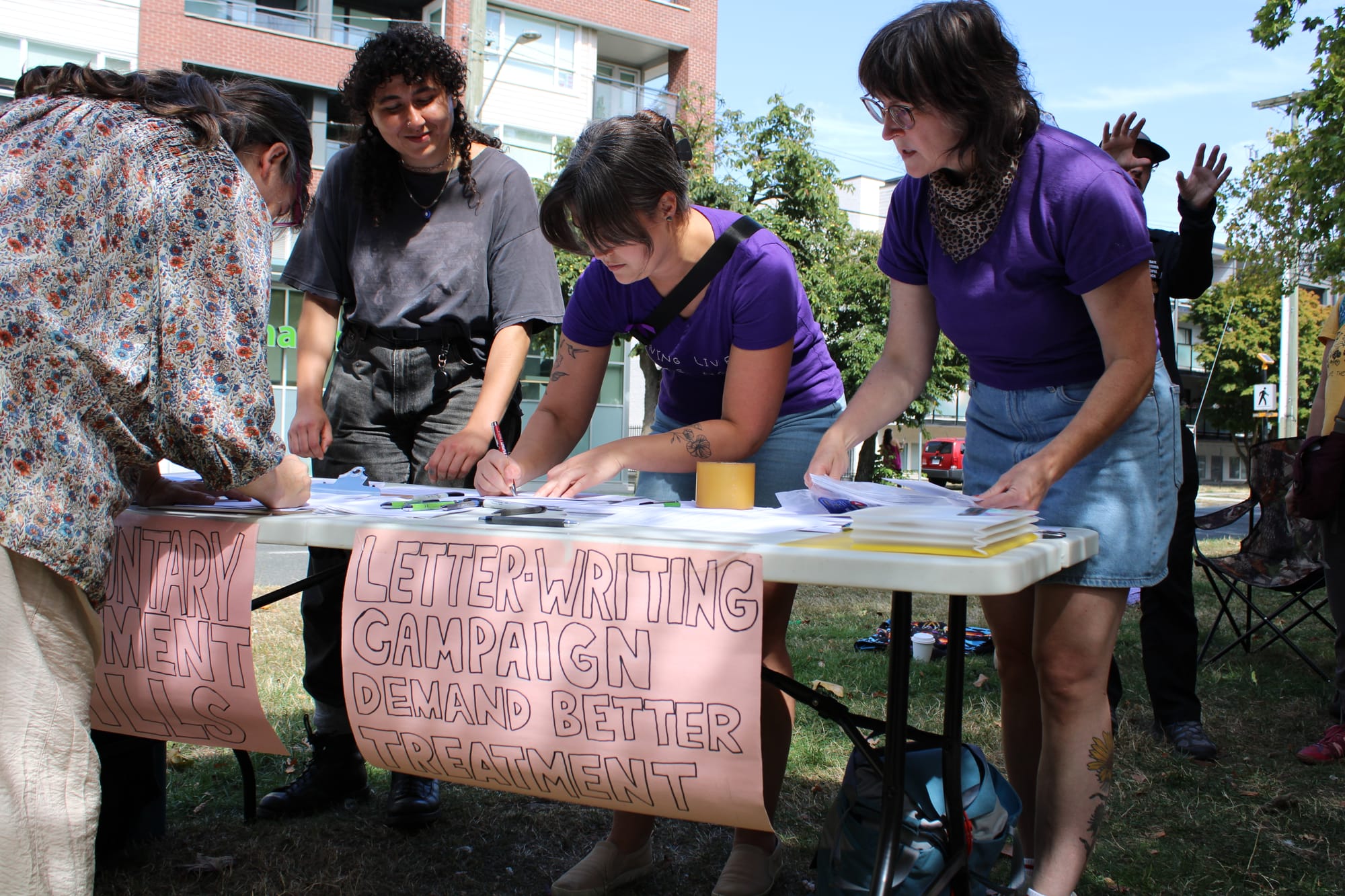
The letter to the auditor general notes that the province has made several public announcements about investing in more treatment centres, but that “investigations into these claims have shown a system that is fragmented, difficult to navigate and access, and not based on evidence.”
It references the fact that most of former chief coroner Lisa Lapointe’s recommendations in her death review panels about the overdose crisis have not been implemented. It also references reporting by the Investigative Journalism Foundation which found that a third of BC’s publicly funded substance-use treatment beds are actually meant for low-barrier housing.
Though the province is pushing for abstinence-based treatment, Roden said, there is no publicly available evidence that the treatments currently available are actually working.
“We don't know things like what are people's outcomes after treatment. What does their aftercare look like? What does the actual treatment itself look like? Does it meet a certain standard, for example, of care?” Roden said.
“So what we're asking for is simply an audit, so that that information can be made available. If there are issues, they can be worked out.”
Work continues into fall for these grassroots groups
This campaign is just one of several actions taken by Doctors for Safer Drug Policy, a group that launched in 2024 by opening volunteer-run unsanctioned overdose prevention sites outside hospitals on Vancouver Island.
This week, physicians with this group will be at the University of Victoria to offer drug checking services to incoming students during the first week of classes.
In 2024, UVic student Sidney McIntyre-Starko died just two weeks into her second semester after a group of students took an unknown powder they had found, which later tests identified as cocaine and fentanyl. In the aftermath of that tragedy, UVic changed its emergency response policies and BC rolled out nasal naloxone kits across campuses and has now updated its campus overdose response guidelines for this school year.
The doctors’ group’s services are, however, not funded by the province and will run on a volunteer basis. They will set up by the Student Union Building on September 9 and 11.
For their part, representatives with grassroots support groups operating downtown, like QomQem, say it’s getting harder and harder to secure funding to continue their operations.
“This year, there's definitely been less funding,” said Paterson-Andino.
“A lot of the time, with bylaw [officers] coming by and winter is going to be coming, we get tents and we get supplies for folks so that they can be safe during the cold months. But yeah… bylaw will take the tents and it’s just this vicious cycle.”
Thank you for supporting independent journalism that boldly shines a light on law, justice, and rights!