VPD claimed no emails sent to or from senior cops about compassion club ahead of raid. That’s untrue
Freedom-of-information advocates say force's non-response likely broke BC’s transparency law — and ask if Vancouver police should undergo ‘greater scrutiny’ for public transparency


In late 2023, the Vancouver Police Department prepared for its high-profile raid of the Drug User Liberation Front’s (DULF) compassion club, leading to drug trafficking-related convictions for the harm-reduction initiative’s founders.
In the month ahead of the raid, DULF had been the subject of intense media and political fervour, following an article in The Economist.
Yet when De Facto filed freedom-of-information requests for communications from the entire month around the raid, the police force claimed no emails about the group were sent to or from several top officers.
In fact, emails revealed in the DULF criminal trial showed that for two high-level officers that wasn’t true — and the VPD’s claim otherwise may have violated the provincial freedom-of-information law, according to transparency experts.
For one FOI advocate, it raises questions about whether the VPD should undergo “greater scrutiny” for its information management practices.
DULF launched its compassion club in August 2022 as a civil disobedience initiative to show that providing drug-using adults with regulated, lab-tested alternatives to the toxic illicit drug supply would reduce overdose deaths.
Since BC declared a public health emergency ten years ago, more than 18,000 people have died from unregulated drugs in the province.
But DULF’s unsanctioned harm-reduction effort was shut down on Oct. 25, 2023, after VPD raided its office and the homes of co-founders Jeremy Kalicum and Eris Nyx.
The court will hear closing arguments this week in their constitutional challenge of their possession for the purpose of trafficking convictions.
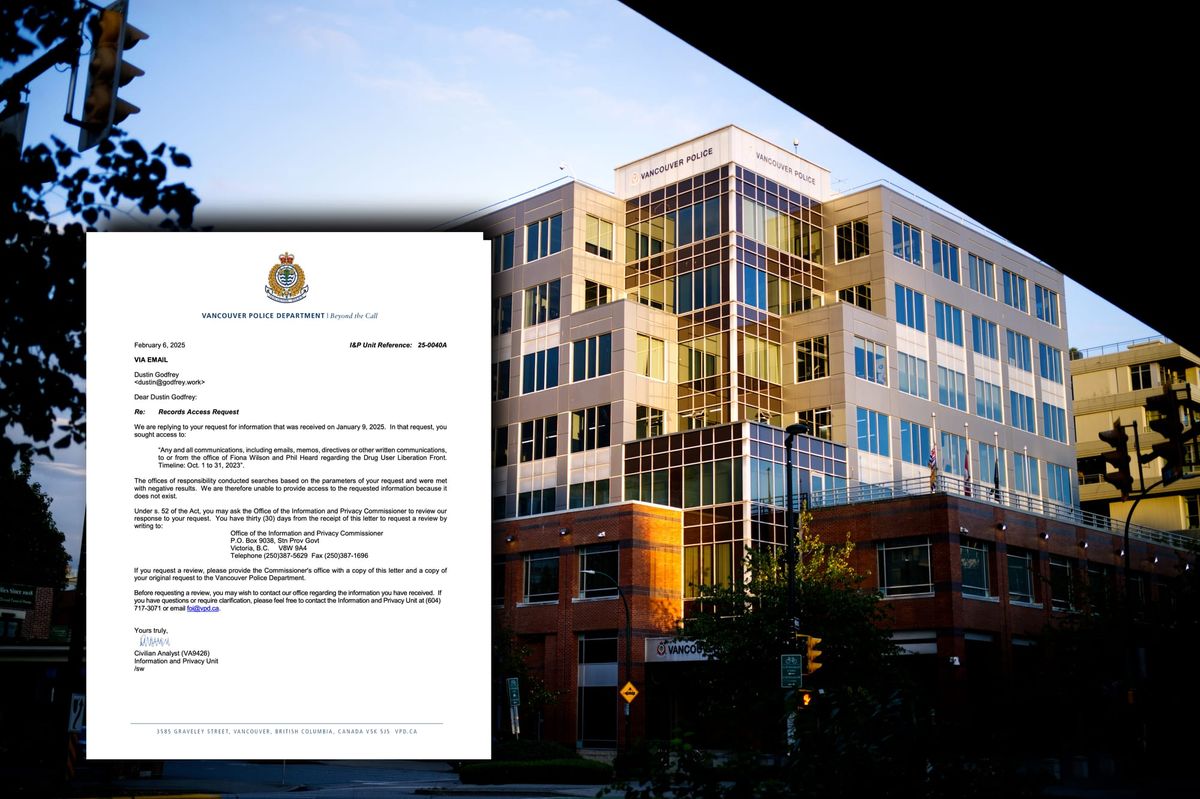
De Facto filed a request for emails to and from then-deputy chief Fiona Wilson and then-inspector Phil Heard about DULF in the entire month of October.
“We are … unable to provide access to the requested information because it does not exist,” the police force’s information and privacy unit (IPU) said in a letter responding to the January 2025 FOI request.
Emails found in the DULF trial evidence
Evidence submitted in the criminal trial of Kalicum and Nyx — who were convicted of possession for the purpose of trafficking charges for their unsanctioned compassion club — include emails that CC'd both Heard and Wilson in that time period covered by the FOI request.
De Facto was granted a court order in November to view evidence submitted to the trial. Among the thousands of pages of evidence were a series of emails from Oct. 10–16, 2023 between various officers involved in the investigation into DULF.
The emails detail questions from prosecutors about the public interest in pursuing enforcement and VPD's plans for the raid, which took place that month.
They include comments about political concerns that prompted the investigation, along with worries that failing to pursue enforcement could encourage “copycats” of DULF’s compassion club.
De Facto will be reporting on those emails and more about the case in greater detail.
However, the court order to allow De Facto to view the evidence came with a major caveat: none of it could be published without another court order.
The legal definition of “publish” is expansive, and includes sending the records by email to another individual. De Facto obtained a court order to be able to send the emails to the Office of the Information and Privacy Commissioner (OIPC) to file a formal complaint about VPD’s non-response to the request.
The OIPC is the independent, quasi-judicial body that adjudicates complaints about and reviews of responses — or lack thereof — to requests under the Freedom of Information and Protection of Privacy Act (FOIPPA).
The order also allowed De Facto to share the records with the Freedom of Information and Privacy Association (FIPA), a transparency advocacy group, and to publish the emails publicly, albeit with contact information redacted.
After viewing the emails, its executive director Jason Woywada said he believes it is likely the VPD’s failure to disclose them violated FOIPPA.
VPD claims CC’d emails don’t count as 'received'
In response to questions about whether the emails had been deleted by Heard or Wilson, or whether there was an incomplete search, VPD spokesperson constable Megan Lui said “the claim that emails were deleted or suppressed is categorically false,” adding that Heard searched for records related to the request but found none.
Lui said the emails found in the DULF trial evidence “are ones that superintendent Heard was copied on; as such, they are not captured by the criteria of your previous request. This position remains unchanged.”
De Facto’s FOI request sought “any and all communications, including emails, memos, directives or other written communications, to or from the office of Fiona Wilson and Phil Heard regarding the Drug User Liberation Front” between Oct. 1 and 31, 2023.
Woywada wasn’t convinced by the VPD’s explanation. In particular, he said it would likely constitute an incomplete search and potentially a failure to assist.
Public bodies have an obligation under FOIPPA to “make every reasonable effort to assist applicants.”
The duty to assist includes “interpreting the request fairly or clarifying the scope and intent if necessary, conducting a comprehensive search for records, applying exceptions fairly, and adhering to the act’s timelines,” according to the provincial government.
Support independent journalism that boldly shines a light on law, justice and rights. Sign up or donate today
These aren’t the only emails found through other channels that weren’t included in the VPD’s response.
In response to an FOI request, the public safety ministry included an email from Heard to Wilson sharing a press release the VPD planned to release about the Oct. 25 raid, which Wilson then forwarded to provincial director of police services Glen Lewis.
In that case, an IPU officer said those emails appeared to be transitory and may have been deleted.
“It is reasonable to conclude it was not retained, which could explain why it was not captured in the search conducted for your request,” the IPU officer wrote in an email.
It’s also not De Facto’s only FOI application for communications about DULF to yield no results. It followed a March 2024 request for emails about DULF to and from then-chief Adam Palmer and senior deputy chief Howard Chow between Sept. 27 and Oct. 26, 2023.
In that case, the police force initially gave itself a 30-day extension “due to the large number of records that must be searched” for the request, before similarly telling De Facto that there were no responsive records.
No emails surfaced in the trial from those two officers in that timeline.

‘Much precedent’ for inadequate searches
Kwantlen Polytechnic University criminologist Mike Larsen, who serves as FIPA's president, said it “wasn’t surprising … there was evidence that there was a failure to identify records that were clearly responsive to your request,” adding there is “much precedent for that.”
“The Vancouver Police Department, there have been OIPC investigations of the failure to conduct adequate searches and to document the search process,” Larsen said in an interview alongside Woywada.
That’s not just a VPD issue, he added — in 2016, the OIPC did an audit of the City of Vancouver following its duty to assist, finding the city missed its legal deadline for responding to requests 16% of the time. Requests from media were four times more likely to miss their deadlines, according to the audit report.
The audit also found the city only searched personal emails and messaging when that was explicitly requested.
“There is a cultural problem with transparency in policing writ large, and this is not a new thing, and this is not specific to a particular jurisdiction.”
– Mike Larsen, Freedom of Information and Privacy Association
“Given that some of these requests produced records, it would appear that some officials and employees conduct city business using personal email or devices,” the audit report’s authors wrote.
Woywada added that the duty to assist is a far-reaching issue in BC, pointing to a recent report by FIPA based on three years of research. That report found gaps and inconsistencies across public institutions in the province in how information and documents are managed.
And that affects public bodies’ ability to respond to requests.
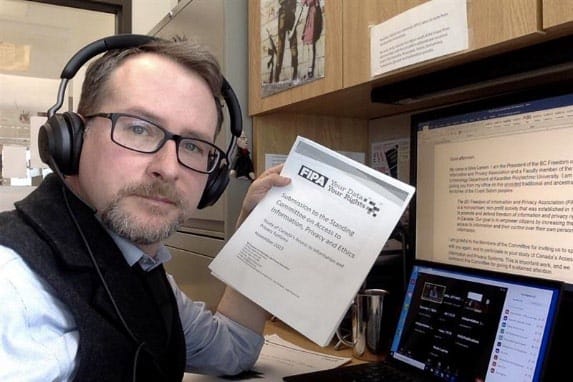

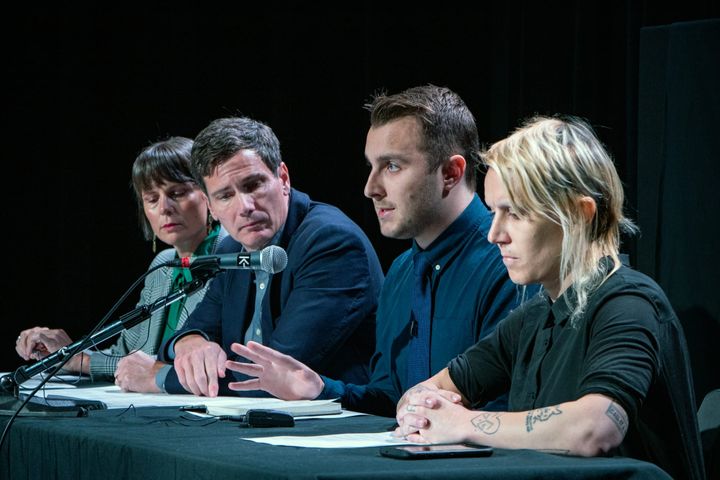
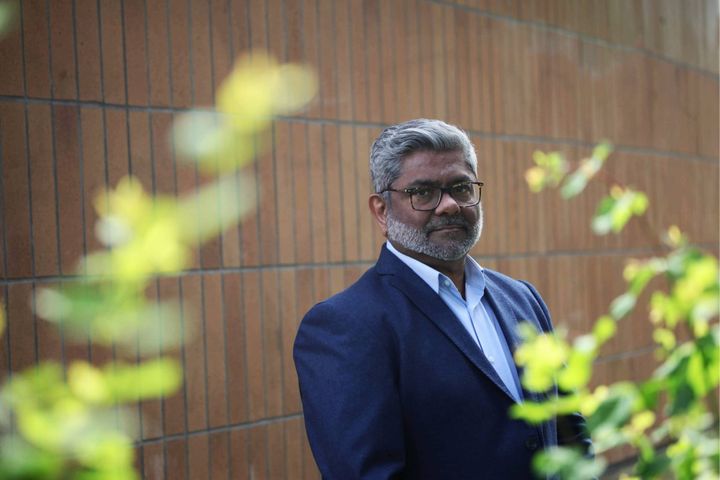
Freedom of Information and Privacy Association president Mike Larsen (left), and executive director Jason Woywada. Photos courtesy FIPA
A ‘cultural problem’ of secrecy in policing
De Facto’s request isn’t an isolated case when it comes to VPD’s compliance with BC’s freedom-of-information law — media have reported over the years on VPD failing to meet their legal deadlines for FOI requests.
Last August, CTV reported that the department took 14 months to respond to a request for Palmer’s communications about stranger assaults, the 2022 municipal election, and Vancouver mayor Ken Sim.
“For an institution to be found not complying with the law — especially a law enforcement institution, I might add — is not a good look,” Larsen told CTV months prior.
Follow-up FOI requests found Palmer initially told the information and privacy unit that he had no records before providing some communications, including a congratulatory letter to Sim after the election.
Xtra Magazine similarly reported that a nearly six-month-old FOI request still hadn’t received a response, and that the VPD ignored multiple attempts to contact them until the OIPC got involved.
Larsen, who also teaches criminology at Kwantlen Polytechnic University, said police departments across Canada and beyond have a storied history of secrecy.
“The literature is clear that there is a cultural problem with transparency in policing writ large, and this is not a new thing, and this is not specific to a particular jurisdiction,” he said.
He pointed to issues with police officials communicating on private channels, including encrypted chat applications.
“Not to say that that's the case here, but there have been other examples of situations where there's a string of communications, like an ongoing running chat,” Larsen said.
“It's just that if you were to conduct a standard FOI to get access to those records, you would find nothing, because they're all taking place on unapproved devices and unapproved channels.”
‘A lot of questions’ on VPD info management
Woywada said it’s particularly concerning coming from law enforcement, where the public has higher expectations, given their duty to manage information related to criminal cases.
“Otherwise you start running into a lot of questions about, well, how are they meeting their chain of custody in control of records. If they can't meet a basic FOI request, how are they making sure that they're meeting the legal tests in court?” Woywada asked.
“This is a very simple dynamic in terms of what you should have received, and then a very simple cross check that reveals there's a problem,” he added.
“So it leads to the question about whether or not VPD needs to go under greater scrutiny for their information management.”
Woywada added that less transparency only contributes to waning trust in public institutions.
“If they can't meet a basic FOI request, how are they making sure that they're meeting the legal tests in court?”
– Jason Woywada, Freedom of Information and Privacy Association
“You start wondering whether there was malintent or just incompetence, and in either instance, neither of those two possibilities is good from a public accountability perspective,” he said.
“In an information vacuum, mis-, dis- and malinformation thrives, and that's where conspiracy thrives. And that's a real problem in current civil society.”
Wilson has since gone on to become the chief of the Victoria Police Department, and Woywada said that raises additional concerns given her promotion to leadership.
“If the leadership doesn't make information management a priority, the organization won't,” he said. “So it is concerning.”
VicPD spokesperson Tiffany Parton said Wilson is “not in a position to respond to questions regarding the administration or processing of a freedom-of-information request made to another police agency.”

Editors: Mike Graeme and David P. Ball

Dustin Godfrey
Dustin (they/them) is a De Facto member and a reporter based in Vancouver, BC, on Sḵwx̱wú7mesh, xʷməθkʷəy̓əm, and səlilwətaɬ territories. Their work has also appeared in The Guardian, The Tyee, The Globe and Mail, The Maple, Filter Magazine and an independent newsletter where they’ve focused on policing, drug policy, health and housing. They've won awards from the Jack Webster Foundation, Canadian Community Newspaper Association, BC and Yukon Community NewsMedia Association. Read their reporting