How we found emails police claimed didn't exist
The challenges & costs of freedom-of-info reporting

The Drug User Liberation Front was one of the biggest — if not the biggest — BC news stories in October 2023.
Though the group hadn’t previously shied away from the media, police, or government in talking about their unsanctioned compassion club, a story in The Economist in September that year had spurred a public maelstrom.
After the Economist piece, opposition politicians were demanding the government take action — to which the government responded by revoking funding DULF received for its overdose prevention site and drug checking services.
The VPD, meanwhile, was quietly planning its own high-profile raid of DULF’s compassion club that would come in late October, leading to possession-for-the-purpose-of-trafficking charges against co-founders Jeremy Kalicum and Eris Nyx.
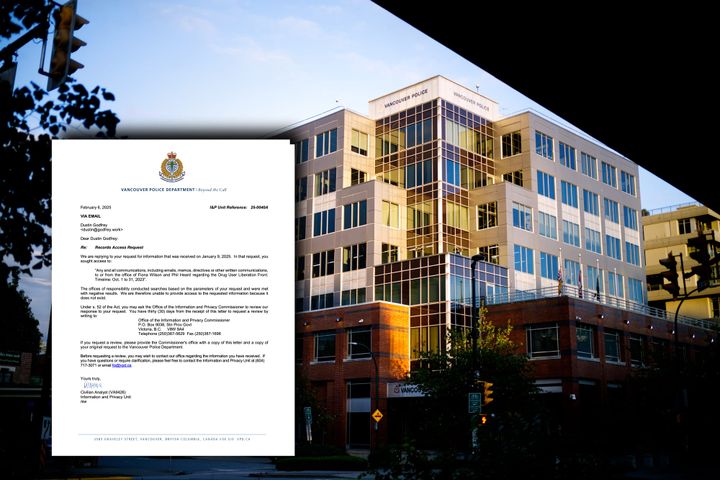
Yet, in response to two FOI requests, the VPD claimed that not a single communication was sent to or from four of its most senior officers about this major news story that intersected directly with the police force they led.
It, of course, seemed a little strange.
That's because it wasn't true
I didn’t expect much from the FOI requests. Given the broad discretion for public bodies to redact information, especially for law enforcement, I expected to get documents filled with redactions — or a simple response letter saying all records were being withheld.
I didn’t expect to be told there was nothing at all.
This turned out to be untrue — but to be able to prove that would take numerous hours of work, including appearing self-represented before a judge to unseal court documents.
We believe information is a public good that should be free to everyone. But we need donations to make this sustainable.
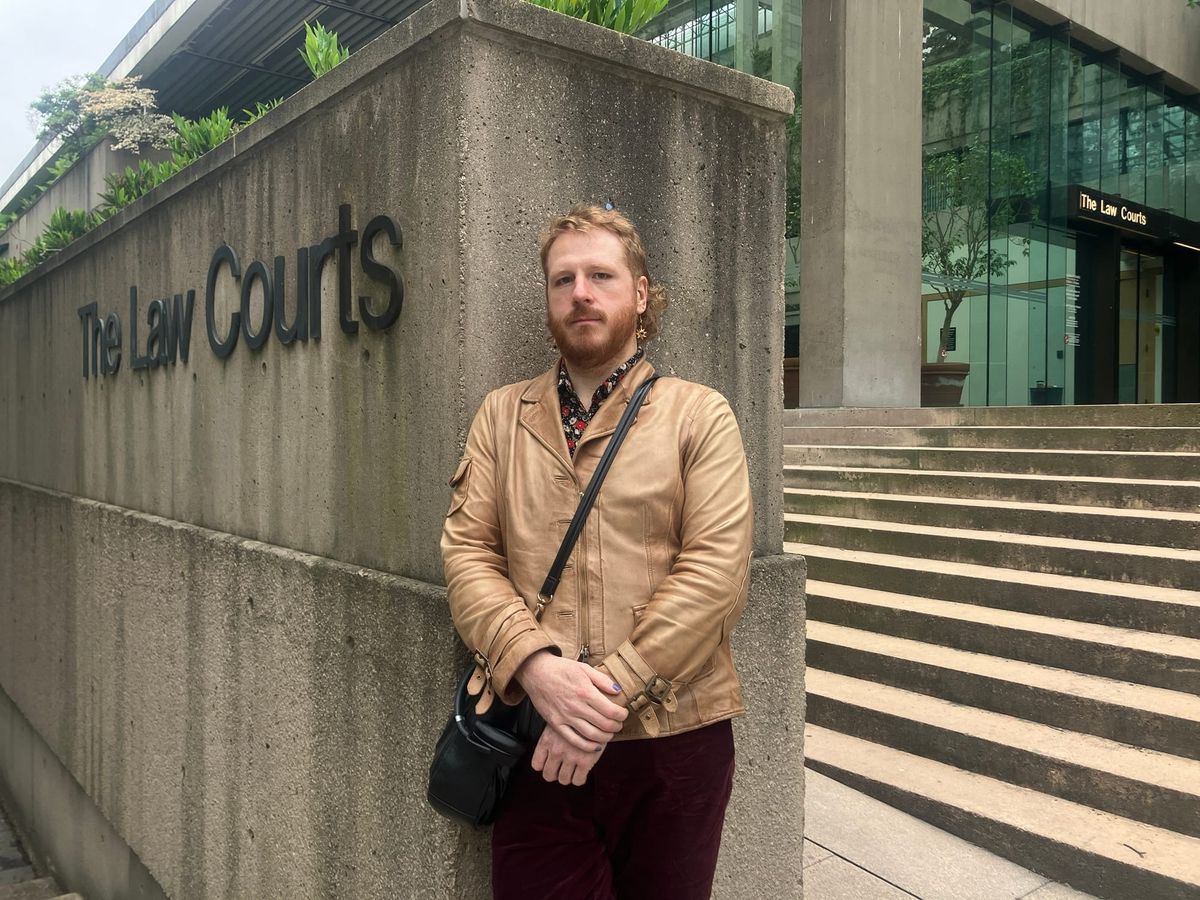
It started with a morning last December in the Vancouver Law Courts registry, after being granted an order to view evidence submitted in the DULF trial.
Flipping through thousands of pages of emails, investigation logs, search warrant applications, expert submissions and more, a handful of pages stood out to me — emails between a number of officers connected to the DULF investigation between Oct. 10 and 16, 2023.
Neither then-deputy chief Fiona Wilson nor then-inspector Phil Heard, two officers captured in one of my FOI requests, sent any emails in that chain.

But Heard had been CC’d throughout the exchange, and Wilson was looped in towards the end.
In other words, both officers did, in fact, receive emails about DULF in a time period in which I was told there were no communications about DULF to or from either of them.
Going back to court
The order I’d received to view the records in court didn’t let me publish them. By law, “publishing” doesn’t only mean publishing the records publicly; it also includes sending them to anyone.
We wanted an order allowing us to publish the records for two reasons:
- To write about the VPD’s non-response and the fact that there were, in fact, emails that should have been responsive. Even without publishing the emails for a story, it required sharing them with experts at the Freedom of Information and Privacy Association to ensure we weren’t missing anything in our belief that the VPD had broken the Freedom of Information and Protection of Privacy Act; and
- To file a complaint with the Office of the Information and Privacy Commissioner, the independent quasi-judicial body that adjudicates FOI and privacy disputes.
That required another court order.
The original request to view evidence simply involved filling out a form, submitting it, and getting an order back. But this second order would require going before a judge and making our case.
And that wasn't always the most intuitive process for someone who isn't a lawyer.
When big news outlets apply to unseal court documents, they typically have lawyers doing the work for them. As a new media organization that is still scarcely able to pay its workers, let alone paying for lawyers, we were navigating this system on our own.
While we faced no opposition by prosecutors or defence lawyers in our application to release the files, it was a time-consuming and resource-intensive process.
And it’s illustrative of the work it takes to bring readers important stories, especially when it comes to reporting on law enforcement — work that we, at De Facto, are generally doing unpaid off the sides of our desks until we can raise the money to really pay ourselves.
Little incentive to follow FOI laws
Freedom-of-information systems rest on good-faith behaviour by those who they are intended to hold accountable. If you ask for a public official's emails, the request is often forwarded to that official to search their own emails for responsive records.
In some ways, that the system functions at all can cure some cynicism.
As is, there's little incentive to follow the law. And the biggest issue is public bodies failing to respond within their legal 30-business-day deadline under BC’s law. (That’s 30 calendar days under federal law.)
As a publication focusing on power and justice, De Facto has a particular interest in policing and other law enforcement agencies. And Mike Larsen, president of the Freedom of Information and Privacy Association and a criminology professor at Kwantlen Polytechnic University, says law enforcement has a particularly strong "culture of secrecy."
That aligns with my own experience, and it makes the work of De Facto a resource-intensive endeavour.
Though I've found provincial, municipal, and public health organizations to often miss their legal deadlines, law enforcement stands out for it.
In the case of De Facto's first series, the data I and my colleague, Emma Arkell, obtained from the Canada Border Services Agency came a year after we'd first requested it. For a story I wrote for The Globe and Mail some years ago, the request I filed with the RCMP for records about cellphone tracking technology took 18 months to yield a response.
Deadlines treated as guidelines
In a recent fee complaint to the OIPC for an unrelated FOI request, I also spent some time trying to argue that the police had a bad history with FOI laws. I'd compiled a list of times the VPD had failed to meet its legal deadlines.
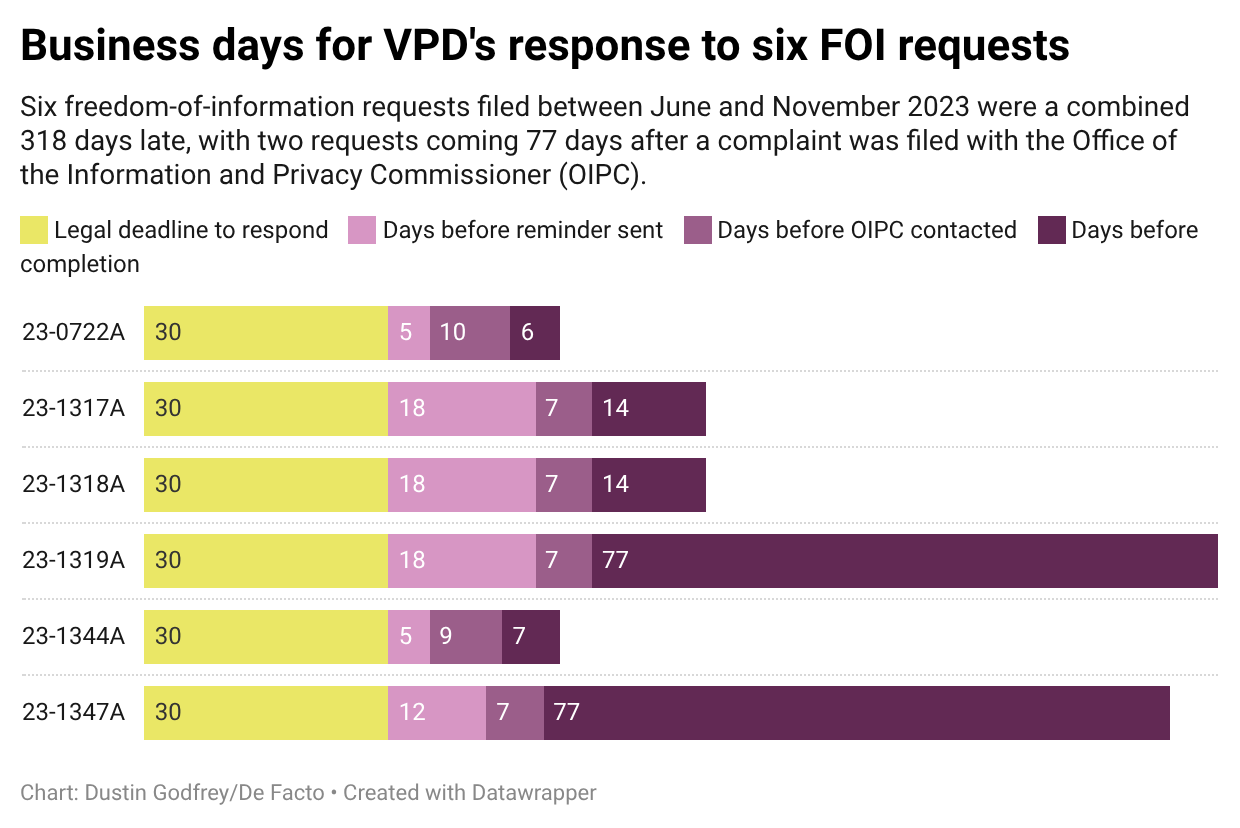
Between six FOI requests I filed in October and November 2023 and June 2024, the VPD was a combined 318 days late. In one, the police never even sent an acknowledgement. In another, when I asked for clarification about a fee estimate, the VPD told me I would receive a response "in the near future." The near future never came.
This is just one example of a troubling trend across jurisdictions.
In recent years, various governments have only weakened FOI laws, from the federal government to the provincial governments in B.C. (with more planned), Ontario and Alberta.
Public bodies are supposed to represent the public. When those public bodies approach accountability with cynicism, the public comes to reflect that attitude.
And we know where that leads — when the baseline is cynicism, governments can continually push the boundaries of what’s acceptable, and the public increasingly responds with a shrug.
For all of its problems, the media — particularly independent media — remains an avenue for accountability. But that, too, has eroded in the last few decades.
We need your support
As layoffs and downsizing beset the media, journalism can feel like a hopeless line of work. But that belies the fact that journalism is an inherently hopeful industry.
We don't do this work for the hell of it.
We report on issues of public interest because we believe that information is power; we know that journalism can have real consequences. But this kind of work takes serious resources and time.
It goes well beyond the challenges from FOI requests. Good journalism relies on finding, interviewing and vetting sources, and on deep research into a topic to understand the context — not to mention the time spent fact-checking our work. To make our work digestible for readers, we spend considerable time on editing and making engaging packaging for the story — photography and data visualizations (like the one above), for instance.
De Facto is operating on a shoestring budget. We haven't borrowed any money. As a non-profit co-operative, we have no investors. While that means we’re not rushing to pay off any debts or dividends, it also means we're working off the side of our desks.
Good journalism costs money; working for free isn’t sustainable.
We've raised around $6,000 so far, with monthly donations bringing that up to about $10,000 over 12 months. And that is an incredible response to our first few months in operation.
But to keep doing accountability reporting on power and justice, we need you to spread the word of our work — and, if you're able, to donate.
We believe information is a public good that should be free to everyone. But we need donations to make this sustainable.

Dustin Godfrey
Dustin (they/them) is a De Facto member and a reporter based in Vancouver, BC, on Sḵwx̱wú7mesh, xʷməθkʷəy̓əm, and səlilwətaɬ territories. Read their reporting