‘It's like whack-a-mole’: How courts and cities dance around solving homelessness
A Q&A with authors of 'The Bylaw State: Encampment Evictions and the Struggle for Public Space'



Municipal bylaws are sometimes treated as mundane rules governing public space.
But for people experiencing homelessness, they can manifest as daily invasions — restricting where people can sleep, displacing them from support services and peer networks, and putting their belongings and lives at risk.
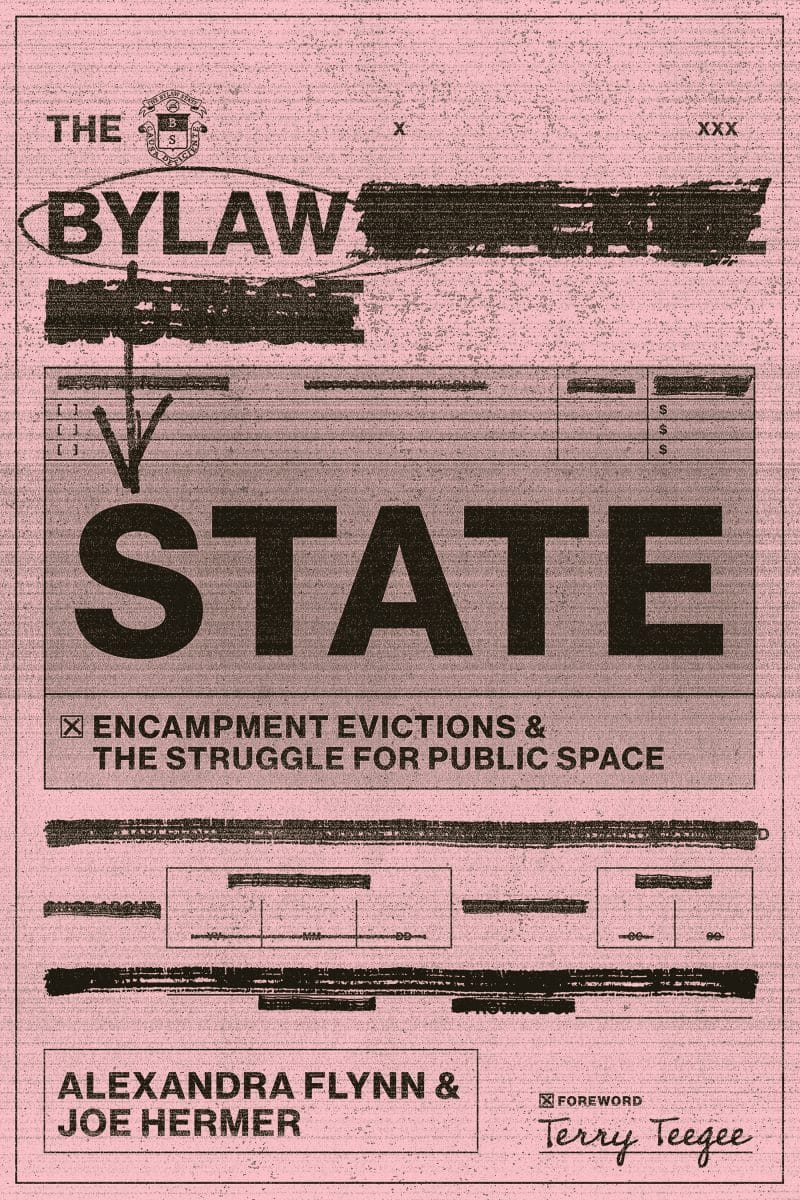
In their new book, The Bylaw State: Encampment Evictions and the Struggle for Public Space, researchers Joe Hermer and Alexandra Flynn examine how municipalities use bylaws to regulate homelessness, often with devastating consequences.
They look at the way bylaws are enacted that can violate human rights, and how court challenges are reshaping the legal landscape.
Flynn and Hermer weighed in on De Facto’s ongoing investigative series in which we used AirTags to track new items that were donated to unhoused people along Pandora Avenue — one of downtown Victoria's corridors that's home to people living unhoused.
 De Facto Journalism Co-op
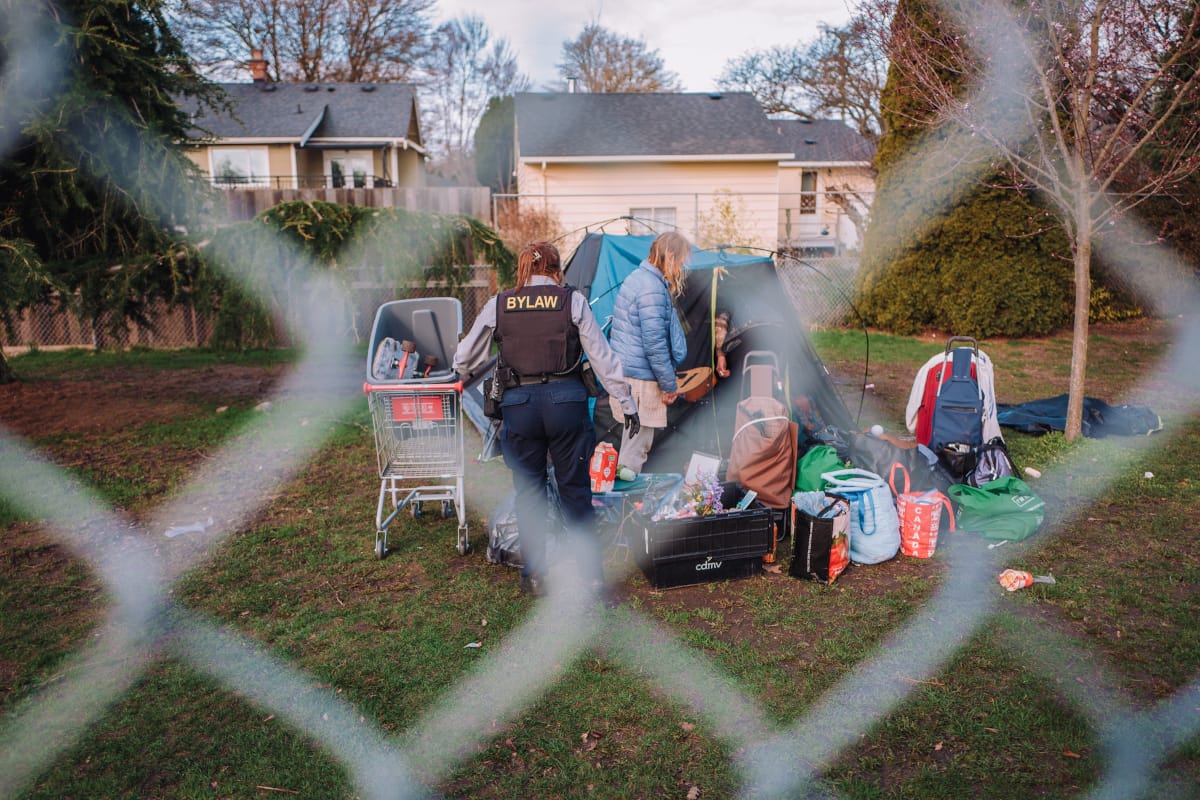
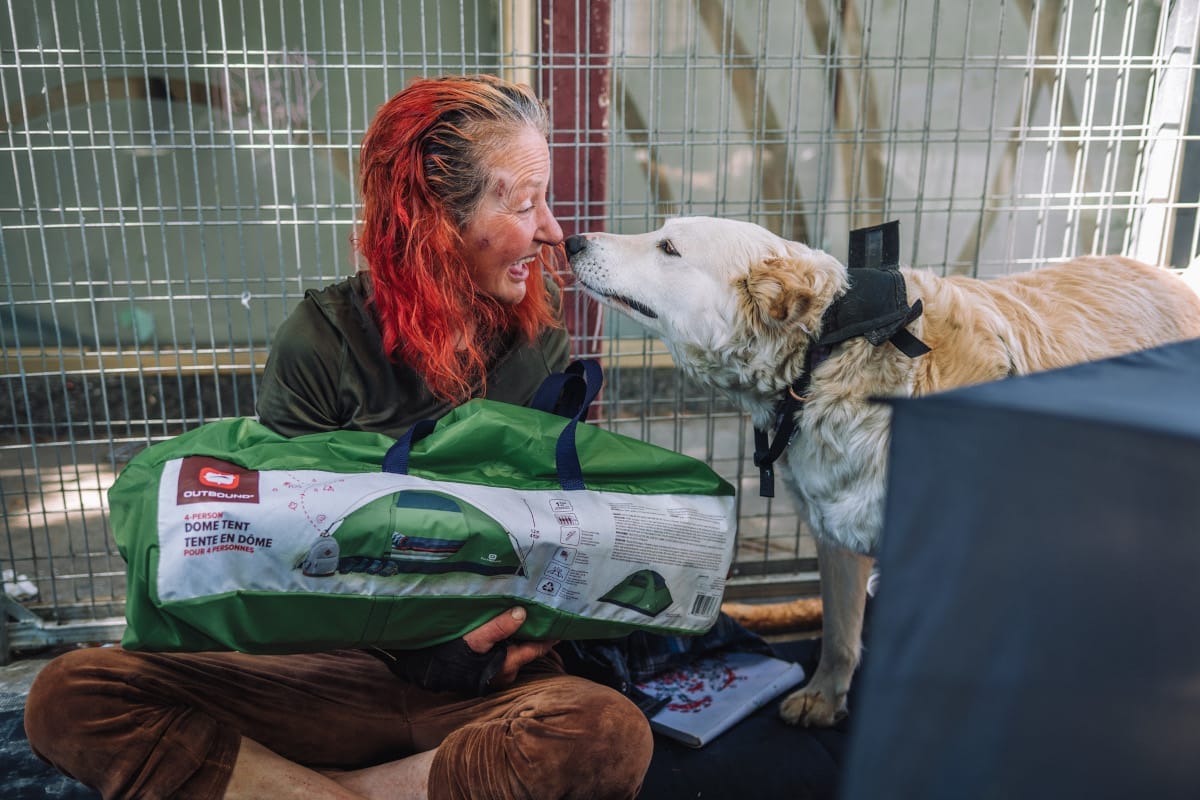
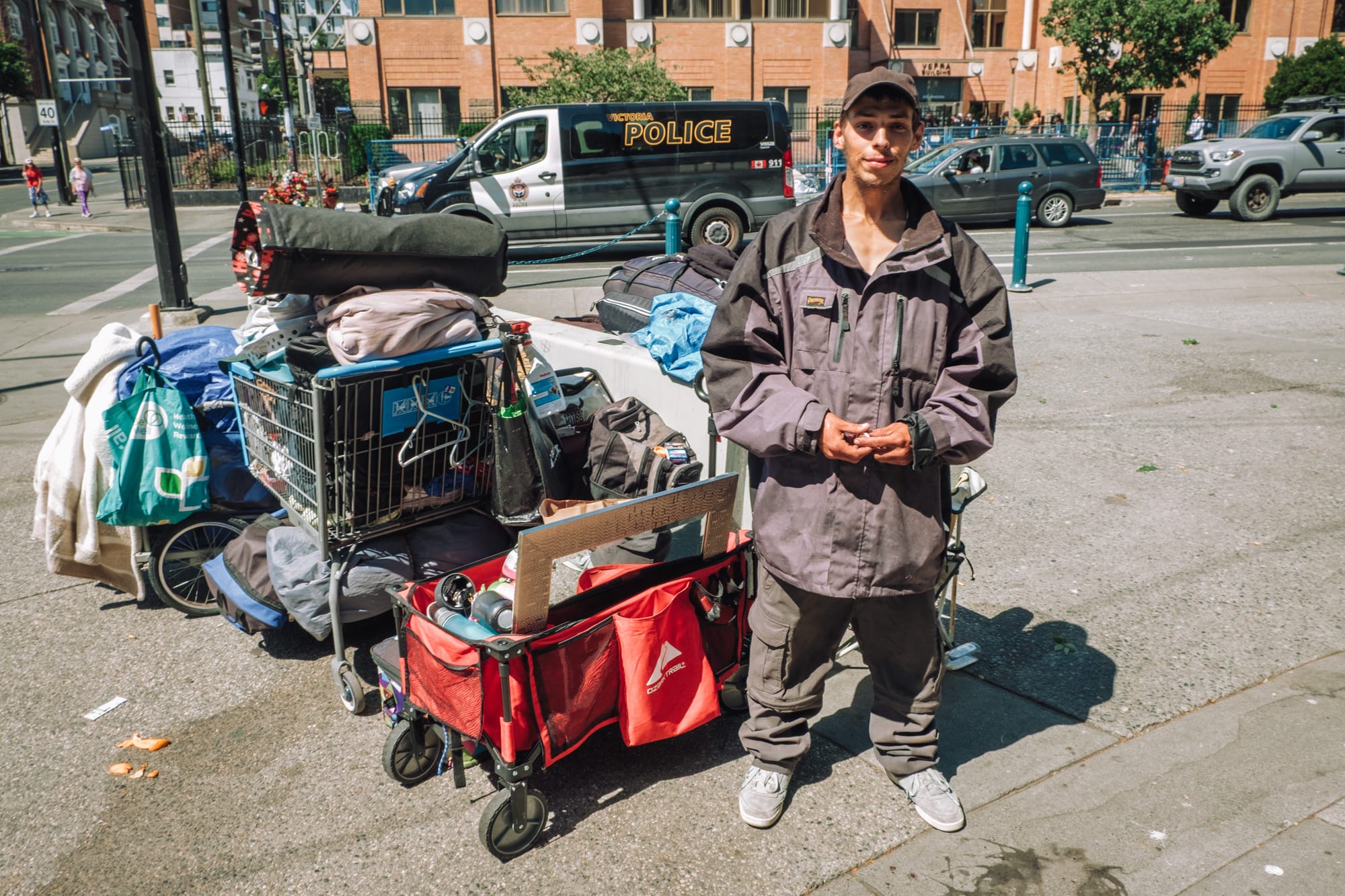
Our investigation established that bylaw officers frequently do not follow the city’s own policies when they throw new and unsoiled items in the trash, despite officials' insistence they can be easily reclaimed.
We corroborated years of allegations made by unhoused people, witnesses, and advocates — something city spokespeople have for years routinely denied.
In the wake of the federal government’s new $29 billion plan to end homelessness in the next decade, we present this Q&A to explore the authors’ perspectives in more depth.
 De Facto Journalism Co-op
Flynn is a University of BC associate law professor and director of the Housing Research Collaborative; Hermer is a University of Toronto sociology professor.
Their book The Bylaw State: Encampment Evictions and the Struggle for Public Space was released in April.
The pair discuss the limits of recent legal victories, the growing overlap between bylaw enforcement and policing, and why lasting change requires more than court rulings.
This interview has been edited for clarity and brevity.
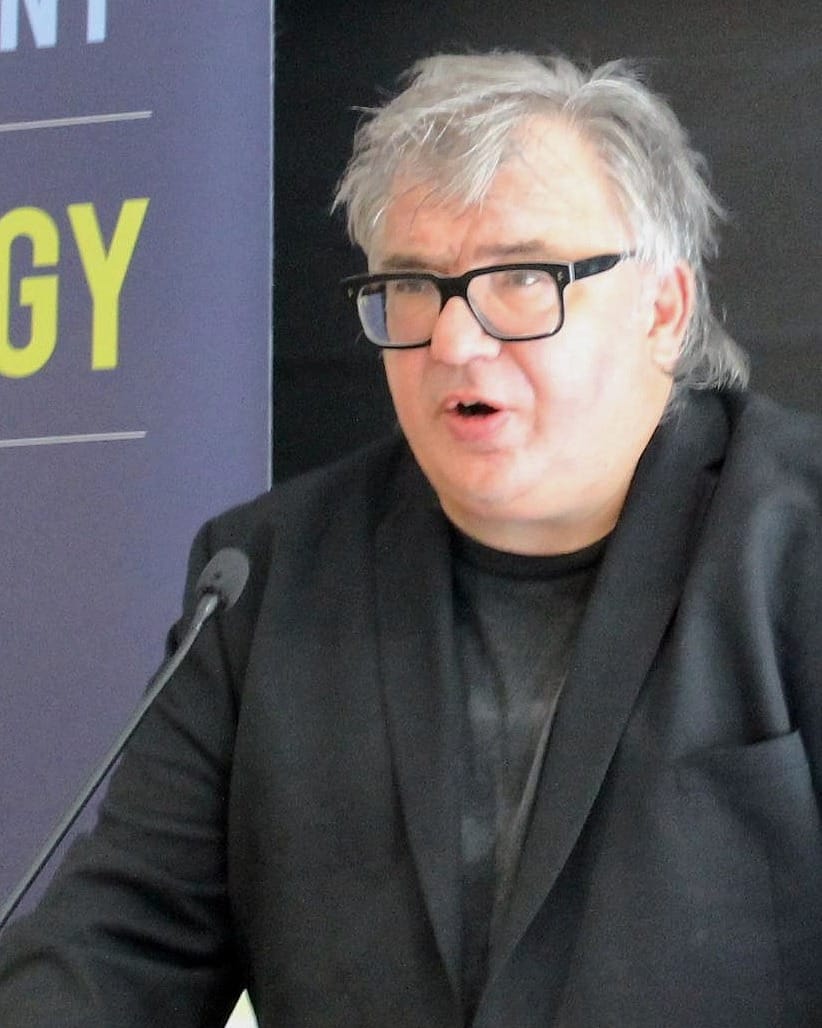
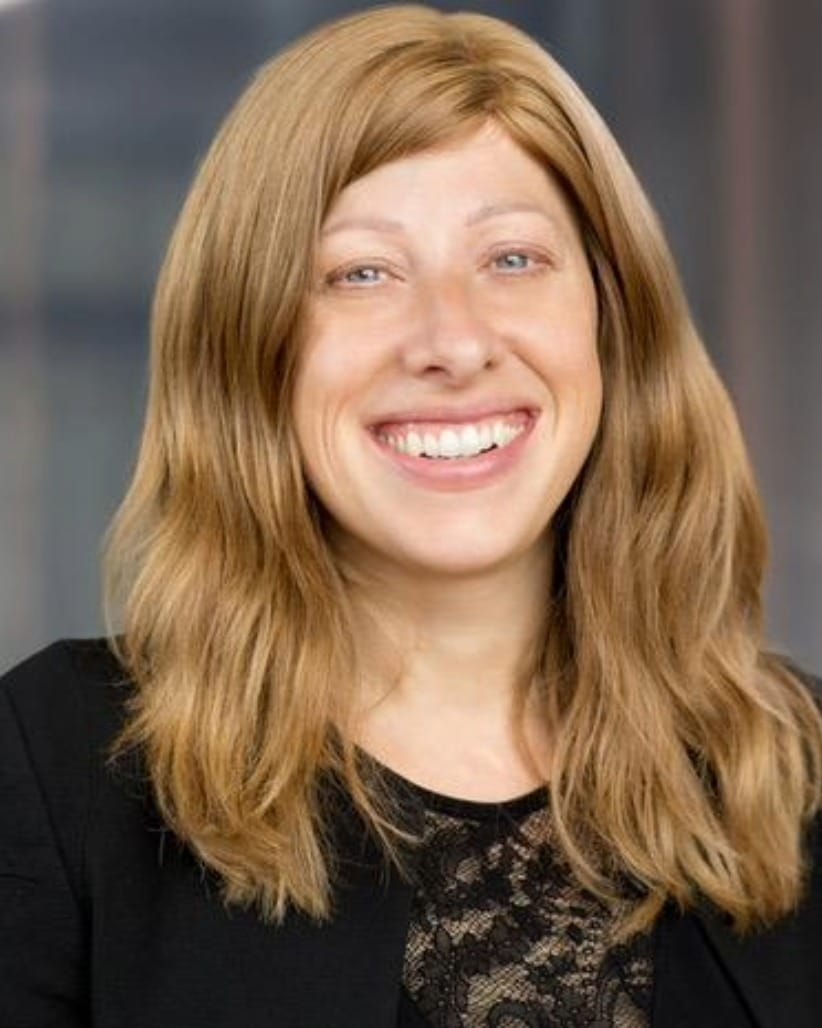
University of Toronto sociology professor Joe Hermer (left) co-authored the 2026 book The Bylaw State with Alexandra Flynn (right), associate professor at University of BC Allard School of Law. Images courtesy UofT/Fernwood Publishing/UBC
Mike Graeme: In The Bylaw State, you write that bylaws should be “taken seriously as powerful and often violent legal instruments.” What do you mean by “violent” in that context?
Joe Hermer: The bylaws we're talking about, which are essentially bylaws targeting people surviving in public space, carry a range of violence in the sense that they endanger the safety and security of people who have no choice but to survive in public spaces.
Unhoused people survive on the street through their relationships with other unhoused people, and through very small but incredibly important things — places that they can shelter at various times, places that they can get food and wash, places that they can sleep.
And because bylaws essentially target the minutiae of public space, they become perfect instruments to interrupt these survival activities — and essentially make the space of the public unlivable for unhoused people who really are there as a very last resort.
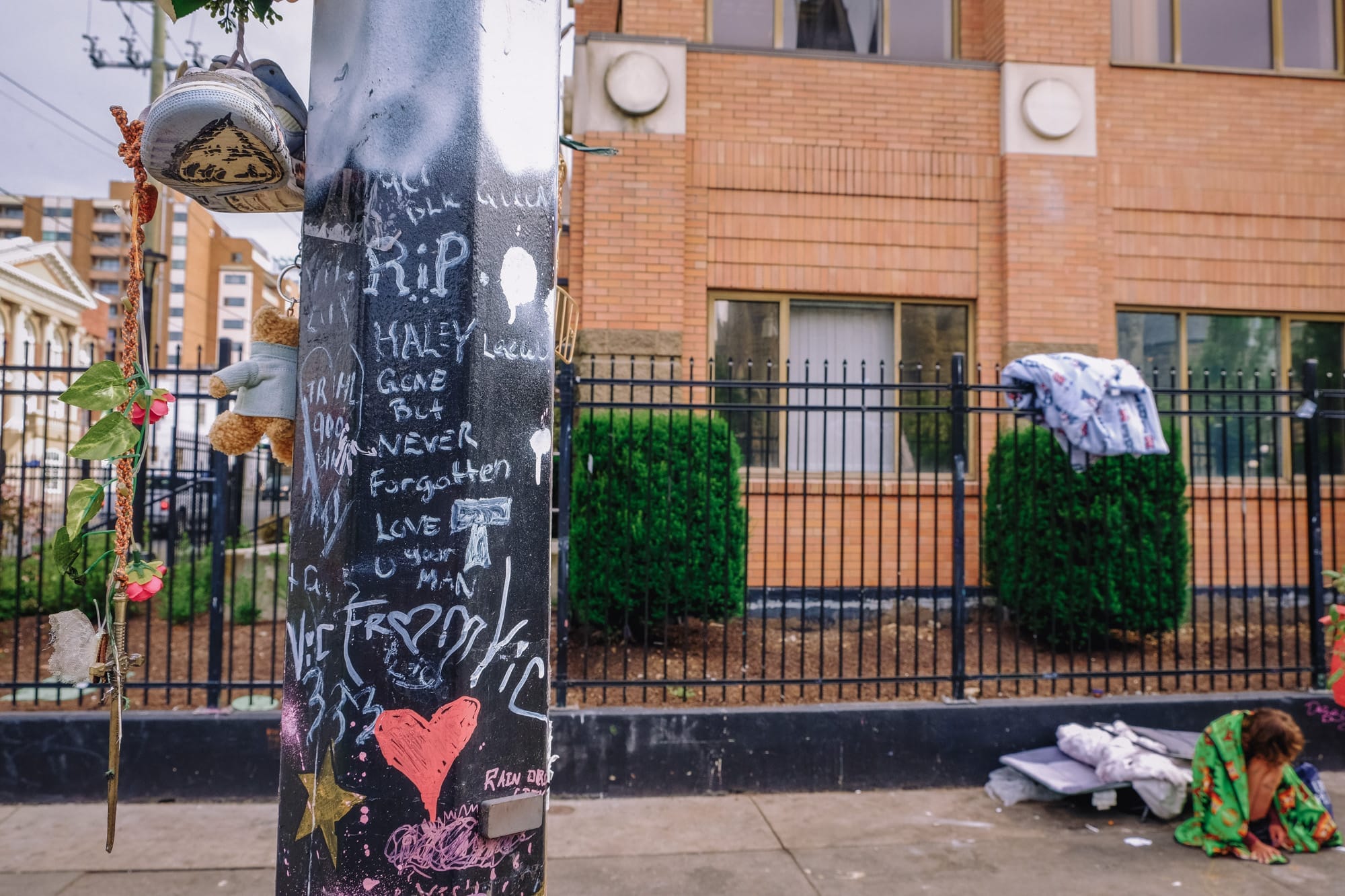
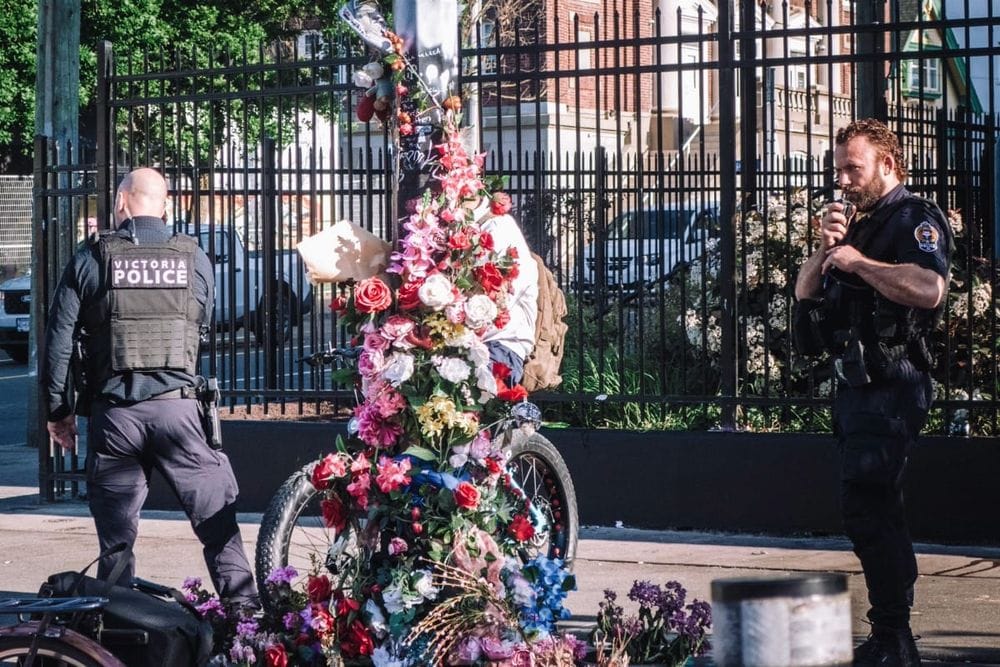
A post in Victoria bears a written memorial note (left) for the late Haley Leeworthy from her partner, Tanner Rattigan. It reads, 'Gone but never forgotten.' Police stand by the memorial on another day. According to Peers Victoria Resources Society, people living unhoused in BC are 24 times more likely to die of drug overdose than those who are housed. Photo by Mike Graeme/De Facto
The most vivid example of that is the way that much of this bylaw enforcement creates circumstances where people are more likely to overdose because of the poisoned drug crisis, and they're using alone after enforcement happens.
When you also take into account, for example, the victimization, the trauma suffered by many unhoused people, particularly unhoused Indigenous people, it simply increases the trauma and does create a climate of general violence against their well-being. These legal instruments are informal, mundane.
Particularly unhoused Indigenous people, it simply increases the trauma and does create a climate of general violence against their well-being. These legal instruments are informal, mundane.
– Joe Hermer, University of Toronto sociologist
It's why I say we should take them seriously because for most people — comfortable middle class people — bylaws are about walking your dog, being parked in the wrong spot, right?
So they're not really paid much attention to as actually very powerful policing instruments.
And bylaw officers are usually not supervised by any Police Services Act or any sort of oversight that is appropriate for a law enforcement function.
There's very little accountability in terms of these specific bylaws and the real harm that they can do to unhoused people's existence.
Speaking of accountability, there have been a number of landmark court cases, most recently the Waterloo decision out of Ontario. How do these cases shift the playing field?
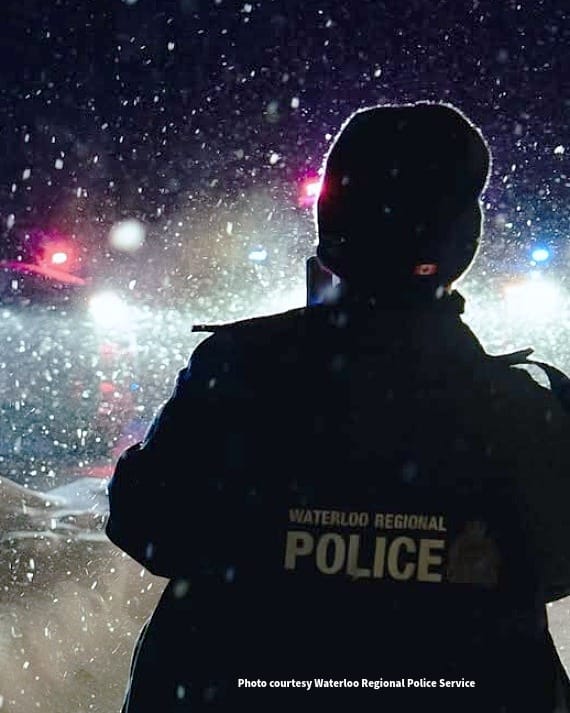
Joe Hermer: The Waterloo, Ontario decision [The Regional Municipality of Waterloo v. Respondents] — which is being appealed by Waterloo — is a game changer and could significantly re-orient how cities consider encampments, outdoor sheltering, and unhoused people in public space.
I imagine the decision is causing a lot of internal debate and confusion within municipalities themselves.
The ruling means that people experiencing homelessness have recognized rights under the Charter, and cannot be prevented from sheltering if there is no other adequate alternative.
The encampment, Justice [Michael] Gibson stated, “represents the only remaining safety valve for the region’s homeless as a refuge of last resort.”
The case essentially affirms or upholds a human right to housing in a legal sense by stating that cities are permitted to move people from public space — but only when they can produce or provide shelter or an alternative camping site that provides basic health, safety, and other factors integral to their needs, including specific cultural needs.
The encampment … represents the only remaining safety valve for the region’s homeless as a refuge of last resort
– Justice Michael Gibson, Ontario Superior Court of Justice
(Waterloo v. Respondents, 2026)
Does this court precedent have any sway in BC?
Alexandra Flynn: Until we have a decision that's made by the Supreme Court of Canada, a provincial case doesn't apply to all of Canada.
So, for example, the Waterloo case — which has gone further than any other case so far — technically doesn't apply in BC, even though the Waterloo case has used BC jurisprudence or used other BC decisions like Victoria v. Adams to help explain what the Charter of Rights and Freedoms means, or what it should obligate governments to do.
And Waterloo, in any case, is vulnerable. It's being appealed now to the Court of Appeal in Ontario. Even though it was a very successful case, it could be overturned as well.
 De Facto Journalism Co-op
Can you say more about the Adams case in BC. What did it accomplish?
Joe Hermer: Adams was a watershed decision in terms of how municipalities in BC consider their obligations to unhoused people — one that is still being grappled with today.
The judgment struck down some of the provisions of the Parks bylaw in question restricting overnight sheltering in parks if no other overnight shelter spaces are available — and in almost all jurisdictions they are not.
The Adams decision did not create a “right to housing” but narrowly addressed the issue of nighttime sheltering.
One response to this legal obligation that Adams laid out was that cities continued to ban sheltering in parks, but created “Temporary Overnight Shelters” (TOS) on specific sites, or created rules on where specific camping could take place.
However, the result was often highly restrictive and in some cases these alternative sites were inaccessible and inappropriate.
Journalism that boldly shines a light on law, justice and rights — in your inbox. Free signup, donations welcome
For example, in Prince George, the TOS space is more than one kilometre from the city centre, and seems intentionally designed to be as inhospitable and inaccessible as possible.
In Prince George, during the daytime, sheltering is outlawed everywhere, including parks, and unhoused people are subject to the very aggressive use of loitering-like offences of their Safe Streets bylaw that allows no place for them — or their belongings.
One exception to this trend is in Smithers, where they appear to have taken a more reasonable view and have a TOS that is accessible, designed minimally for camping and is hospitable with some basic services that uphold basic health, safety, and dignity.
We talk about other limitations in the book with Adams — I expect that the use of TOS in relation to Adams and other cases will be a subject of future litigation.
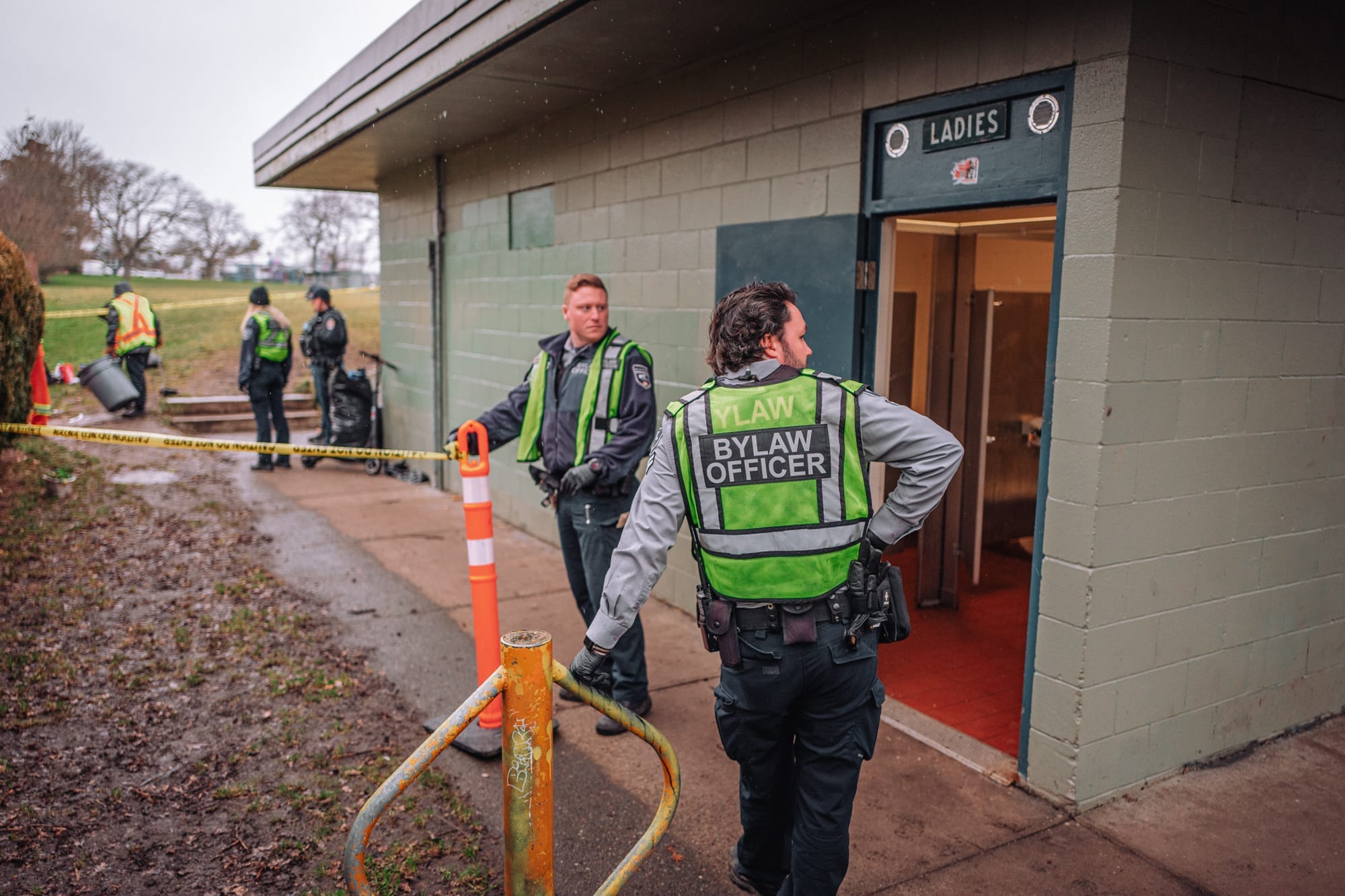
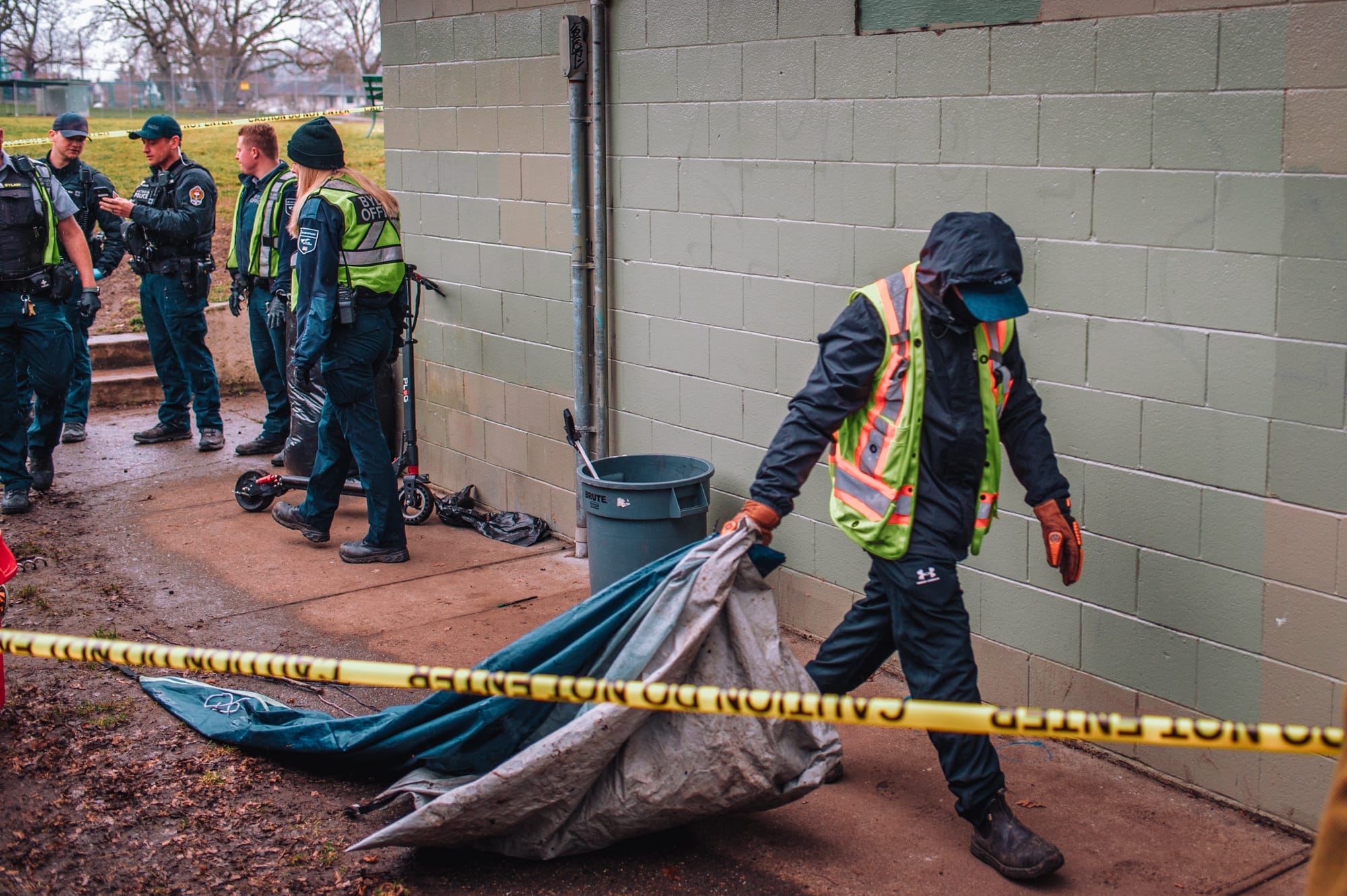
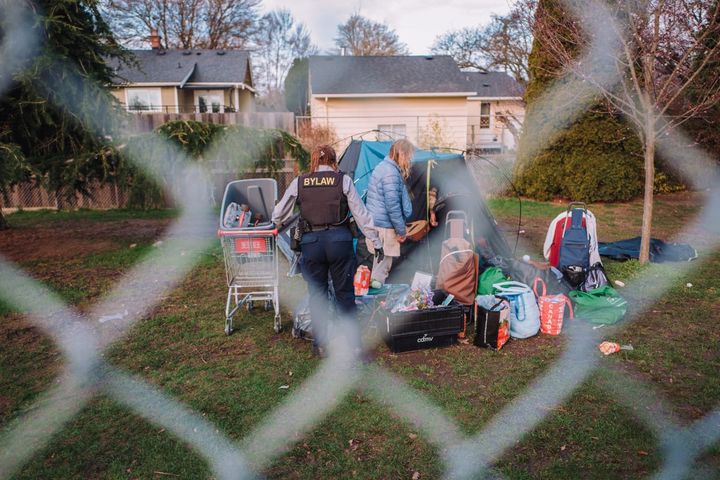
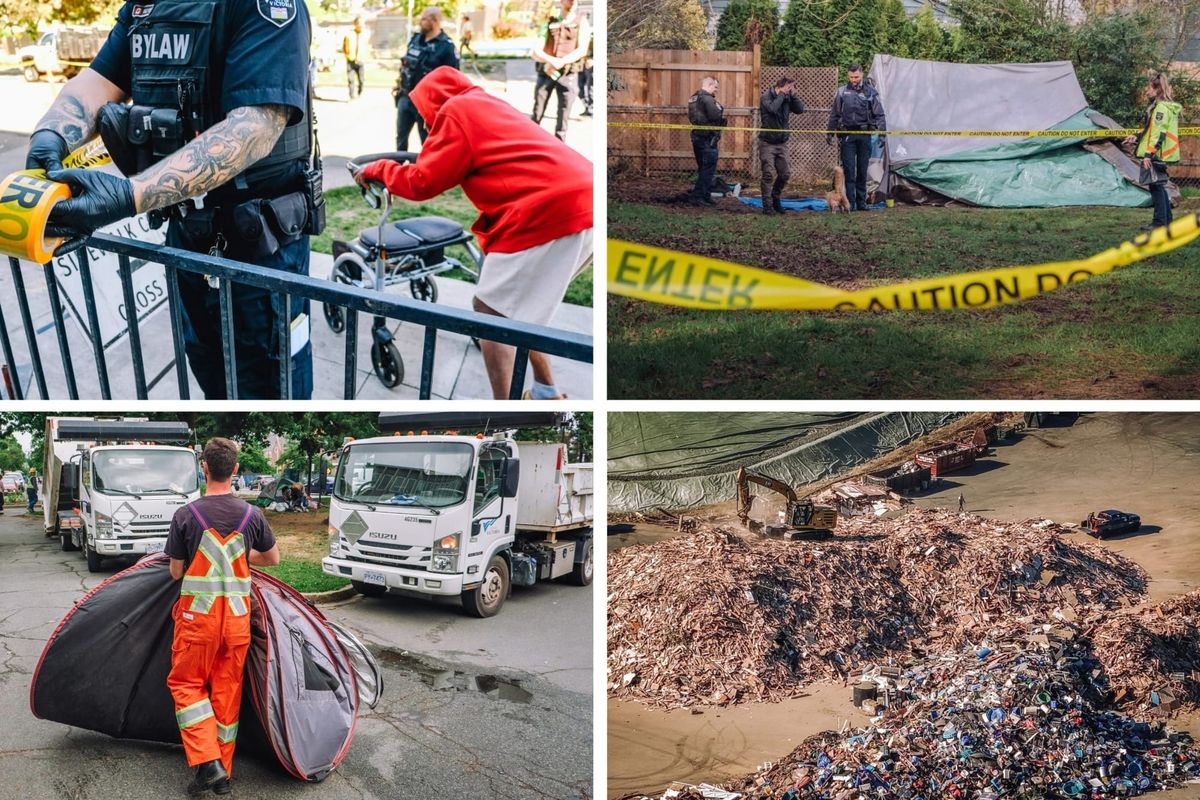
City of Victoria bylaw officers stand outside the public washroom in Oaklands Park (left) after dismantling an encampment (right) on a cold and wet day in February 2025. Photo by Mike Graeme/De Facto
Speaking of daytime sheltering bans and future legal activity, can we expect upcoming challenges?
Alexandra Flynn: I think we should pay a lot of attention to a case that's coming up right now on daytime sheltering in Vancouver.
It’s asking why does Adams only apply at night? Because basically what that means is people can be displaced during the day, even if there's not adequate shelter space.
So they sleep overnight and then [in the morning], bylaw officers will come and move them along. So the case has to do with that. And people's belongings are a core piece of that case.
It acknowledges people are carrying tents and sleeping bags and other things, and they can't just carry those around all day. What if they have a doctor's appointment, or what if they need to go on transit or what have you?
So that upcoming case is really, really important.
The other recent case that I think is really important is a case called Bamberger v. Vancouver, which had to do with the way that administrative bodies act towards people in encampments.
Persons experiencing homelessness sheltering in a park ... do not show disdain, contempt, or mockery of the bylaw. Their evidence is of real hardship in complying with it. This may well explain why these campsites persist.
– Justice Matthew Kirchner, BC Supreme Court
(Bamberger v. Vancouver, 2022)
It has more to do with how people are treated by municipal officials — not necessarily by those who create the bylaw, but those who implement the bylaw.
And it says [unhoused people] have to be treated with fairness. They have to be given notice. They need to have access to lawyers if big decisions are going to be made on their removal.
Those, to me, are really important developments as well. Bamberger succeeded, but then ultimately the people who were at that encampment in Crab Park were removed because a new bylaw was basically enacted that allowed that to happen.
The enactment of new bylaws in response to court decisions brings up another point you make in The Bylaw State, which you describe as the 'dance' that happens between the courts and bylaws. Do these court wins actually make a difference?
Alexandra Flynn: I'm actually doing a study on this specific question now. Like, do the court cases lead to change or do they precede change?
What we have is the Charter of Rights and Freedoms. That's the basis upon which many cases have gone to court, arguing that the actions of municipalities in enacting and enforcing their bylaws violate our Charter.
 David P. Ball
So there have been some really good decisions that have come out of the courts. But the problem with them is that they apply to the specific encampment in question — the specific people who were there, the specific circumstances that led to them going to court.
It's like whack-a-mole: you bring one case and then it goes to court, and even if you succeed, you have to bring another case if the city ends up violating it later.
That being said, I think it's the best thing that we have right now. The people who are in encampments and their advocates are doing really important social justice work.
It's like whack-a-mole: you bring one case and then it goes to court, and even if you succeed, you have to bring another case if the city ends up violating it later ... People who are in encampments and their advocates are doing really important social justice work
– Alexandra Flynn, UBC Allard School of Law
We have to keep using the court system because it will keep pushing the envelope on what governments have to do, what their obligations are.
But so far, those victories are temporary. It has not yet led to any lasting change.
Ultimately, new bylaws are crafted or new ways of enforcing them are crafted in order to ultimately remove people. And then the cycle continues.
What is needed to stop that cycle? In The Bylaw State, you wrote about how without support from higher levels of governments, cities turn to bylaws to regulate homelessness.
Alexandra Flynn: There is simply not enough housing for people, especially lower income housing, deeply affordable housing.
We have the federal government, the provincial governments, and then municipalities, all of which play an important role in housing and homelessness.
There's very little that binds all of these three governments together when there are decisions being made about funding and responsibility. Because of that, each of the governments are sticking to their own lane.
There have been studies showing where housing is needed in Canada, and we know that the people who are most in need of housing are very poor people who have low incomes.
But that's not the kind of housing that's being built. It's actually dumbfounding as to why that isn't the focus.
It's like that Spider-Man meme: they're all pointing their finger at each other and not really stepping up.
— karen ward (@kwardvancouver.bsky.social) 2026-07-14T02:05:48.762Z
No government is really stepping up to say we're going to deal with this issue, this human rights issue, using human rights instruments.
The long and the short of it is: it just shouldn't be bylaws that are regulating homelessness. It shouldn't fall only to municipalities.
I think one of the things that Joe and I wanted to emphasize in the book is that we don't want to paint municipalities as always the bad guy.
There are people within municipalities who are trying, and that's really good. There are municipalities that are doing some really important human rights work.
The City of Toronto, for example, they're leading the show when it comes to municipal approaches to homelessness. Toronto has a committee that reports [to council] on the human rights aspects of homelessness. They have an ombudsman that oversees and looks into what the city's conduct is in relation to unhoused people.
There are municipalities that are doing some really important human rights work ... They'll provide washrooms, they'll provide hot water, they'll bring doctors and social services and other services to the encampment
– Alexandra Flynn, UBC Allard School of Law
In many encampments, municipalities will take away services — like if there's a washroom nearby, they'll lock up the washroom so that the people in the encampment can't use it.
But in London, Ontario they bring services to the encampment. They'll provide washrooms, they'll provide hot water, they'll bring doctors and social services and other services to the encampment to help stabilize or provide options for people who are there.
It's just a completely different way of engaging in the absence of having adequate housing for people to go to — instead of people having to leave and put their possessions at risk and other things, bring the services to them.
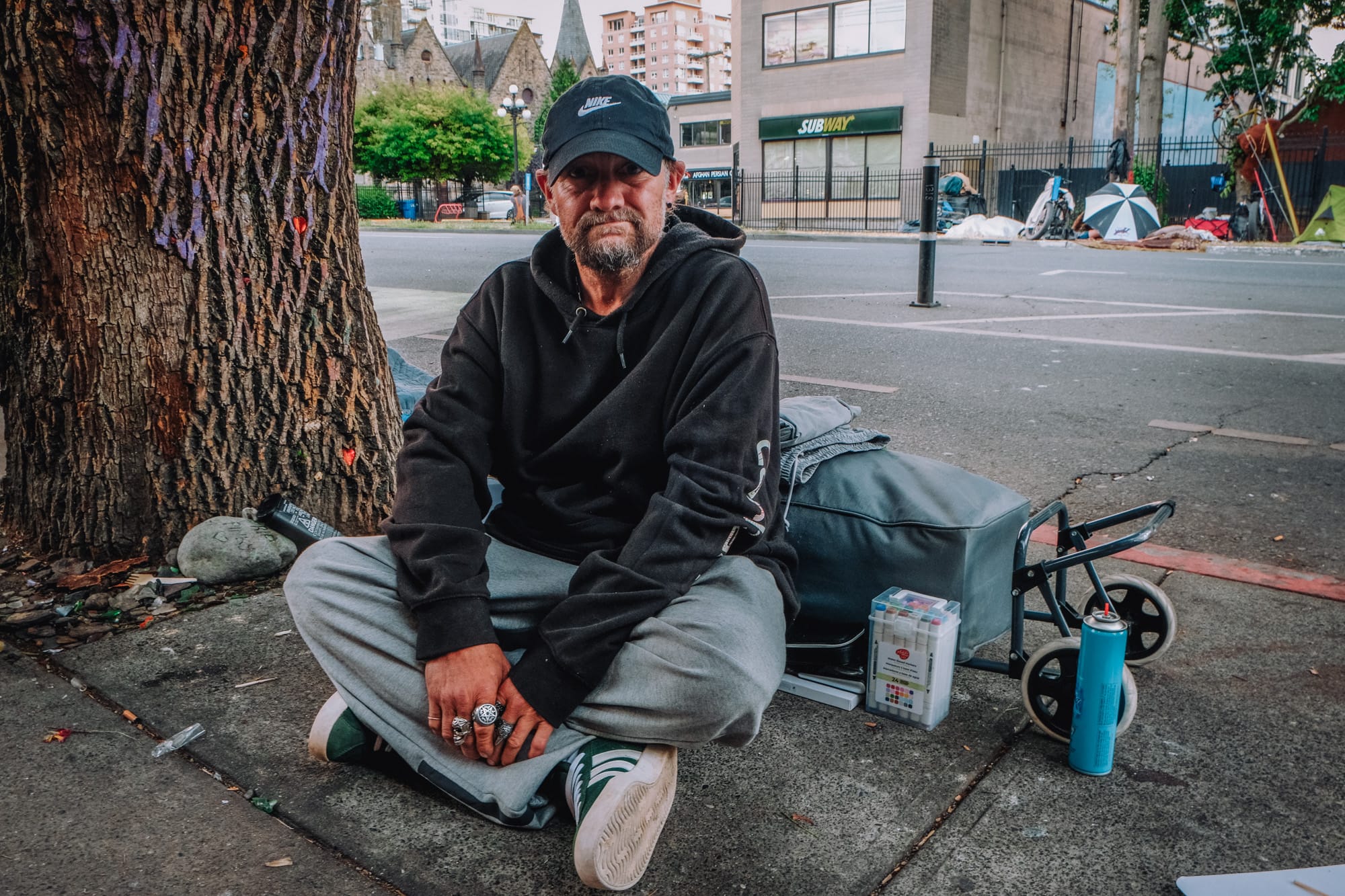
Can you describe what you mean by “adequate” housing?
Alexandra Flynn: We have a very simplistic set of models for what that housing might look like. The avenues that are made available to unhoused people in particular, like temporary shelters, are totally inappropriate for most of the people who are in homeless encampments.
They don't allow them to bring most of their belongings, or people may be turned away if they have pets or if they have partners.
Or a shelter might not account for their backgrounds. Many people have experienced violence or sexual violence, and the nature of the way temporary shelters are built — the form of them — makes them feel unsafe for many people in encampments.
So they are not a form of housing to begin with. As shelter spaces, there's a reason that unhoused people rarely want to go there because they don't serve their needs and they are just not appropriate for them.
What significance do people’s belongings have, and what are the impacts of seizing these belongings by bylaw officers?
Alexandra Flynn: I've been involved in a long term project on the belongings of precariously housed people; the website is belongingsmatter.ca.
My colleagues Nick Blomley [Simon Fraser University geographer], Maria-Eve Silvestre [University of Ottawa law prof and president], and I — together with numerous research assistants — have actually created a report that documents the legal framework for what allows for the dispossession and basically the theft of people's stuff, and what the effects of that are.
What we’ve concluded is that it leads to even more precarity for individuals.
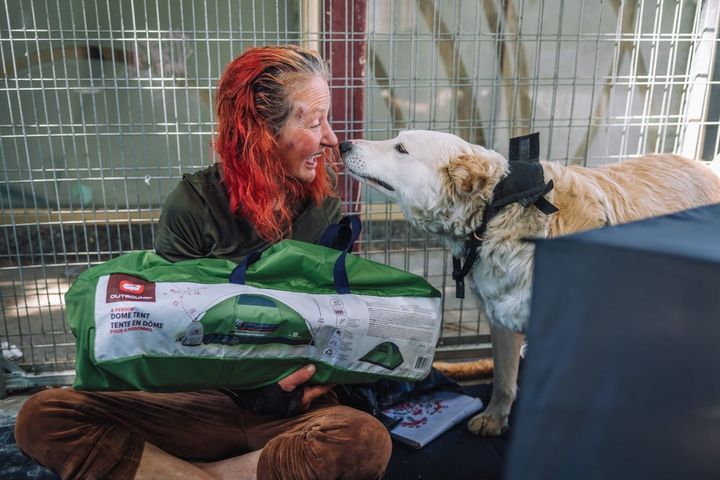
They end up losing the very belongings that give them a sense of security or that allow them to develop more stability. All of our belongings are in part the things that give us some stability.
Things like medication, things that remind them of who they are and how they belong. And like De Facto’s investigation, that's also what we saw in our research: people's belongings would be thrown out, and I've observed this as a legal observer myself.

There's just so much bias against unhoused people's stuff. It's seen as garbage. It's seen as waste. It's seen as unsanitary — not as people's property. But it's their stuff. It belongs to them in the same way that my bag and computer belong to me.
It does not help to dispose of people’s belongings. It just recreates the need to go out and find a new shelter, rather than people being able to focus on the things that are actually going to help lead to more stability.
Bottom line is, we need to see homelessness as a human rights crisis and think of human rights tools to address the problems that we have, and go from there.
Other countries — like Scotland, South Africa, France — have enforceable human rights instruments when it comes to housing and homelessness, and so should we.
We need to see homelessness as a human rights crisis ... Other countries — like Scotland, South Africa, France — have enforceable human rights instruments when it comes to housing and homelessness, and so should we.
– Alexandra Flynn, UBC Allard School of Law
The overarching message is we don't have enough housing for people. So there really is, at present, nowhere for them to go.
The bottom line is: provide those homes for people to go to, provide the right kinds of homes for them to go to.
If Canada is going to take seriously its Charter of Rights and Freedoms and the right to adequate housing — and it's a signatory to both of these legal obligations — then it should be doing something different.
It shouldn't be relying on bylaws as the way to address homelessness.
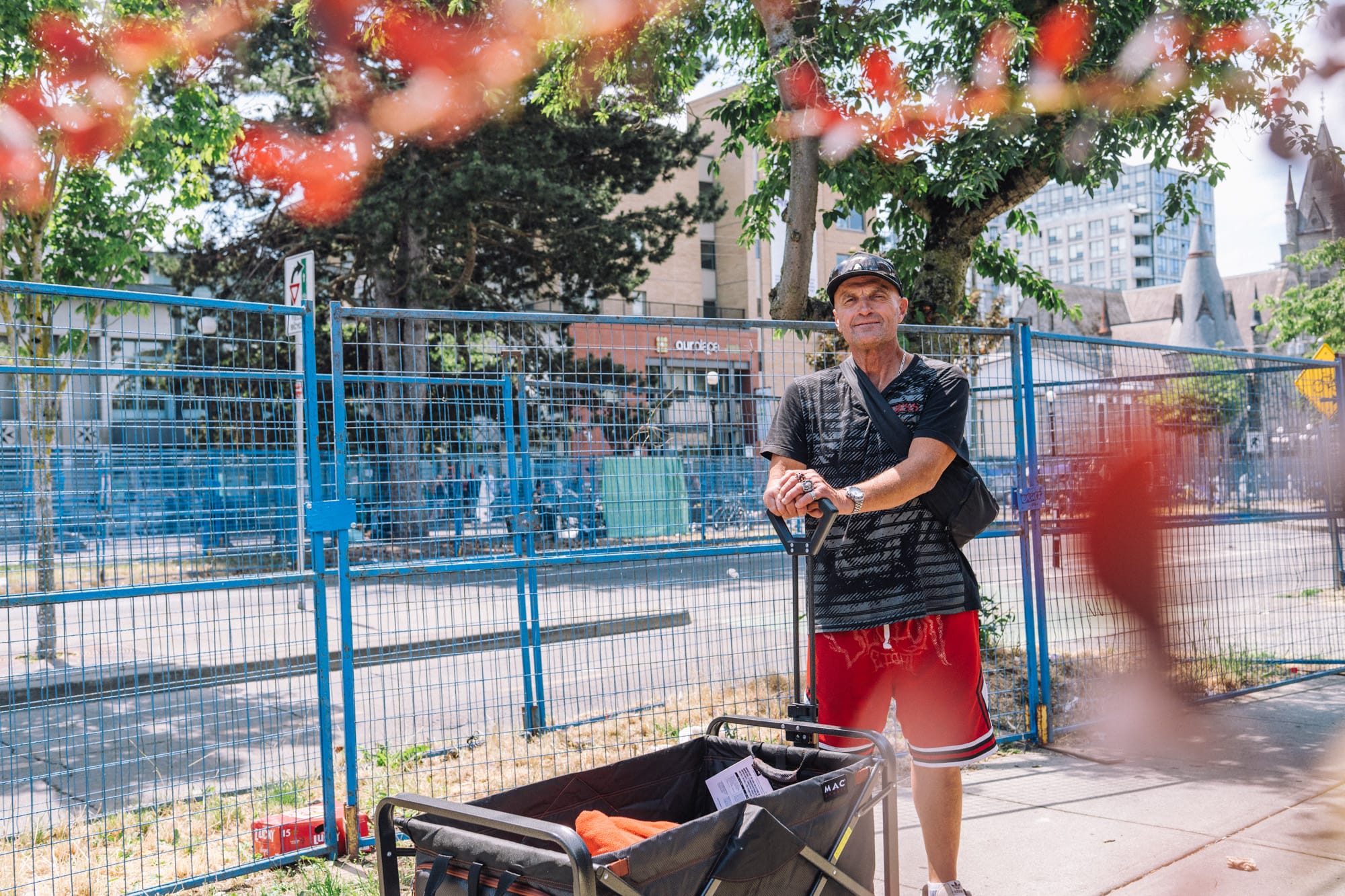
As you write in your book, municipalities may not have the ability to solve the root causes of homelessness, but they do have the ability to use a 'housing as a human rights' approach. Which ones have implemented a different approach?
Joe Hermer: It's hard to pick out a particular city because I think some cities do some things better than others, but I don't think there's a golden example. I will say that I think municipalities have been put in a very difficult position.
When COVID hit, municipalities went into this shock mode about how they could help. And they don't have the resources. They don't have the expertise. They don't have the staff. They have a limited budget. They have to balance other things and so on.
On the other hand, one of the things municipalities can do is to not pass bylaws that are going to make the situation worse and increase the suffering of unhoused people.
 Community Newsletter
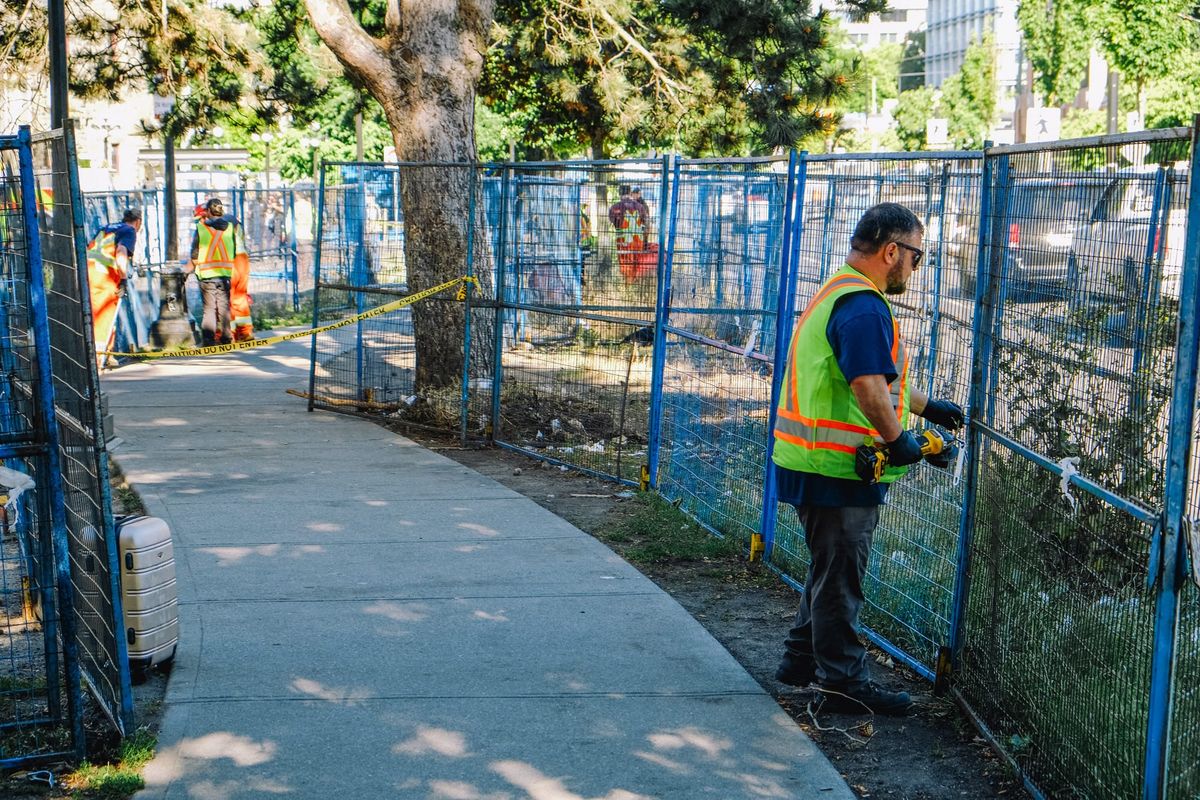
Essentially through these bylaws, unhoused people are talked about and treated as an object of nuisance — like physical nuisances in parks, a piece of garbage that's in the way and causing a problem.
Unhoused people are not pieces of garbage. They're not physical objects that are getting in the way of pedestrians. They're actual humans trying to survive in public space.
Unhoused people are not pieces of garbage. They're not physical objects that are getting in the way of pedestrians. They're actual humans trying to survive in public space.
– Joe Hermer, University of Toronto sociologist
Accountability has to start with the bylaw itself — it has to be baked in from the start. Because if you pass a bylaw which is very poorly and loosely written, a bylaw officer may not be clear on how to enforce it.
One of the recommendations Alexandra and others have made is that municipalities should have a checklist of ways in which they have to consult on sections of the bylaw which could cause harm to unhoused people. So the accountability starts there.
In terms of the actual enforcement, I think you need clear policy and standing orders, which interpret the sections and how they're to be enforced and what their purpose is.
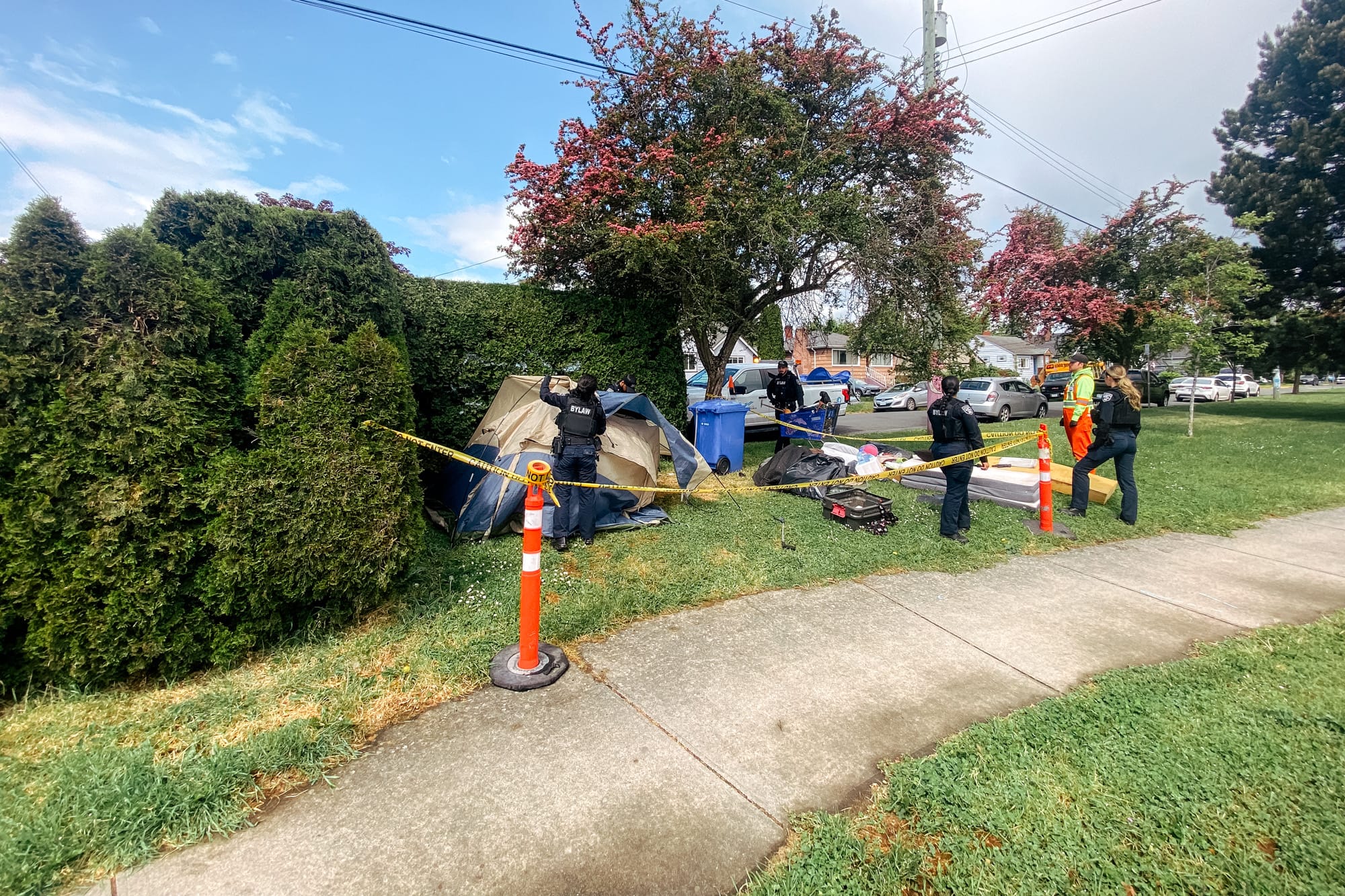
If you have a bylaw section that allows almost unfettered discretion, of course the bylaw officers are going to enforce it any way they want. Particularly if it's complaint-driven or they're under pressure from local communities, which typically don't want unhoused people around.
If you have a prejudicial bylaw that is clearly meant to target unhoused people, it's very difficult once it's enacted to actually put guardrails around it.
There are also very limited structures in municipalities that actually supervise and make bylaw officers accountable.
 Drug Data Decoded
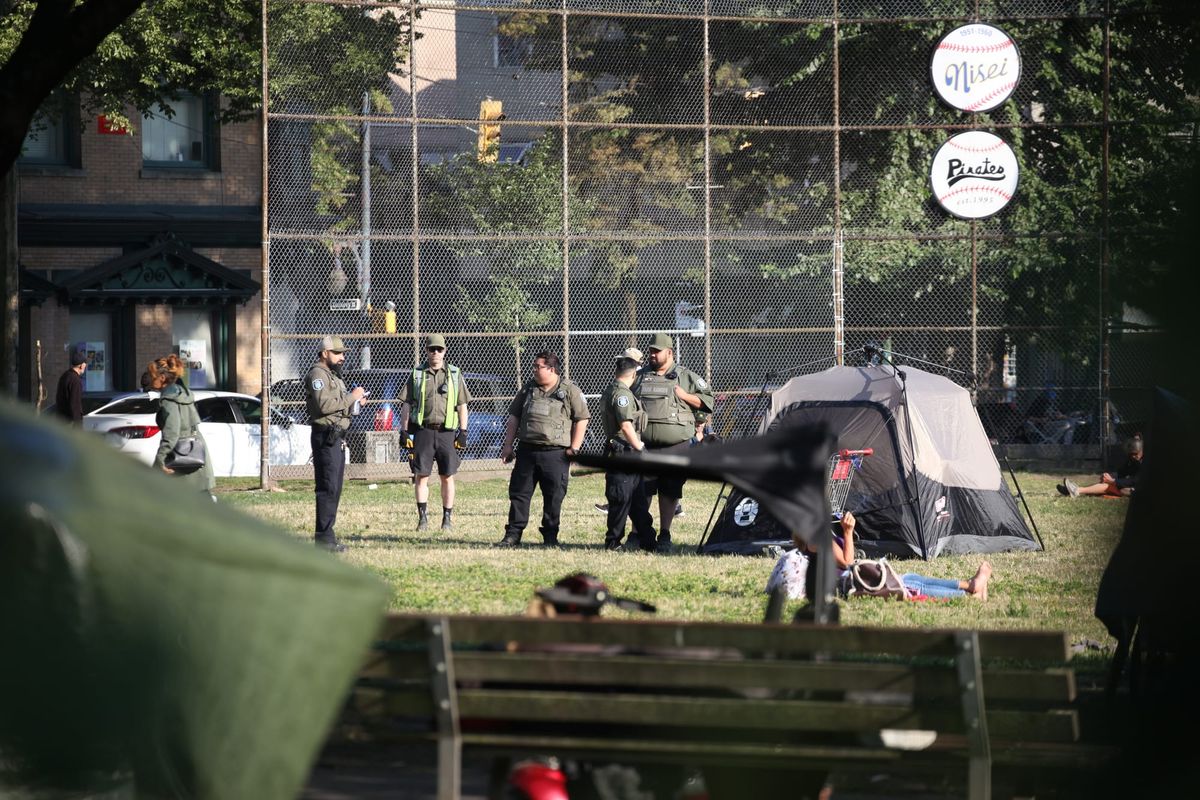
It comes back again to the leadership of the municipalities and how they approach issues.
If they just bang the drums about crime and disorder and safety — and the downtown area being a no-go area, and demonizing unhoused people — well, that is going to encourage views that are prejudicial.
There's a middle ground there, where we can address people's legitimate concerns. But at the same time, have a realistic view of what can solve the problem, which, of course, is housing — transitional housing, shelters, wraparound social services, peer-mentored harm reduction.
Those are, in the long-term, the solution. They take time.
We can have a humanitarian view that takes the circumstances of unhoused people seriously, while still addressing safety concerns that people have.
– Joe Hermer, University of Toronto sociologist
So there needs to be leadership to have this middle view. We can have a humanitarian view that takes the circumstances of unhoused people seriously, while still addressing safety concerns that people have.
I think the days are over where municipalities can just evict people because they're on city property.
There is a movement now, which the Waterloo decision exemplifies, that municipalities have gotten a wake up call about how they deal with encampments and unhoused people on the street.

Editor: Brishti Basu

Mike Graeme
Mike Graeme (he/they) is a white settler photojournalist and member of De Facto cooperative documenting stories of resistance and justice on the unceded lək̓ʷəŋən and W̱SÁNEĆ territories. His photos and writings have appeared in more than 25 media outlets and nonfiction books across Canada and the US, including The Narwhal, The Tyee, IndigiNews, and The Nation. He's won a Jack Webster Foundation award, and been a shortlisted finalist for two John H. McDonald Excellence in Student Journalism Awards. Read their reporting