How De Facto investigated what happens to unhoused people’s confiscated belongings
Reporters Brishti Basu and Mike Graeme reveal how they hid tracking devices in resident’s tents and other valued items

It is municipal election day across BC, and next weekend voters head to the polls again for a provincial election.
One issue that has dominated the election cycle in many communities across the province is the housing crisis — and in particular "public safety," homelessness and the war on drugs.
In Vancouver, there are two plebiscite questions on the ballot that are a referendum on whether to ban open-air hard drug use on the streets of the city, and whether to involuntarily detain people who use substances in the former St. Paul’s Hospital building.
In the lead-up to both elections, De Facto journalists Brishti Basu and Mike Graeme spent eight months investigating the experiences of unhoused people in Victoria.
 De Facto Journalism Co-op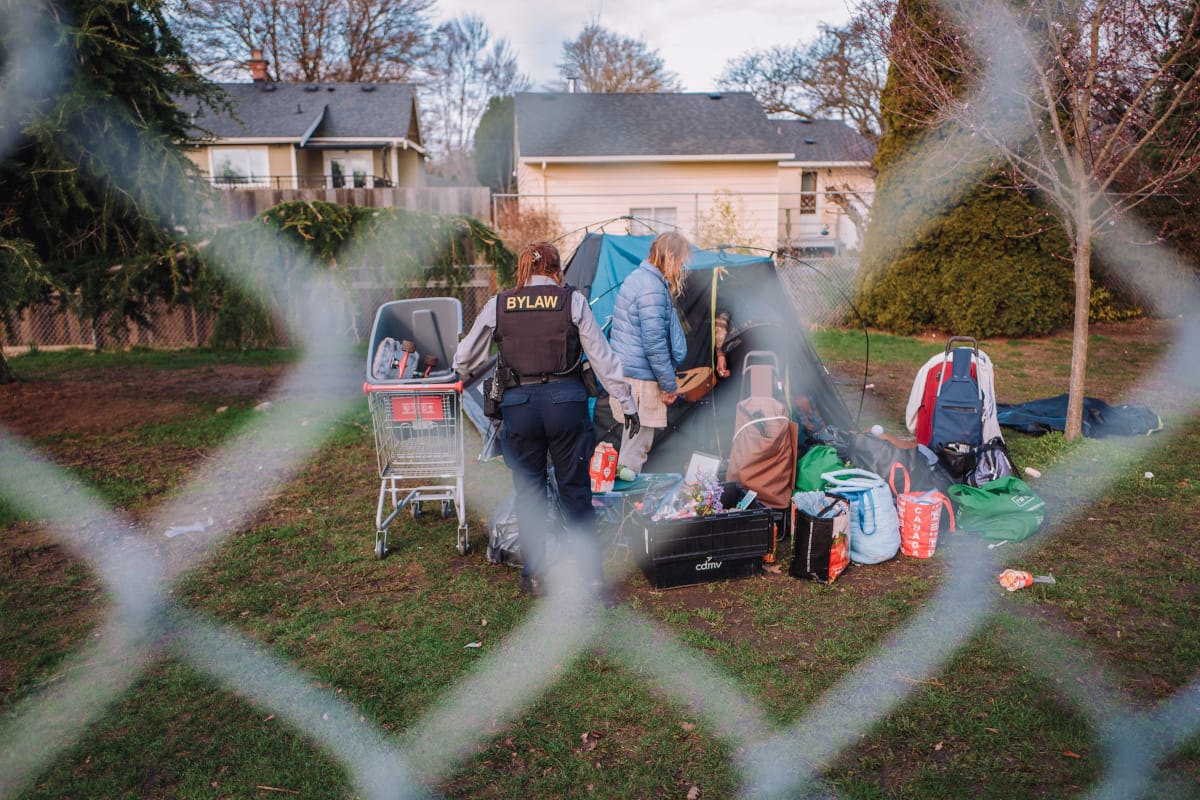
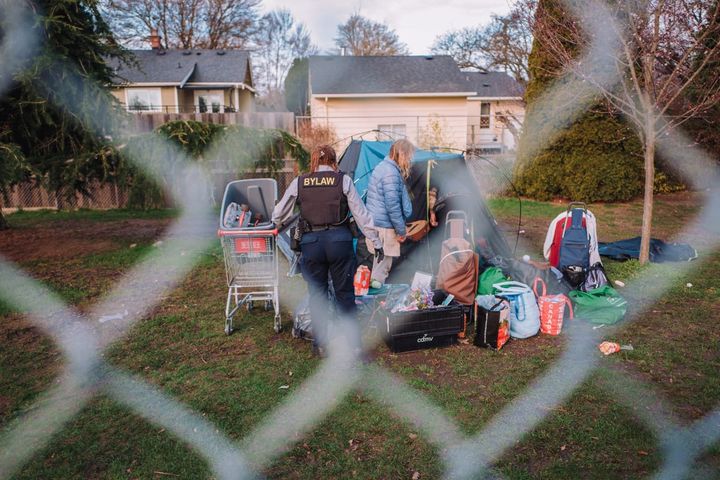
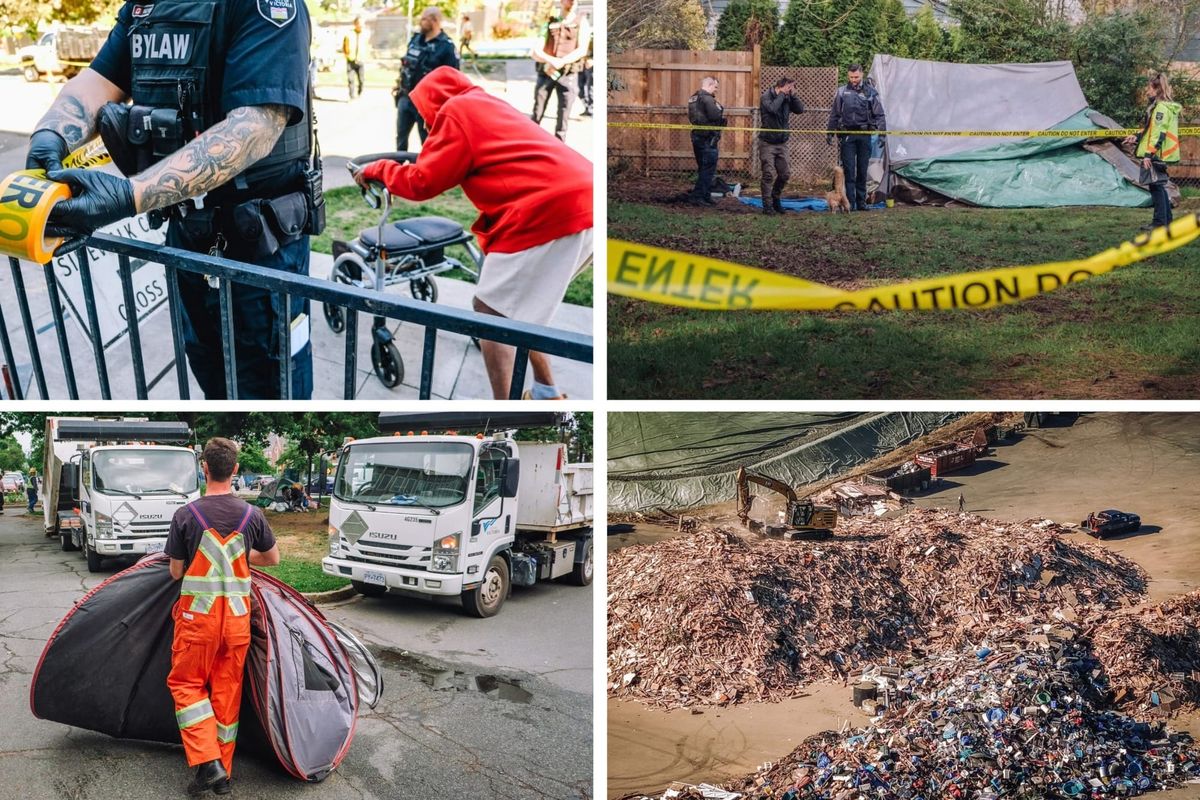
They scrutinized the devastating impacts of increasingly aggressive bylaw enforcement, and the fallout from officers throwing away the valued possessions of already vulnerable residents.
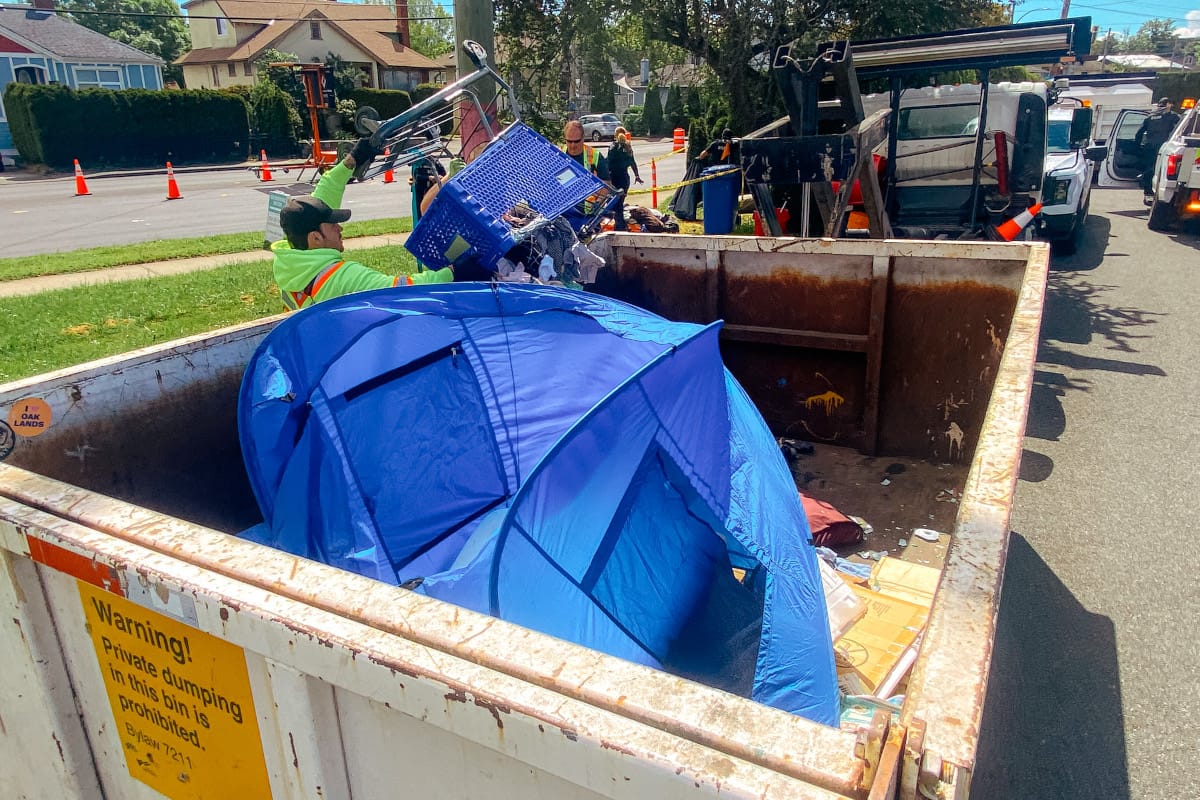
They used tracking devices to corroborate what many unhoused people and advocates have said for years: that essential survival items like tents are thrown into the garbage within days of a bylaw sweep — despite city officials' insistence that no such thing happens to new or otherwise functional items.
"'Public safety' has been dominating the discourse when it comes to this double election cycle we're having in BC. It’s so important that people get out to vote."
– Brishti Basu, De Facto Journalism Co-op
De Facto tracked unhoused people's belongings using Apple AirTags — with their consent — to the Greater Victoria region’s landfill.
Brishti and Mike spoke about their investigation with fellow co-op member David Ball on De Facto Radio on Saturday.
This interview is edited for length and clarity. You can also listen to them on our podcast here.

David Ball: Could you just start out big-picture — tell us what the stories are about.
Brishti: Mike and I embarked on this investigation about eight months ago.
It was really sparked from conversations with local advocates here in Victoria about bylaw activities and how they've ramped up over the past year, especially along Pandora Avenue — that bylaw officers don't follow their policies evenly, they take people's belongings like tents and personal things, and they throw them away.
"Bylaw officers don't follow their policies evenly, they take people's belongings like tents and personal things, and they throw them away."
– Brishti Basu, De Facto Journalism Co-op
So our investigation was basically trying to corroborate claims that were made by people on the ground, versus what the City of Victoria has historically said in response to these allegations.
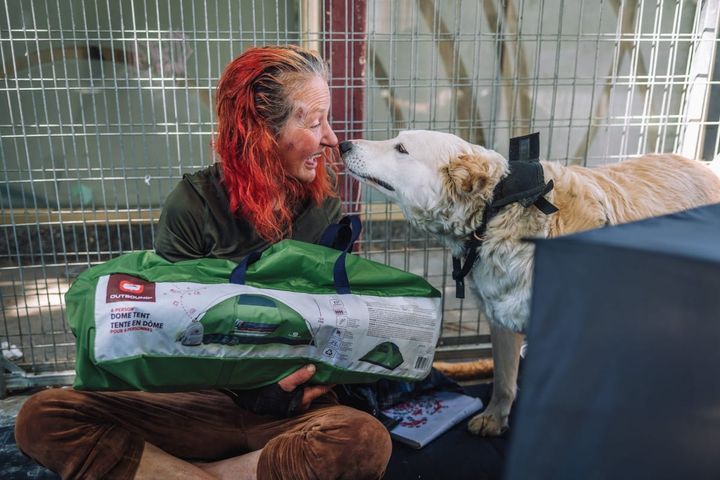
So we put AirTags in donations — donated tents and carts — with people's consent in order to track where these items actually end up.
David: That's so cool. What made you think of this whole AirTag idea? Have you seen this elsewhere?
Brishti: No, actually it came up as an idea in conversation with Niki Ottosen; she's the founder of The Backpack Project, and she's been on the ground since 2008 giving people donations.
She was just so frustrated with her donations basically ending up God knows where, and she couldn't get any answers from the city. So she was like, ‘What if we just tracked these things?’ And I was like, ‘That sounds like a good idea, I think I know a group of people who'd be down for this.’
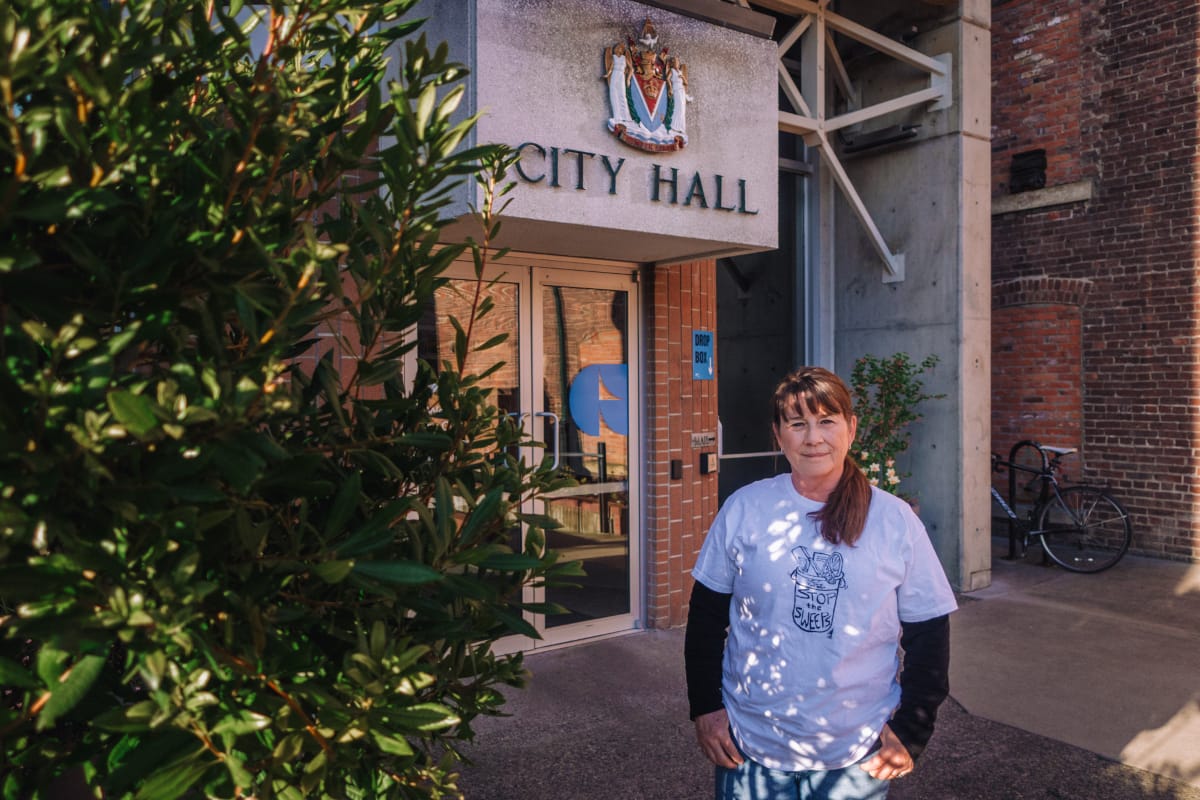
David: How did you get permission from the unhoused folks to do this?
Mike: We were introduced to some unhoused folks along Pandora Avenue, and we got consent from folks.
We told them about this project, and that we were wanting to get more insight into their experiences on the ground — having to face what some researchers like the ones we spoke to for this story have called violent systems that are actually pushing people into more vulnerable situations can lead to more harm, and even more chance of death on the streets.
 De Facto Journalism Co-op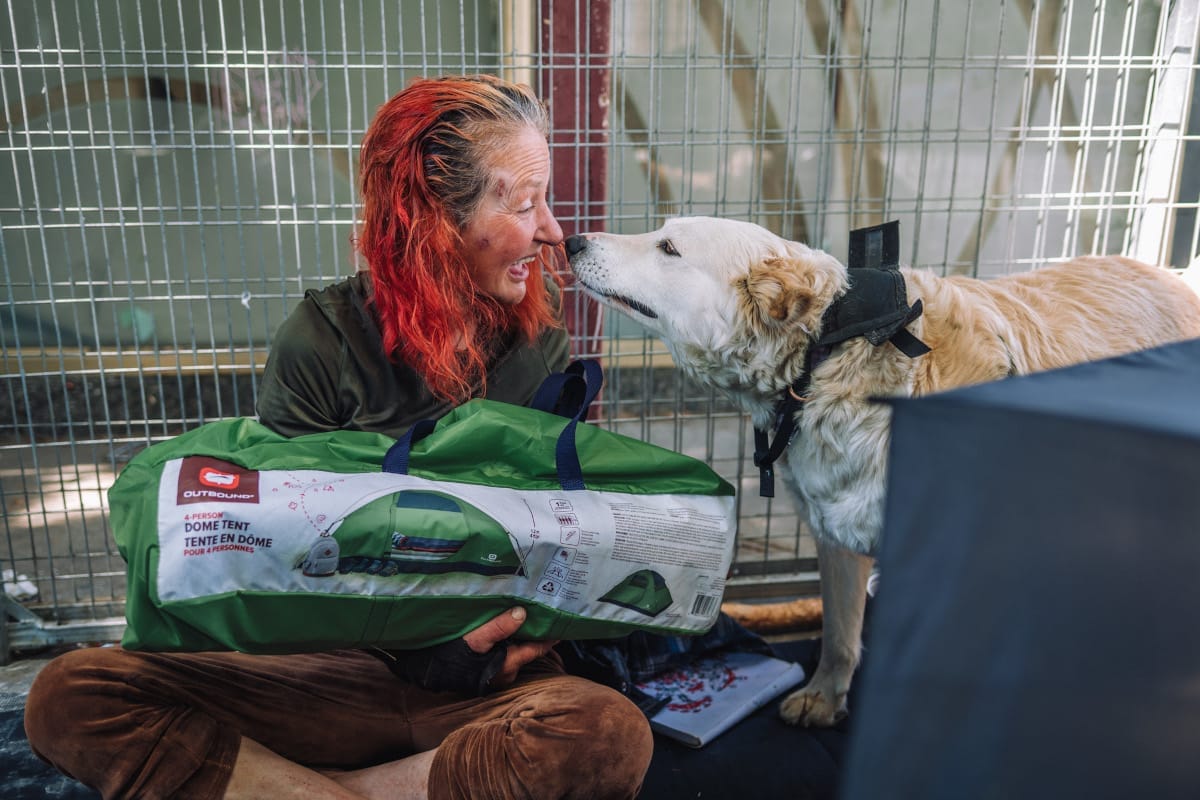
So the people we talked to were really interested in being a part of the project, and gave their consent.
That was one thing that really stuck out to me when I was watching the items to see where they were going, checking in on Apple FindMy devices app. I remember one of the first times I looked on my computer — it was a rainy day and I was in my warm home.
I was like, ‘Oh yeah, those people that we met, who we gave these items to, are still on the streets, and right now they have their survival items like the tents we distributed.’ But within a few days, those items were taken from them. We tracked them to the landfill.
On a personal level, it just helped to see what people are facing on a daily basis, and how those systems are harming people.
"Their survival items ... were taken from them. We tracked them to the landfill. On a personal level, it just helped to see what people are facing on a daily basis, and how those systems are harming people."
– Mike Graeme, De Facto Journalism Co-op
Brishti: Similar to Mike, I was pretty struck by the fact that the people that I was talking to were so excited we were doing this project.
A few of them were like, ‘Why didn't someone think of this before? This is such a good idea.’ Because they know that it happens all the time, and advocates who are on the ground see it all the time, too.
"They know that it happens all the time ... Everyone was really excited that we were actually getting some proof."
– Brishti Basu, De Facto Journalism Co-op
But whenever there's a media report — and there have been articles in Victoria News and CHEK News that talk about this exact same phenomenon of bylaw throwing things away even if they're good to use — there's never any resolution. There's never anything that comes out of it.
So everyone was really excited that we were actually getting some proof.
David: I had a similar experience here in Vancouver, where I sent a couple AirTags out in Oppenheimer Park. And I was thinking, ‘Well, it's kind of awkward to be following someone like this — it’s kind of a breach of privacy.’
And yet people were super keen.This one guy was just like, ‘I want more AirTags. I can find more people, I really want to.’ He was willing to sacrifice his tent that was in good condition, just to be able to prove that this was happening.
"It's kind of awkward to be following someone like this — it’s kind of a breach of privacy. And yet people were super keen.This one guy was just like, ‘I want more AirTags.'"
– David Ball, De Facto Journalism Co-op
Some people's response I've heard since publishing is like, ‘Well, everyone knew this was happening.’ But it’s just validating to see that, absolutely, we have receipts that these tents get disposed of, even when they're in good condition.
How did the AirTags get put into things, and what did you actually find when you monitored them?
Brishti: There were so many moving parts to this story. First of all, figuring out AirTags themselves — how they work and if there's anything illegal — then putting them in the items.
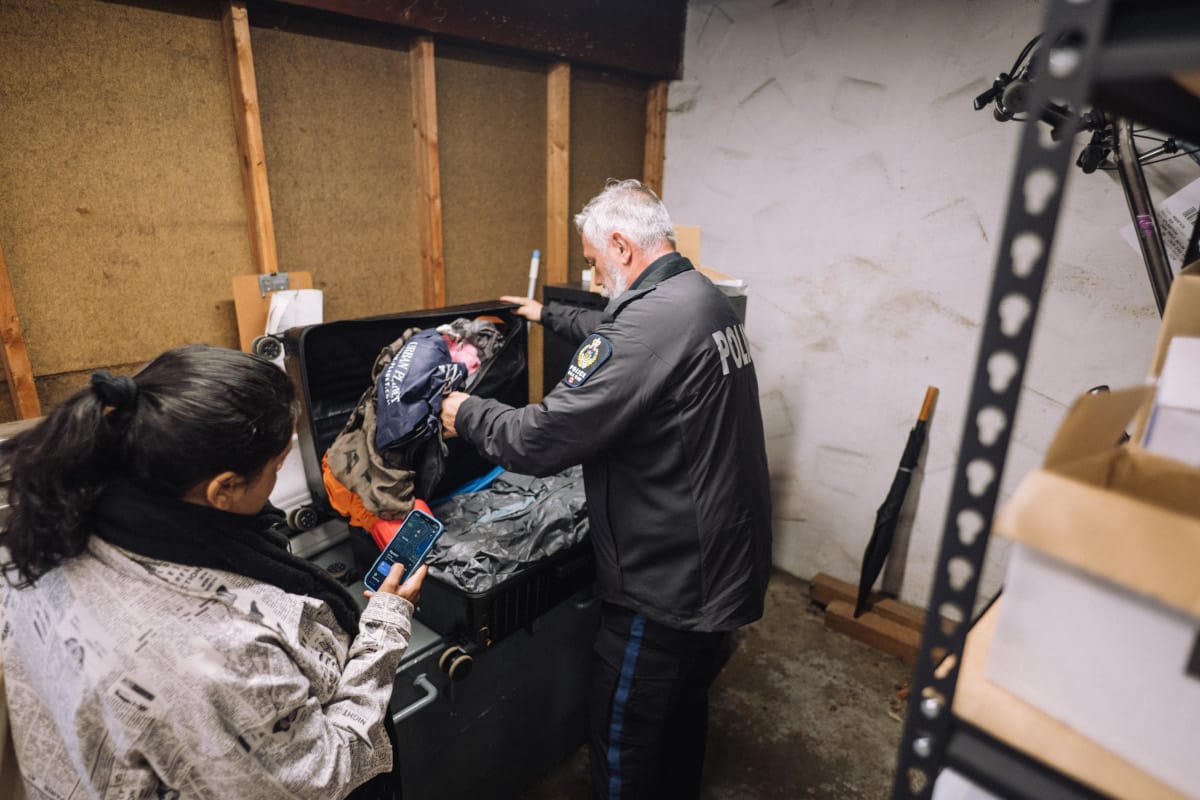
We actually had Mike's roommate help us sew the AirTags inside the linings of the tents.
Support independent journalism that boldly shines a light on law, justice and rights. Sign up or donate today
Then finding the people themselves was actually not too hard, but it was hard to establish that we need to give these items to people who we can get in touch with, who have a phone.
It ended up being that a lot of people didn't have phones anyway, and we weren't able to reach out or follow up with a couple of people.
That's in the story as well — how displacement affected even this investigation. Needing to be in touch with the people that had these items was one part of it, as was strategizing around how to get a response from the city on a rolling basis.
We had so many different aspects to cover here.
Mike: One of the tents we distributed to someone was taken to the Oak Bay Police Department — in a different municipality. That gives a bit of insight into how having to face bylaw enforcement on a daily basis can displace them outside of their support networks.
One thing that really was brought to our attention by the researchers we spoke with is how people really rely on these support networks and social services on Pandora.

When people’s networks are disrupted, that can lead to people using substances alone.
Combine that with the toxic drug crisis, and we have people overdosing without their support networks anymore — because they've been displaced by bylaw enforcement.
"When people’s networks are disrupted, that can lead to people using substances alone. Combine that with the toxic drug crisis, and we have people overdosing without their support networks ... because they've been displaced."
– Mike Graeme, De Facto Journalism Co-op
Dr. Jill Wiwcharuk [a Victoria street doctor] told us about one instance where someone she was working with had actually missed out on a housing opportunity, because of similar displacement and not being there when the support worker came to sign a lease with that individual.
There are just many impacts of bylaw enforcement people don't really think about.
David: And there are some really tragic stories in your articles that are really heartbreaking — about people losing things that were both medically important, like someone lost their medications?
Brishti: This was another incident Dr. Wiwcharuk told us about. Someone was on Pandora during a bylaw sweep, and their rescue medication for their lungs was thrown away. 48 hours later, they died.
We posed the question to a city spokesperson as well: ‘Does bylaw throw away things like medications and IDs?’
And their response was, ‘No, that's not the policy, but it's also not possible for bylaw officers to check every bag and every receptacle for these things. So it's possible that they get thrown away.’
That was really striking to me as well, because what do you mean you're throwing away people's life-saving medications and IDs they need to get into housing?
"That was really striking to me ... because what do you mean you're throwing away people's life-saving medications and IDs they need to get into housing?
– Brishti Basu, De Facto Journalism Co-op
David: Also, of course, it's going to be in someone's bag or tent — because they don't have a medicine cabinet.
All of this kind of comes down to people not having a home, and are therefore in a public space, have no privacy, are constantly having stuff taken away or having to move around.
And yet they're expected to somehow have their medication laying out to be seen. And then there's also sentimental stuff, too.
"All of this kind of comes down to people not having a home, and are therefore in a public space, have no privacy, are constantly having stuff taken away or having to move around."
– David Ball, De Facto Journalism Co-op
People talked about ashes of loved ones — we've heard of that happening in Vancouver and Victoria several times — or family photos, and someone who had the baby blanket of their kid taken.
These are important things that can really destabilize someone when they're taken away, on top of the health impacts.
Mike: This investigation coincided with an FOI filed by a UVic law student that showed some statistics behind the amount of stuff that's getting thrown away.
Over half of the items bylaw officers were seizing was actually being thrown out on-scene — 56 percent on average for the months that FOI covered, from January to August 2026.
And then when you account for all the items that did get impounded but were then thrown away after, it was nearly 83 percent on average during those months. So just a huge amount of things are thrown away.
 Community Newsletter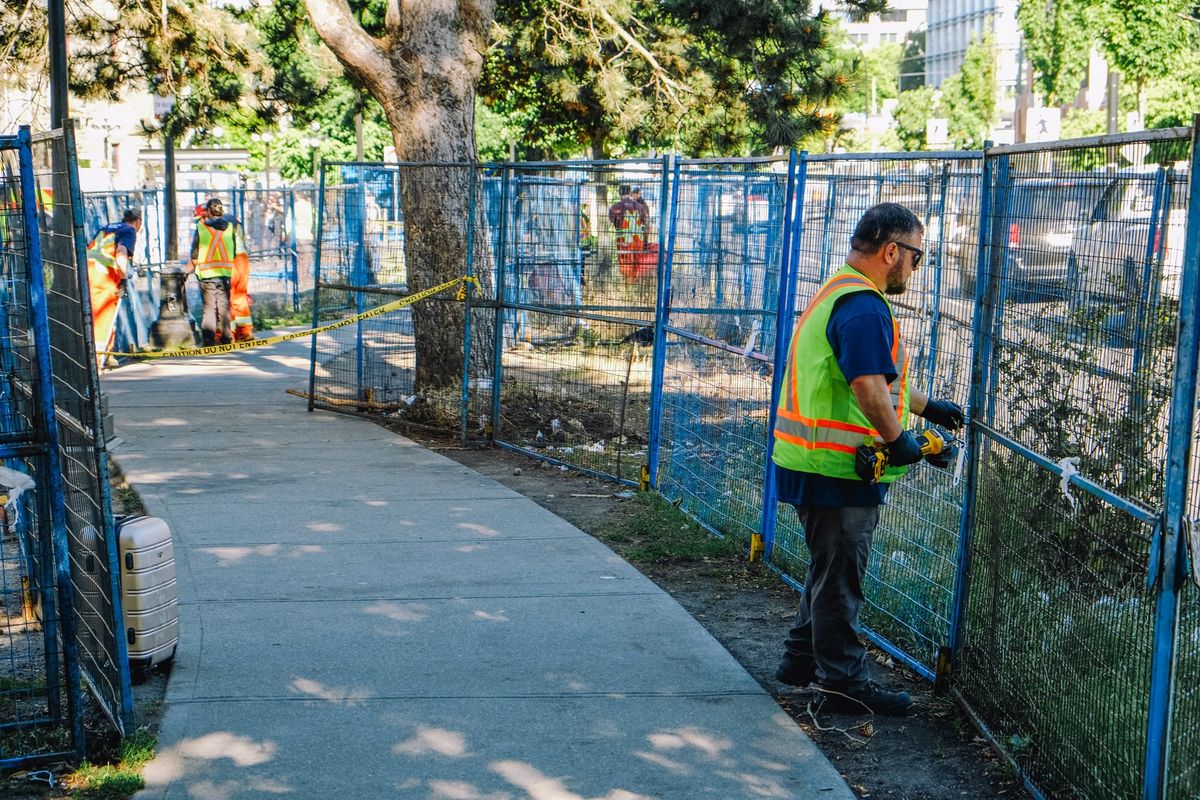
David: Not to mention the waste. There's an environmental angle I'd love to dig into here, because these are all nylon and plastic objects that are brand new. It's a complete waste when someone donates them.
I've seen comments on our stories on social media where people are like, ‘I donate tents and sleeping bags and shoes to homeless people — I don't expect them to be taken within a day and thrown into a dump; I thought people were supposed to claim these back if they were taken.’
Brishti: There are so many aspects of the story that we can follow up on, and the environmental aspect is definitely one.
David: I was actually watching the bylaw officers find the tent and sleeping bag I'd AirTagged in Oppenheimer Park. Literally, the sleeping bag was so pristine and freshly laundered, and the tent was upright with a fly, assembled in Oppenheimer Park, with the sleeping bag actually made up like a bed, nicely laid out with a pillow and everything.
I saw the bylaw officers go up to the tent, look inside the door, and say, ‘The sleeping bag is soiled,’ and they nodded at each other and then just started ripping it apart, pulling it down and dragging it away.
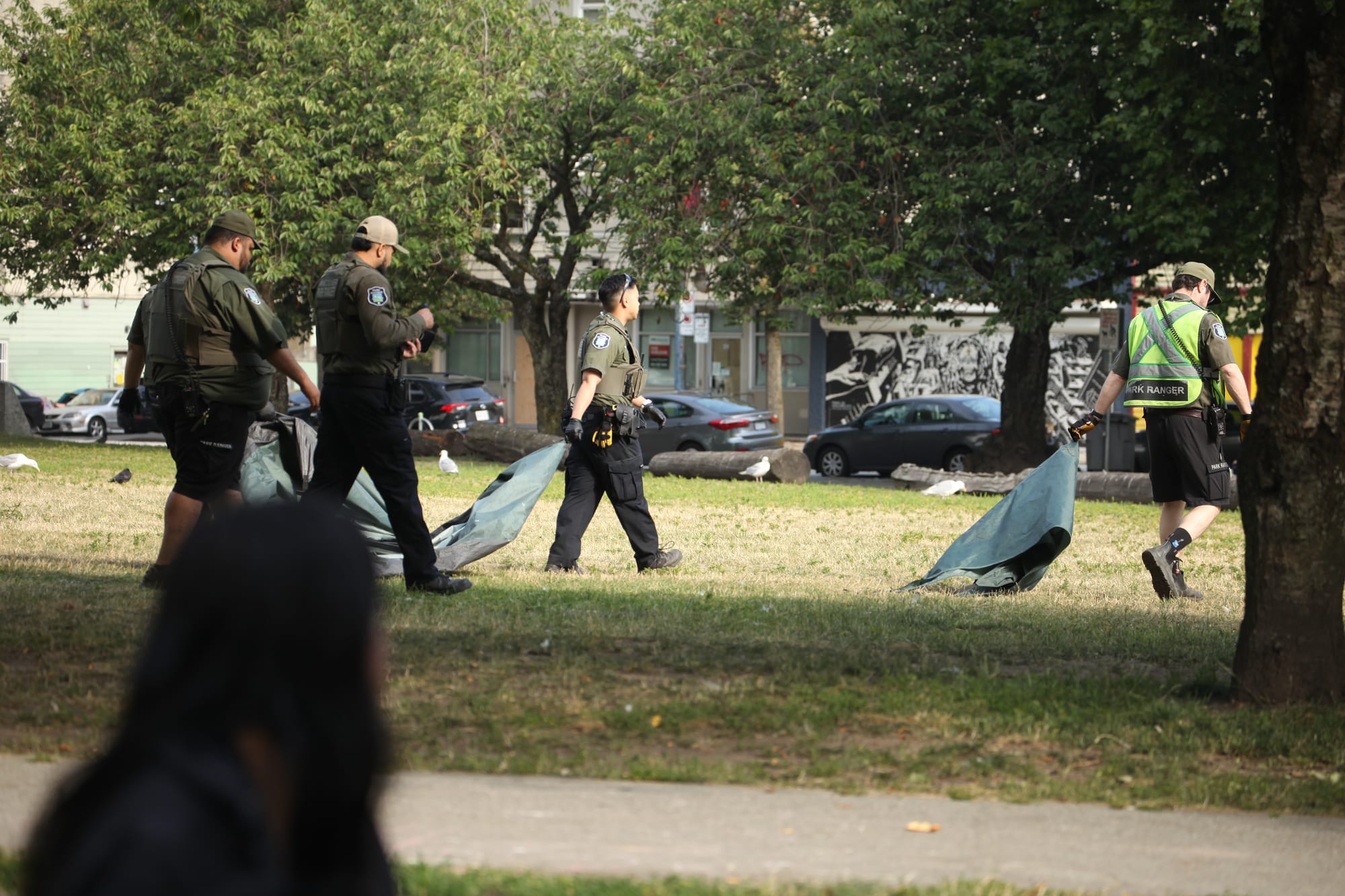
Other people went and said, ‘No, no, that's our friend's tent!’ and tried to stop them. But they took it away like 20 minutes after anyways. It went straight to Stanley Park to some holding facility that's fortified like Fort Knox with security guards. You cannot get in, you cannot reclaim it.
They said it was soiled, but I could see — and have pictures — that the sleeping bag was literally clean and freshly laundered.
Brishti: There were two people that told us very similar things.
Mike: That's really illustrative of how these bylaws are worded, too. They're very much open to the interpretation of the officers themselves. And as we've seen, there can be bias amongst officers.
The researchers we spoke with talked about more aggressive behavior in bylaw — moving towards more of a "proactive" policing approach.
"The researchers we spoke with talked about more aggressive behavior in bylaw — moving towards more of a proactive policing approach."
– Mike Graeme, De Facto Journalism Co-op
We see the wording of these bylaws giving a lot of interpretive power to officers to say, ‘That's looking soiled to me, let's throw it out.’
There's a lot of stigma around people being unhoused, too. And we heard from many people we spoke with about how those biases can play out in those interactions — and lead to these devastating impacts for people.
 Ricochet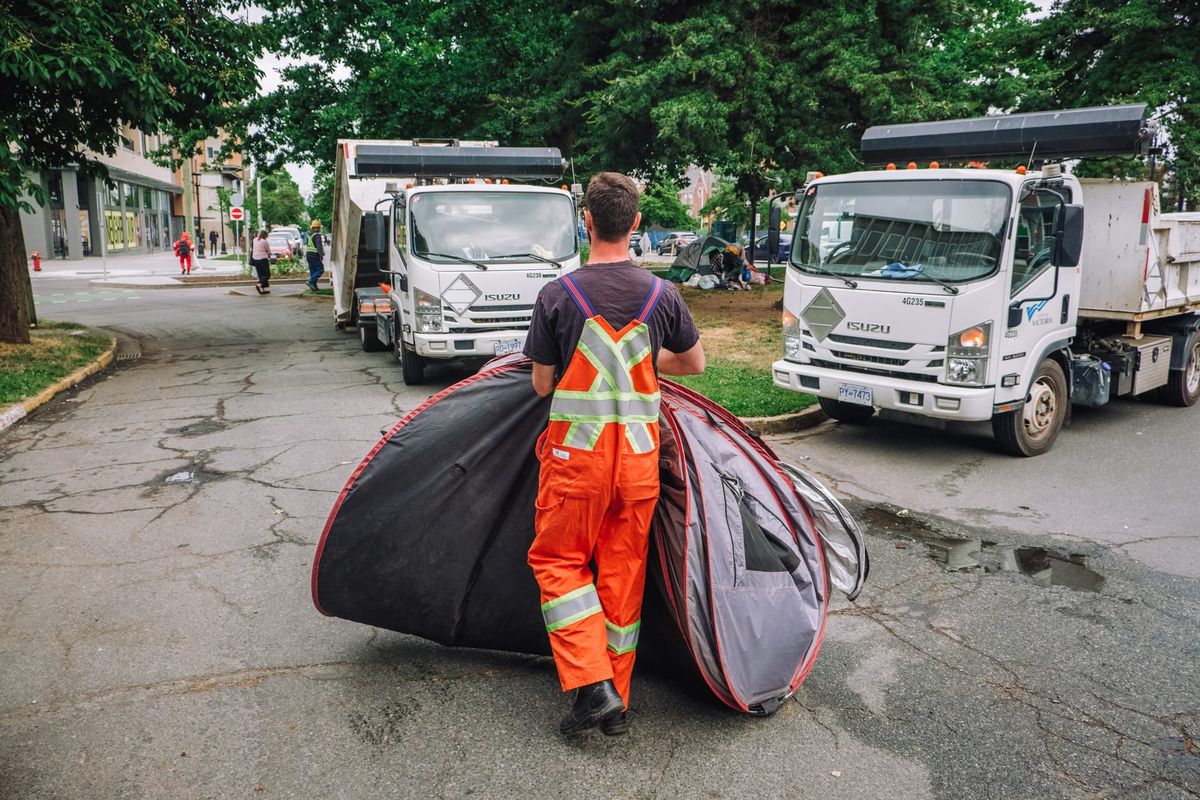
Brishti: There were two separate couples as well who told us very similar stories of how the bylaw officers destroyed their items before throwing them away.
In one situation, they said bylaw threw their clothes in a puddle, and then threw them away claiming that they're dirty. In another situation, someone ripped a tent and then threw it away.
We put these questions to the city, and of course they denied that. They said bylaw officers do not discriminate, they don't target anyone. But what we're hearing on the ground is very, very different.
"The city ... said bylaw officers do not discriminate, they don't target anyone. But what we're hearing on the ground is very, very different."
– Brishti Basu, De Facto Journalism Co-op
David: This was really such good journalism. You proved a lie, which is that people can reclaim unsoiled, usable, good, undamaged stuff that's taken from them within a timely period.
In Vancouver, it's a certain holding period. In Victoria, they say you can come for 14 days and will even bring the thing to you if you contact them, they told you.
Yet it's clear that if it goes to the dump, no one's going there to be able to reclaim it if they haven't AirTagged it. You went to the dump, right, Mike?
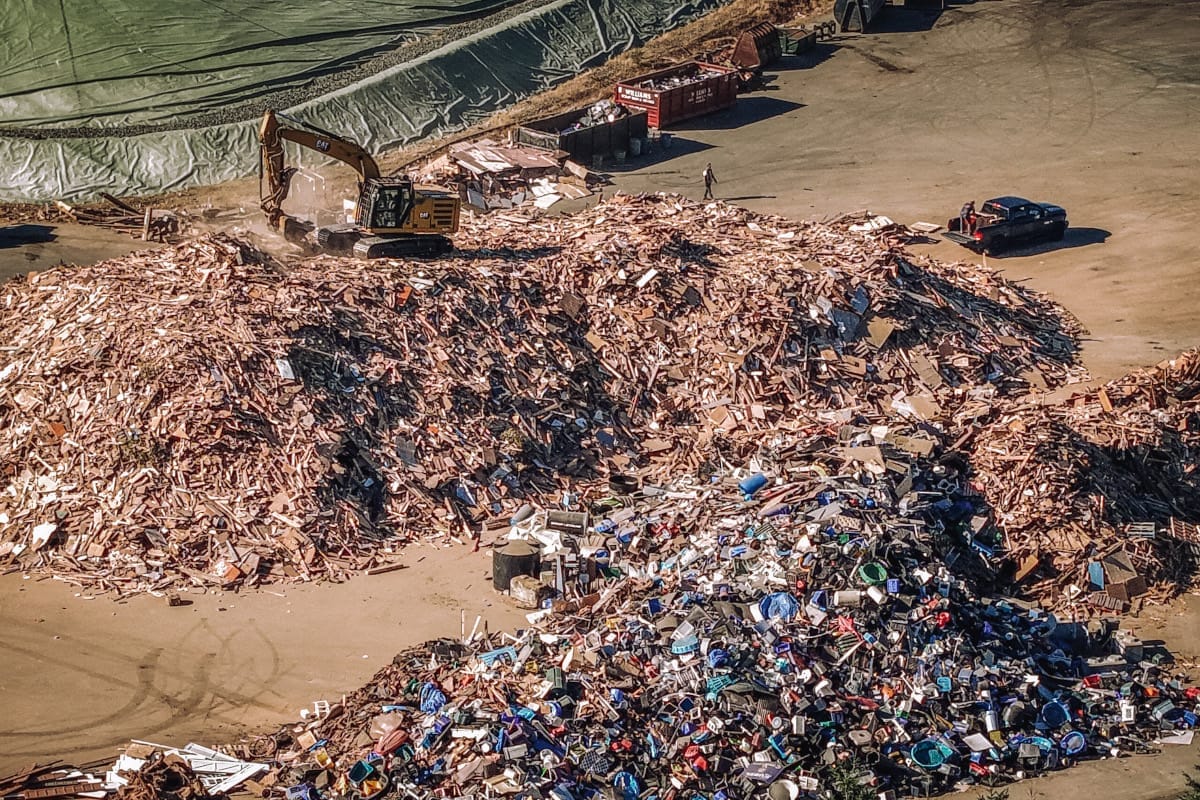

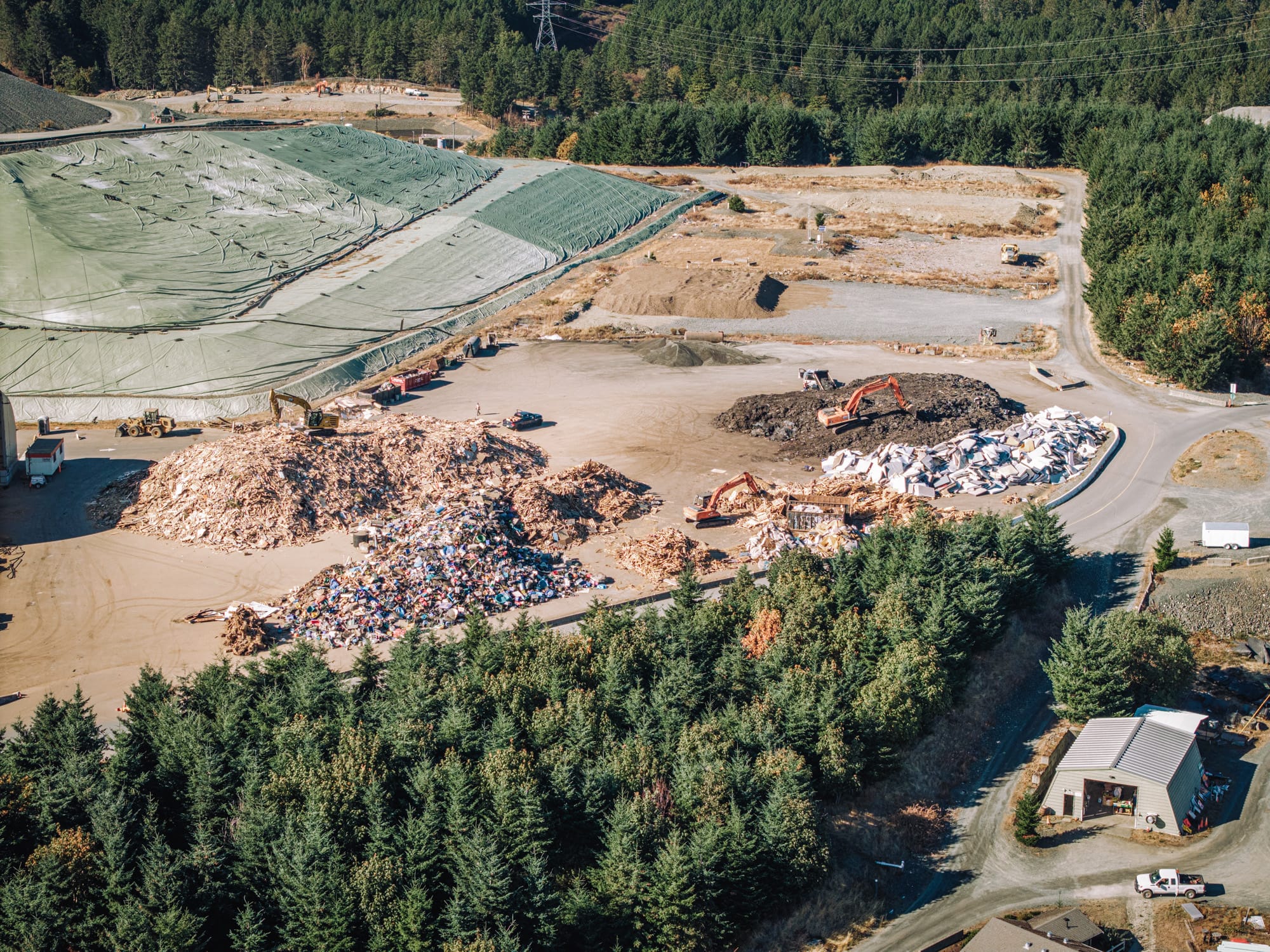
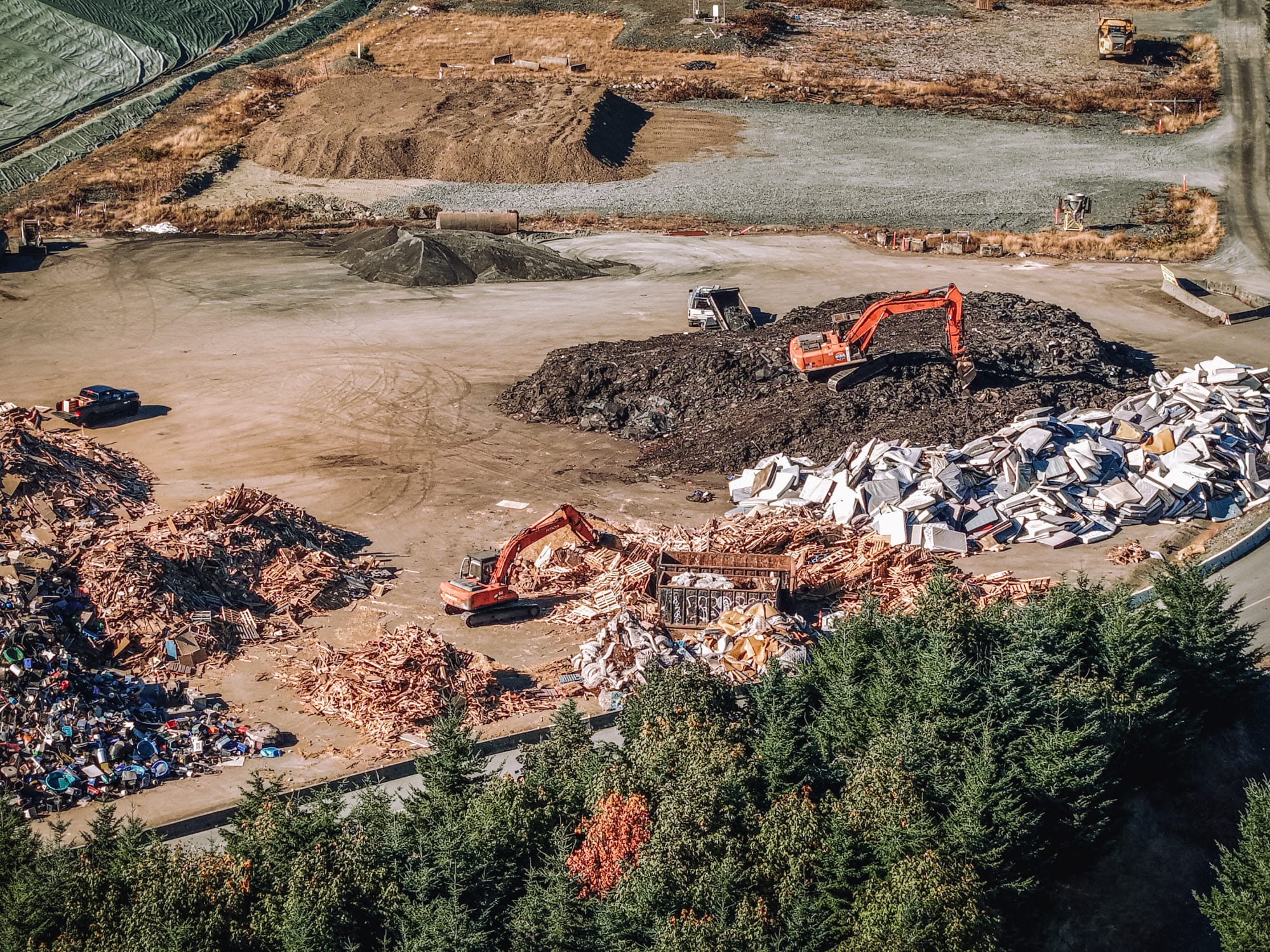
Mike: I went out to the Hartland Landfill. A friend lent me his drone. I was able to take some aerial photos.
David: You obviously were outside the dump; you weren't able to see where the objects were?
"All of this kind of comes down to people not having a home, and are therefore in a public space, have no privacy, are constantly having stuff taken away or having to move around."
– David Ball, De Facto Journalism Co-op
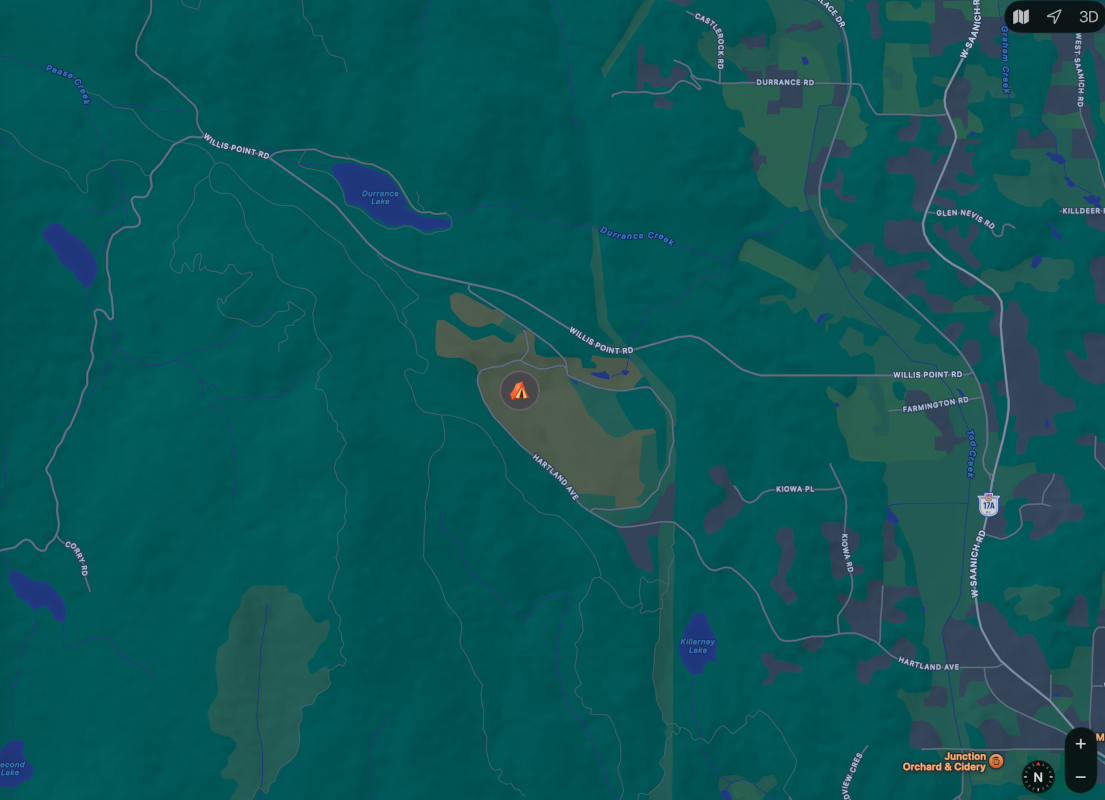
Mike: No. After the items we tagged went to the Hartland Landfill on our FindMy apps, they stopped pinging.
I think they were probably destroyed, or just got buried so deep they weren't getting in touch with the Bluetooth system that sends those signals.
David: I wanted to ask you about the systemic aspect — of bylaw becoming more militarized and blurred with policing — because you found some really cool researchers who have been looking at this exact problem.
There's a new book this year called The Bylaw State: Encampment Evictions and the Struggle for Public Space, by Alexandra Flynn and Joe Hermer; Alexandra is an associate law professor at UBC, and Joe is a sociologist at the University of Toronto.
Mike: It’s an incredible book they put out earlier this year. They talked about some of the court cases filed by unhoused people and by advocates against municipalities across Canada, and what the positive impacts of those cases are — but also how a lot of energy can go into these cases but the reward isn't as good as it could be.
 Drug Data Decoded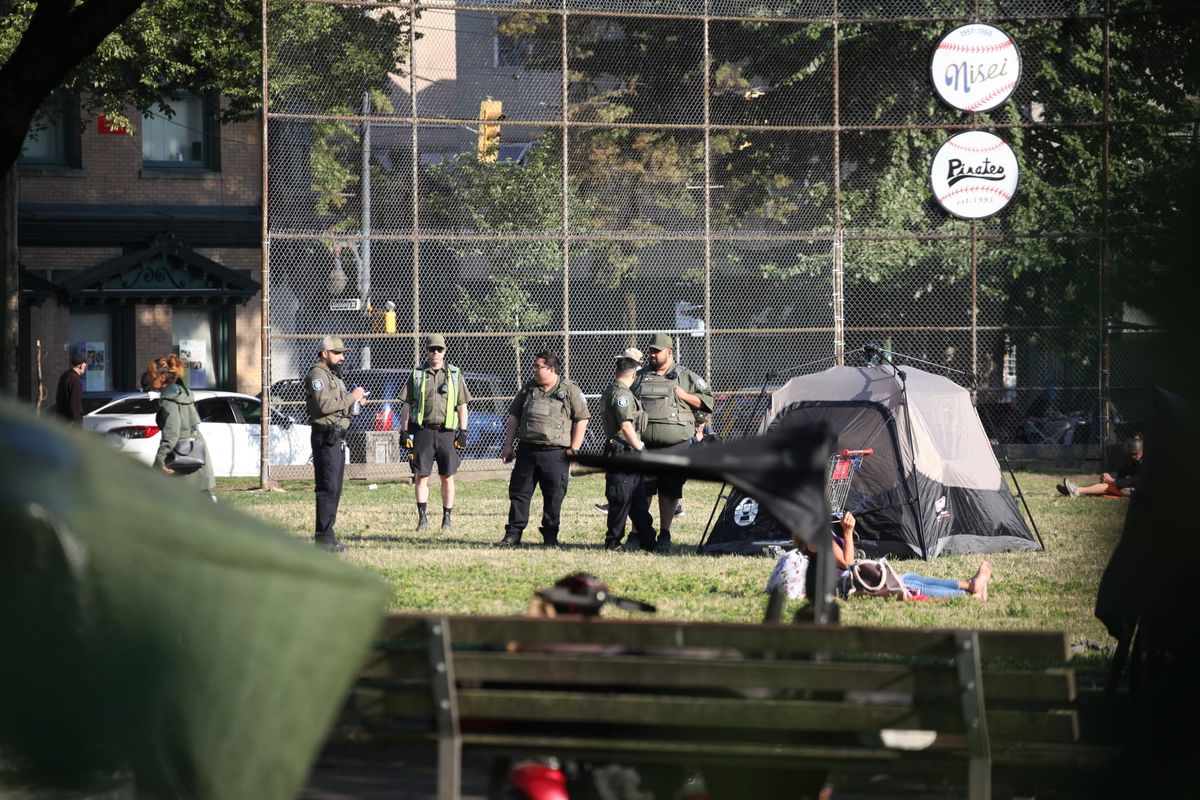
Both Joe and Alexandra shared that what's really important is we start at the level of not passing these bylaws in the first place.
Alexandra really emphasized that this is a human rights issue we're facing here in Canada. If we really wanted to take it seriously, we can't be using bylaws to regulate what is a human rights crisis.
And Joe said that what municipalities can do is not pass bylaws that are going to exacerbate the problem.
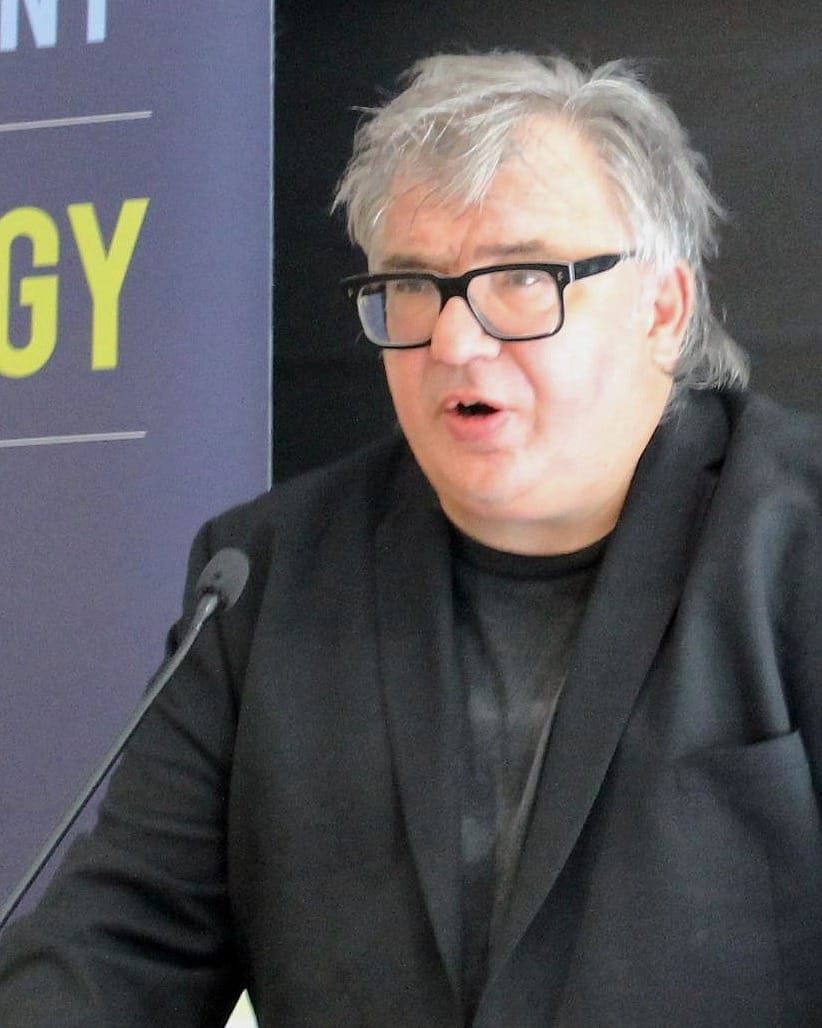
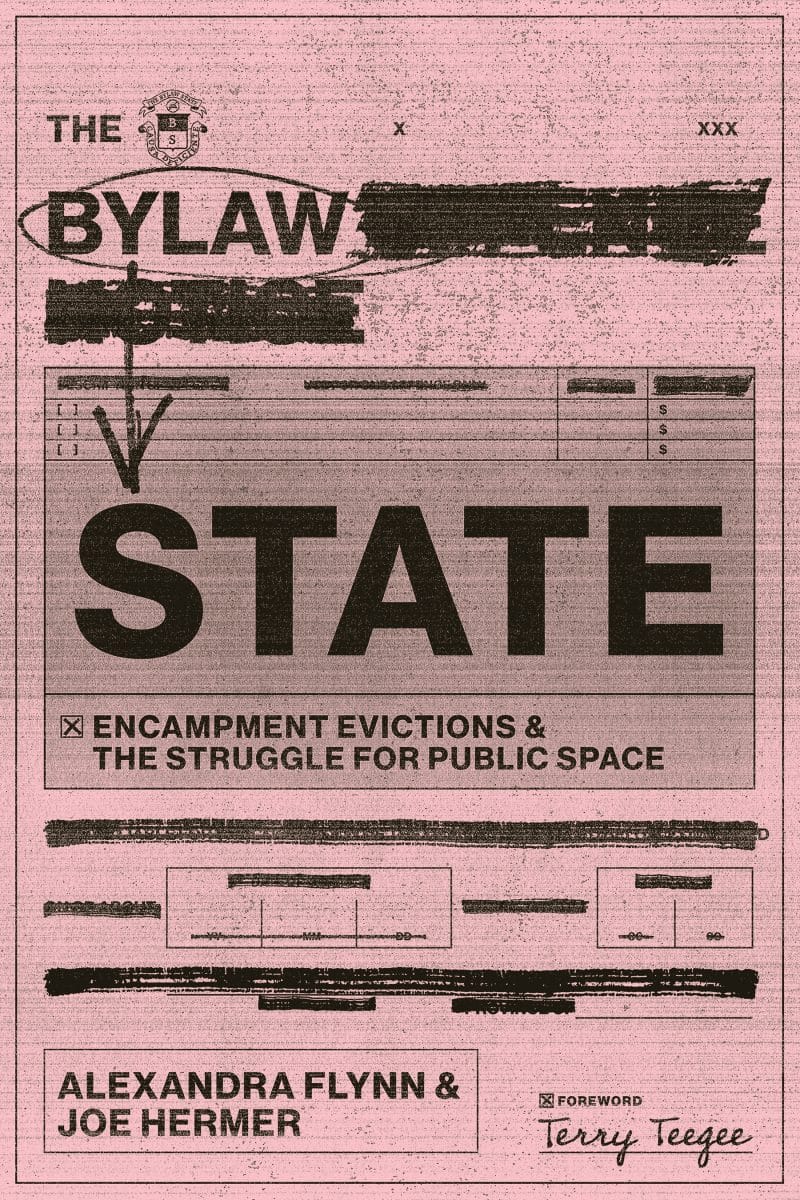
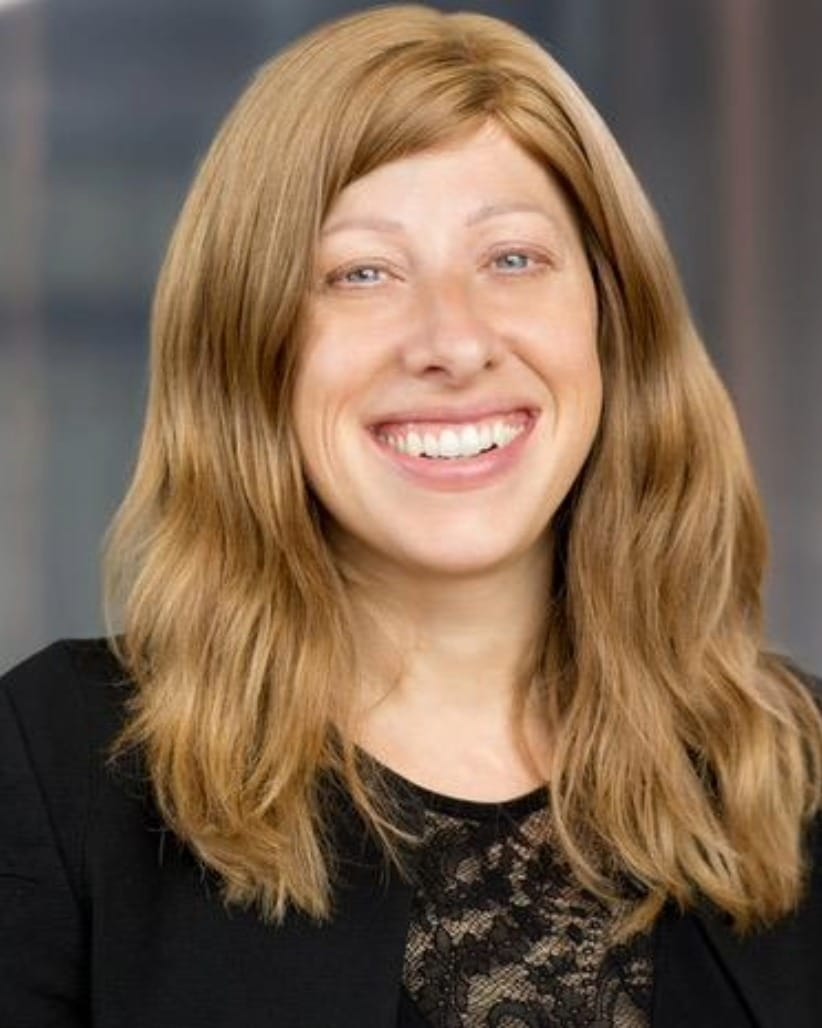
University of Toronto sociology professor Joe Hermer (left) co-authored the 2026 book The Bylaw State with Alexandra Flynn (right), associate professor at University of BC Allard School of Law. Images courtesy UofT/Fernwood Publishing/UBC
Another thing I learned throughout those conversations is it's really this multi-governmental problem. So if there's co-ordination at all levels, we can get somewhere.
We need a multi-pronged approach. And if we don't get that, we're just going to fall short. We're putting a lot of onus on municipalities in this story, because that's where our investigation was looking at, but it's really everyone's responsibility.
"We need a multi-pronged approach. And if we don't get that, we're just going to fall short."
– Mike Graeme, De Facto Journalism Co-op
It was inspiring to also see there are solutions. We can focus on the problems, which is really important, but also orient around actions we can push our governments to do and co-operate on.
David: It is municipal election day across BC. And next week is the provincial election — where a lot of these housing policies are being set at the provincial level, because cities fall under the provincial jurisdiction.
How do you think this is playing out on the election field? Because we've seen a lot of rhetoric around street safety, "public safety," and open-air drug use.
Brishti: In this article I had a conversation with Victoria's incumbent mayor, Marianne Alto. Victoria has a Community Safety and Wellbeing Plan that has been implemented over the past year.
She seemed to recognize they’d put in a little bit more funding towards bylaw enforcement, rather than focusing more on nonprofits and shelters and that kind of thing.
Her emphasis was that, if she is reelected, that would be more of her priority.
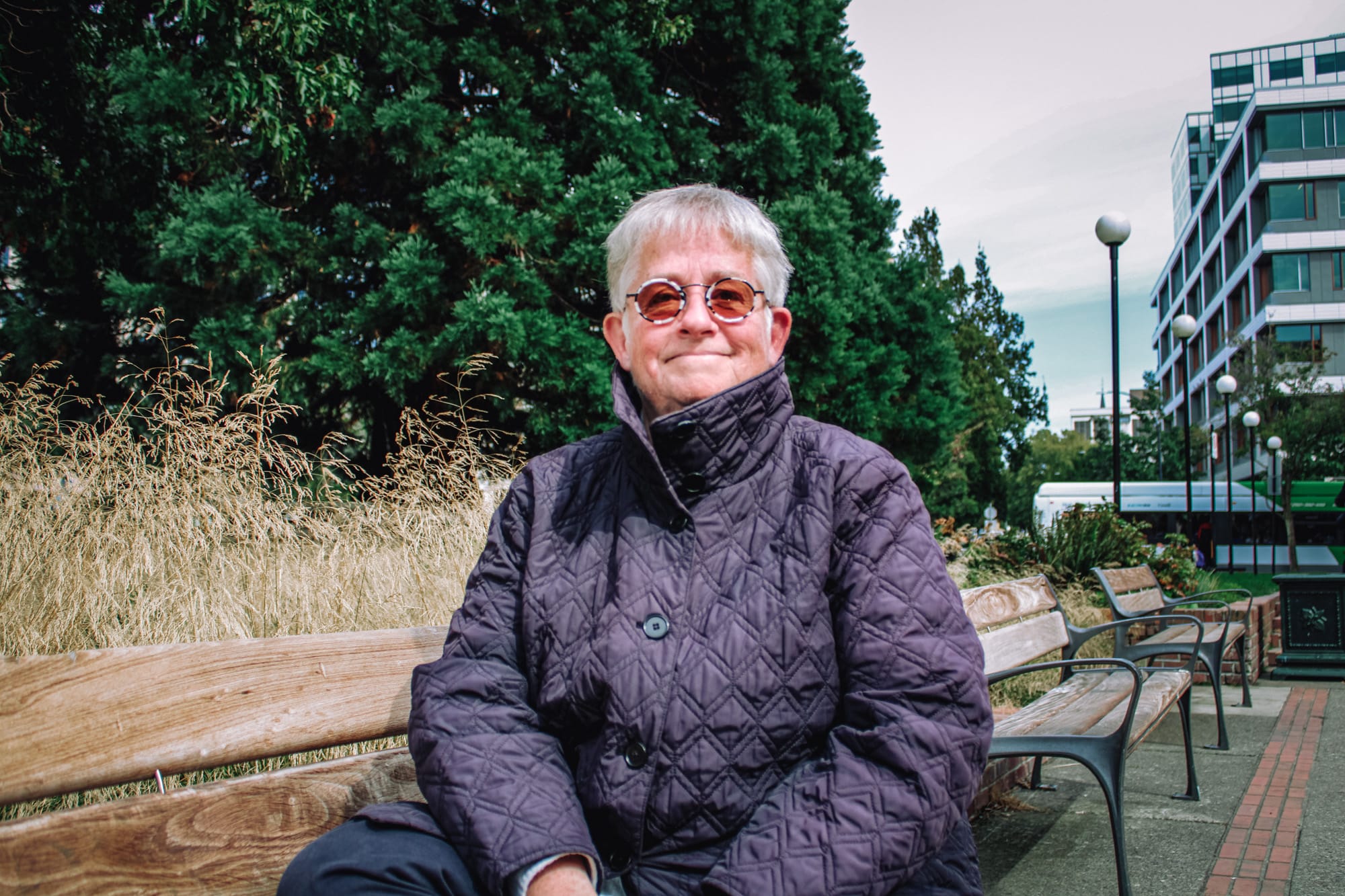
She also acknowledged, basically, that the way individual bylaw officers approach their duties can differ. Now, of course, she's been a councillor since 2010, and then mayor since 2022. So she's had a long time to solve these problems.
Anything a politician says during an election period we should take with a grain of salt. But "public safety" has been dominating the discourse when it comes to this double election cycle we're having in BC.
"You proved a lie, which is that people can reclaim unsoiled, usable, good, undamaged stuff that's taken from them within a timely period ... If it goes to the dump, no one's going there to be able to reclaim it."
– David Ball, De Facto Journalism Co-op
It’s so important that people get out to vote. Especially at the provincial level this year — we have three parties, so the balance of power can really be in anyone's hands at this point.
David: And I hope our investigation has helped humanize and show the actual consequences of something so simple as how taking away a belonging can cause a whole ripple effect for people.
And that we all have a chance to have a say on some very specific issues around this.

Editor: Emma Arkell
David P. Ball
David (he/him) is a De Facto member and a reporter, editor, podcaster and photojournalist based in Vancouver, BC, on Sḵwx̱wú7mesh, xʷməθkʷəy̓əm, and səlilwətaɬ territories. He has worked in media for more than 25 years, including as staff reporter at CBC News, TorStar, and The Tyee, and has been published in The Globe and Mail, Agence France-Presse, Al-Jazeera, VICE, and National Post. He's won awards from the Canadian Association of Journalists, Jack Webster Foundation, and Canadian Journalism Foundation. Read his reporting

Brishti Basu
Brishti Basu (she/her) is a member of the De Facto co-operative and a reporter/editor living on unceded lək̓ʷəŋən and W̱SÁNEĆ territories, otherwise known as Victoria, BC. Her reporting over the last eight years can be found in over 15 Canadian and international publications, including CBC, Capital Daily, VICE, National Geographic, and BBC. She's been a shortlisted finalist for awards from the Canadian Association of Journalists, Jack Webster Foundation, and Canadian Online Publishing Awards. Read her reporting

Mike Graeme
Mike Graeme (he/they) is a white settler photojournalist and member of De Facto cooperative documenting stories of resistance and justice on the unceded lək̓ʷəŋən and W̱SÁNEĆ territories. His photos and writings have appeared in more than 25 media outlets and nonfiction books across Canada and the US, including The Narwhal, The Tyee, IndigiNews, and The Nation. He's won a Jack Webster Foundation award, and been a shortlisted finalist for two John H. McDonald Excellence in Student Journalism Awards. Read their reporting